

Many African economies continue to face high borrowing costs, limited access to long-term capital, and heavy exposure to global financial volatility, which together restrict the continent’s ability to fund infrastructure, industry, and social services at the scale required.
Domestic savings often leave the continent in search of more stable financial markets, while development programmes rely heavily on external capital that is increasingly expensive and unpredictable.
Against this backdrop, proposals like a coordinated financial architecture, stronger risk-sharing mechanisms, and greater use of local capital markets have gained renewed attention, making calls for financial sovereignty especially timely.
Dr Ould Tah focused his address on the New African Financial Architecture (NAFA), describing it as both a strategic lever for major resource mobilisation and the foundation of a new African financial sovereignty. He portrayed NAFA as a system designed to change fundamentally how Africa mobilises, organises and deploys its resources.
“Africa is not lacking in ambition. Agenda 2063 gives us a vision. Our National Energy Pacts, our trade agreements, our infrastructure frameworks, all of these give us plans,” he said. “The problem is not a lack of resources. This is the architecture of risk and capital,” he insisted.
A vision anchored in the four cardinal points
He explained that NAFA is a central element of the Bank Group’s new strategic vision, known as the Four Cardinal Points, which together aim to shift the continent from fragmentation to coordinated, large-scale financial action.
He said the approach is designed to unlock African savings and institutional funds for development, reinforce financial sovereignty, turn demographic strength into economic momentum, and support the creation of resilient, high-value infrastructure to drive industrialisation and integration.
“NAFA is not a slogan. It is a deliberate reorganisation of the way Africa mobilises, allocates, and deploys its capital for development. A shift from fragmentation to coordination. From isolated transactions to systemic scale. From dependence on external capital to financial sovereignty,” he said.
Summit outcomes
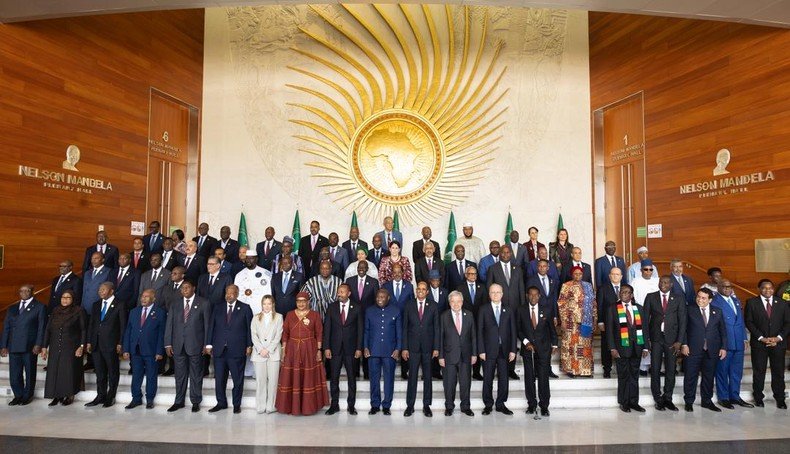
The 39th African Union Summit, held on 14 and 15 February in Addis Ababa, centred on the theme “Ensuring the sustainable availability of safe water and sanitation systems to achieve the goals of Agenda 2063”.
During the Summit, Évariste Ndayishimiye was elected Chairperson of the African Union for 2026, succeeding João Manuel Gonçalves Lourenço.
In a statement on the Bank’s “key initiatives”, African leaders congratulated Dr Ould Tah on his election, saying it reflected “his ability to steer the institution in pursuing Africa’s transformation and integration agenda”.
They welcomed his strategic direction centred on the Four Cardinals and NAFA, and requested a detailed update within six months on how the new financial architecture is progressing.


