

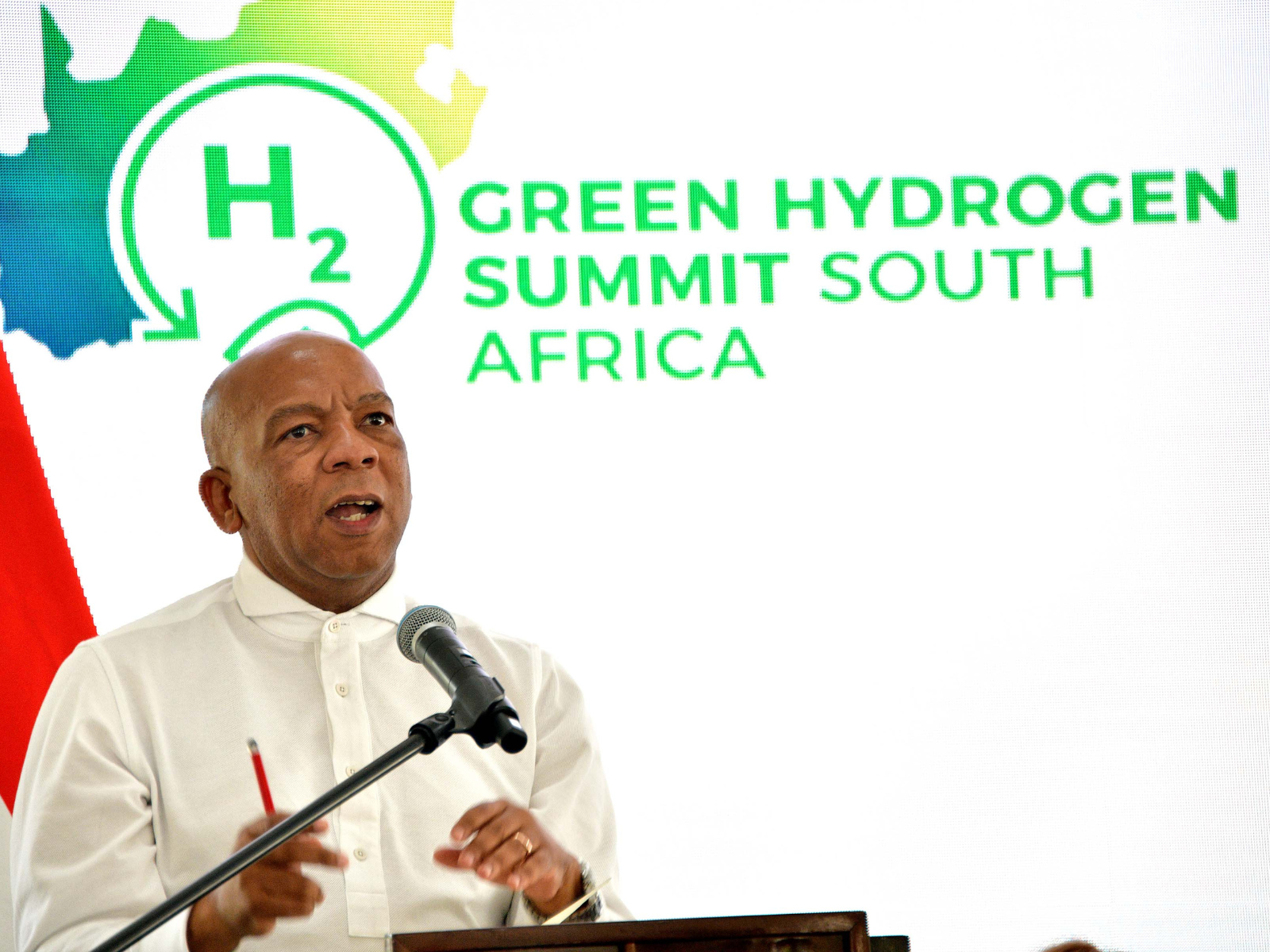
The burgeoning green hydrogen industry presents an opportunity for Africa to enable structural change and reposition the continent. This is according to the Minister of Electricity and Energy, Dr Kgosientsho Ramokgopa. The minister delivered remarks at the African Green Hydrogen Summit, which is underway in Cape Town.
“Green hydrogen must be understood not merely as a clean fuel, but as a strategic enabler of Africa’s structural transformation. It holds the potential to reposition the continent within global value chains, not as an exporter of raw materials but as a competitive industrial actor. Harnessed strategically, it can anchor new industrial ecosystems, from green steel and fertilisers to sustainable mobility and synthetic fuels.
“These are not abstract possibilities — they are within reach, provided we design policy frameworks that localise value, deepen intra-African trade, and direct investment flows towards infrastructure, skills, and technology transfer that serve the interests of the continent,” says Ramokgopa.
Green hydrogen
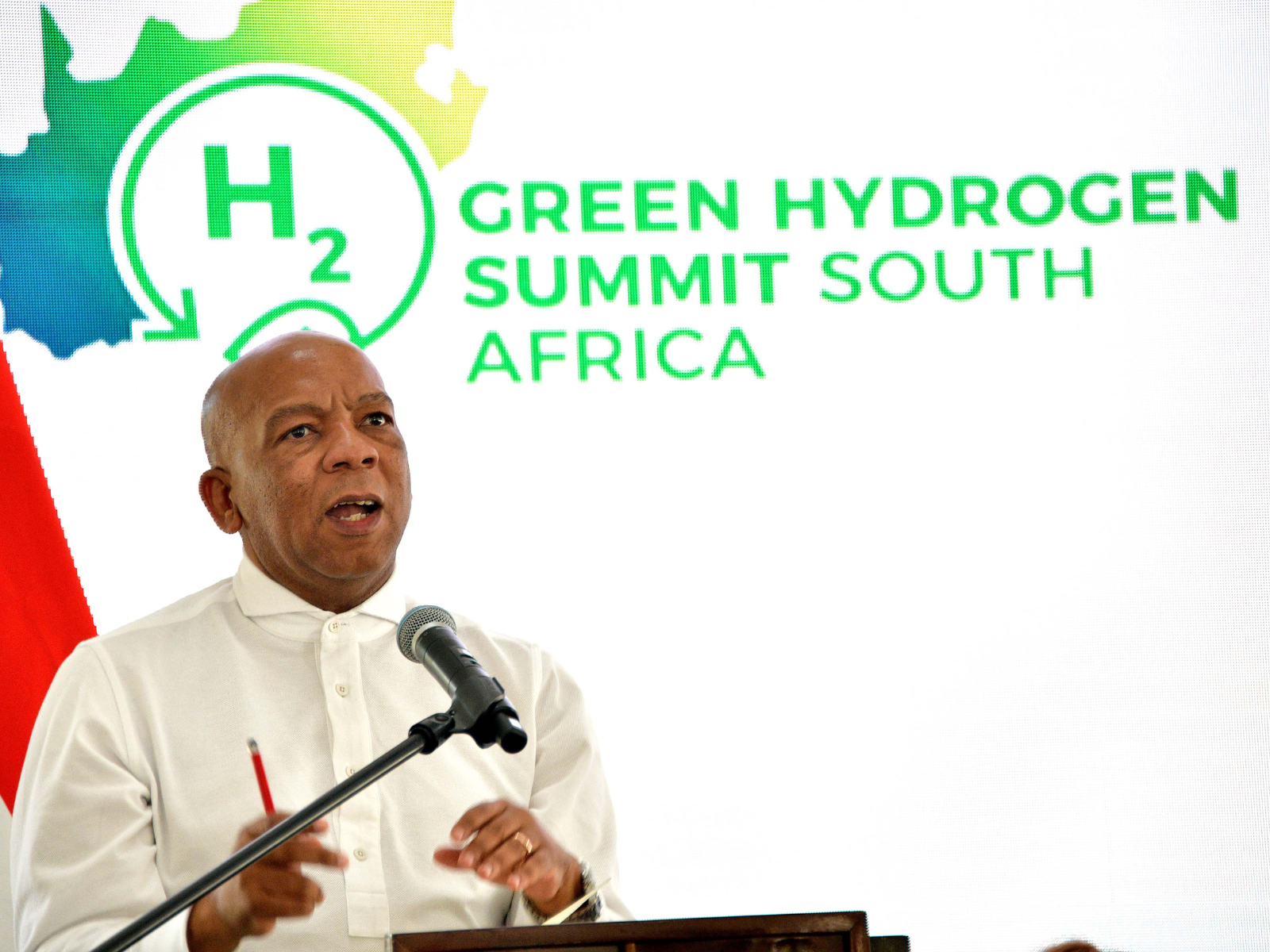
Minister of Electricity and Energy, Dr Kgosientsho Ramokgopa
The colour ‘green’ prefixed with hydrogen signifies the level of sustainability and manner it is produced.
Blue hydrogen is produced from natural gas, using a process called steam reforming, which brings together natural gas and heated water in the form of steam. The output is hydrogen, but carbon dioxide is also produced as a by-product. So, the definition of blue hydrogen includes the use of carbon capture and storage (CCS) to trap and store this carbon.
Blue hydrogen is sometimes described as ‘low-carbon hydrogen,’ as the steam reforming process does not avoid the creation of greenhouse gases.
Grey hydrogen, the most used and produced form available. Grey hydrogen is the same as blue hydrogen, but without the use of carbon capture and storage.
Using black coal or lignite (brown coal) in the hydrogen-making process, these black and brown hydrogen are the absolute opposite of green hydrogen in the hydrogen spectrum and the most environmentally damaging.
Green hydrogen is made by using clean electricity from surplus renewable energy sources, such as solar or wind power, to electrolyse water. Electrolysers use an electrochemical reaction to split water into its components of hydrogen and oxygen, emitting zero carbon dioxide in the process. Green hydrogen is expensive, which is why the world is looking to markets like South Africa to produce it at a competitive and available rate.
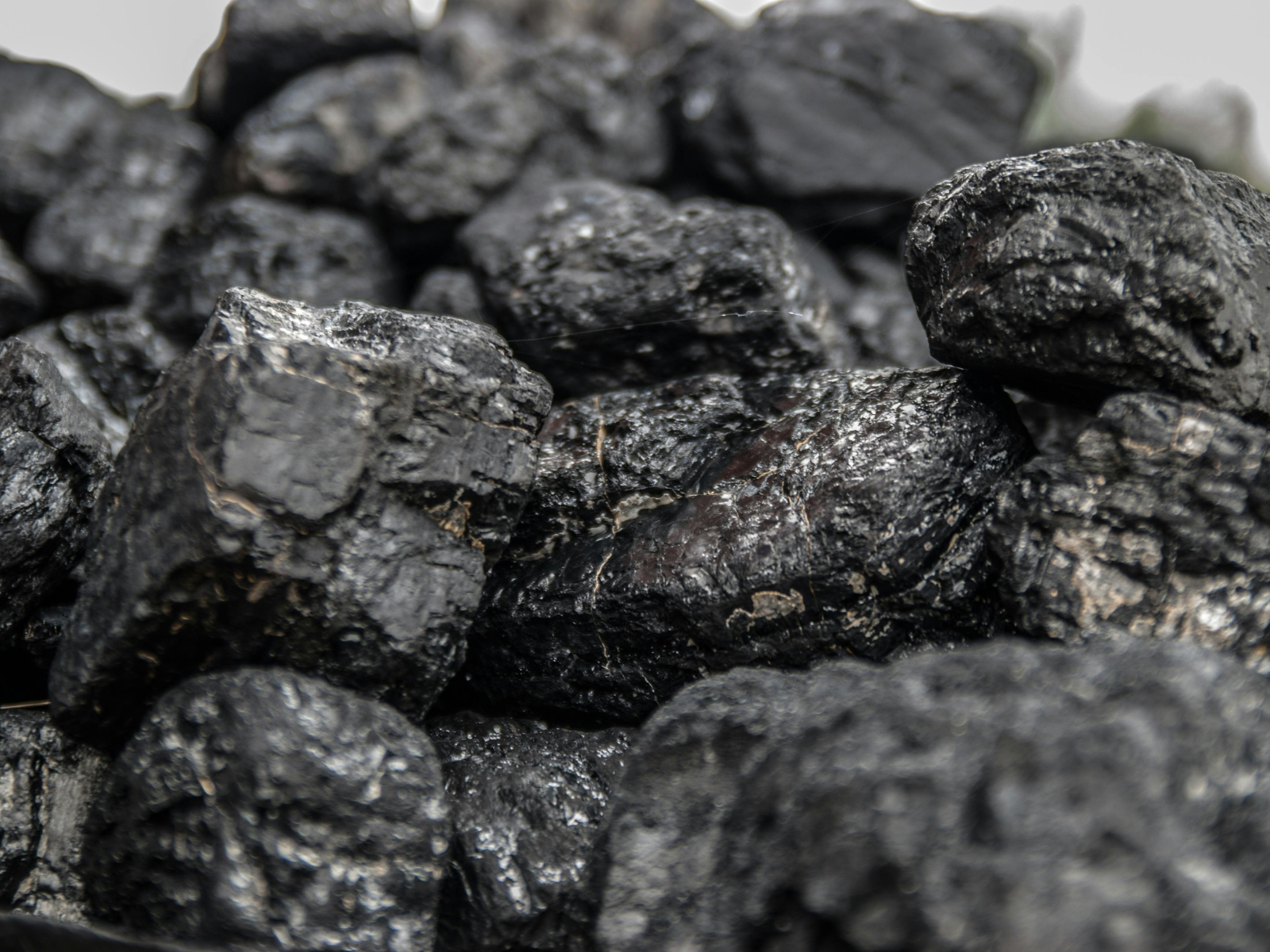
On the opposite end of the spectrum hydrogen generated using coal is very environmentally damaging
The potential for South Africa
The industry presents a lucrative opportunity for the continent and boasts a global potential of at least $300bn in global exports over the next three decades.
Africa holds minerals and metals that are critical for industry, placing the continent at the heart of this new frontier.

“More fundamentally, green hydrogen offers an opportunity to reverse the logic of dependency that has historically defined Africa’s insertion into the global economy. Instead of reinforcing extractive patterns, Africa can lead with an agenda of beneficiation, regional integration, and sovereign industrial development.
“This will require that we reject siloed national approaches in favour of coordinated regional frameworks, leveraging platforms like the African Continental Free Trade Area (AfCFTA), the Programme for Infrastructure Development in Africa (PIDA) and, most crucially, Agenda 2063.
“These frameworks offer the institutional scaffolding for a common energy market and harmonised regulatory regimes that can attract patient, long-term capital,” Ramokgopa said.
The minister implored African leaders at the summit to be ‘unapologetic’ in taking their place at the forefront of the green hydrogen global industry.
“We must also be unapologetic in demanding a fair place at the green negotiating table. Africa’s role in the global energy transition cannot be one of accommodation. It must be one of agency. Our narrative must be led by African voices, grounded in African realities, and committed to African futures.
“As the world seeks new energy alliances and supply chains, Africa must shape its energy destiny through solidarity, strategy and statecraft, turning the promise of green hydrogen into a pillar of continental prosperity,” he insisted.
The summit also launched the Africa Green Hydrogen Report – a document thrashing out the continent’s green hydrogen potential, which brings together the full breadth of the continent’s technical readiness.
“This is not just a theoretical compilation; it is a technical blueprint for scaled project execution. Its message is unequivocal: Africa is not short of knowledge. Africa is ready to move from pilot to pipeline, from strategy to scale.
“But let us be clear. The window for Africa to shape the rules of this emerging market is narrowing. Other regions are moving fast, with public subsidies, regulatory incentives, and long-term offtake strategies. If we delay, we risk importing technologies, importing skills, and once again exporting unprocessed potential.
“So, the real work of this summit is to forge clarity on the scale of our ambition, the credibility of our plans, and the coordination of our actions. Let us begin that work today, with urgency, with unity, and with a shared conviction that Africa’s future is not on the periphery of the global green economy, but firmly at its centre,” he said.
According to the African Green Hydrogen Alliance (AGHA) – which is made up of 10 African states, including South Africa – the industry has the potential to add between $66 billion and $126 billion to the Gross Domestic Product of the member countries over the next 25 years.
Furthermore, some two to four million jobs could also be added during that time.
“Africa’s choice is whether to be a passive site of resource extraction or a proactive architect of the green energy economy. With the right policy frameworks, investment enablers, and regional coordination, green hydrogen can and must be the backbone of a new African industrial era,” says Ramokgopa.


