

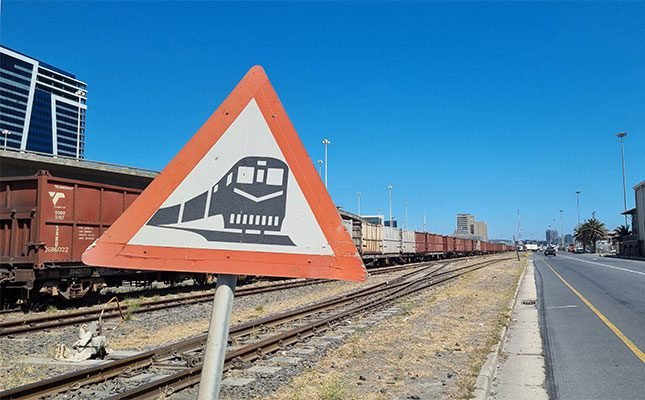
Transport Minister Barbara Creecy recently announced that 11 private rail operators had successfully bid for rail slots on Transnet’s network. Grain value chain players are already looking at ways to transport surplus grain earmarked for export from the interior to Durban by train.
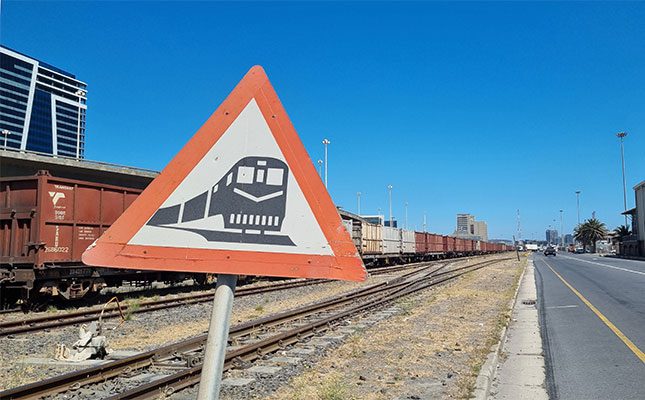
Photo: Jeanne van der Merwe
The South African Cereals and Oilseeds Trade Association (SACOTA), Agbiz, and Agbiz Grain have already discussed this possibility with Moshe Motlohi, CEO of the newly established Transnet Rail Infrastructure Manager (TRIM).
“In South Africa, the cost of rail is approximately two-thirds of the cost of road transport. This potential saving often means the difference between whether South Africa is competitive in the grain export market or not,” Dr André van der Vyver, executive director of SACOTA, said in an update to industry.
“The three years before [the 2024] drought have shown that the Port of Durban can export about 350 000t of grain per month. Of this, rail export capacity is approximately 175 000t per month or 50%. This means the basic rail infrastructure is in place, although a portion of it may require maintenance,” he added.
However, several hurdles must be overcome before the eastern Free State, typically the biggest source of export grains in surplus seasons, can effectively make use of the deregulated rail network.
The TRIM has divided the country’s rail network into A and B networks.
“The A network will be the core main lines of the rail network, such as the [KwaZulu-Natal] container line from Gauteng to Durban, and the mineral line to Richards Bay. Most of the rural branch lines that service the grain silos [in the eastern Free State] fall under the B network,” Van der Vyver explained.
While the TRIM indicated it would maintain and upgrade the A network as necessary, it did not have the funds or capacity to do the same for the B network. For grains to be exported, a network operator would have to show interest in allocating several locomotives and wagons to service the branch lines on which the silos were located.
Furthermore, traders and storage operators would have to commit to generating business for the rail operator.
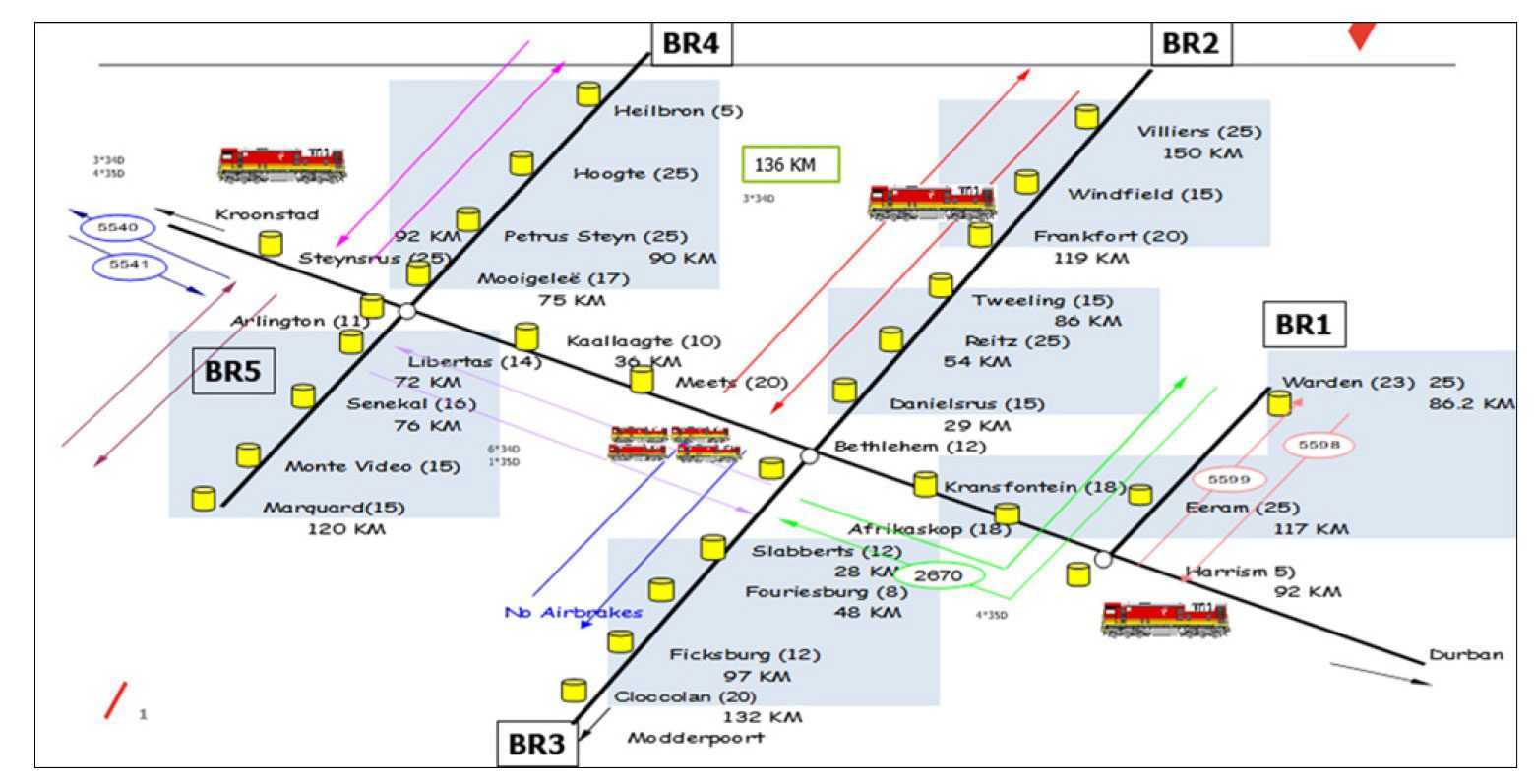
“The grain, or more precisely the loaded wagons, must then be amassed or gathered in Bethlehem or Harrismith where they will, as one complete train, utilise one of the slots secured by the network operator on the [KwaZulu-Natal] container corridor to Durban,” Van der Vyver added.
Success also depends on one or more rail operators being willing to maintain the branch lines.
“Given the relatively low volumes of grain transported – compared with, for example, minerals – the seasonality of the grain export season, and the variability from year to year, it is unlikely that any SACOTA members have the risk appetite to embark on a venture to secure one or more branch lines for their exclusive use.
“It is more feasible that SACOTA members, together with a network operator and Agbiz Grain members [storage operators] form a consortium to engage with the TRIM,” Van der Vyver continued.
He added that SACOTA was testing the waters with its members “to determine who would be interested in forming such a consortium”.
The association was concerned the grain industry would only have two months (September and October) to formulate a consortium strategy before the TRIM announced a request for interest (RFI) from the market, the next step in the allocation of private operators’ slots on Transnet’s rail network.
“For each region or each set of branch lines, or single line, there is likely to be a consortium with a unique set of traders, silo operators, and network operators that may be interested. The blueprint may be more or less the same, but the details will differ,” Van der Vyver explained.
“At this stage, any talk of what will happen beyond compiling an RFI is vague. If there is a surplus crop next year, the ideal time to commence with exports is the end of April or beginning of May 2026. We trust that the necessary arrangements will then be in place. If not, another perfect opportunity of exporting grain by rail may be missed.”


