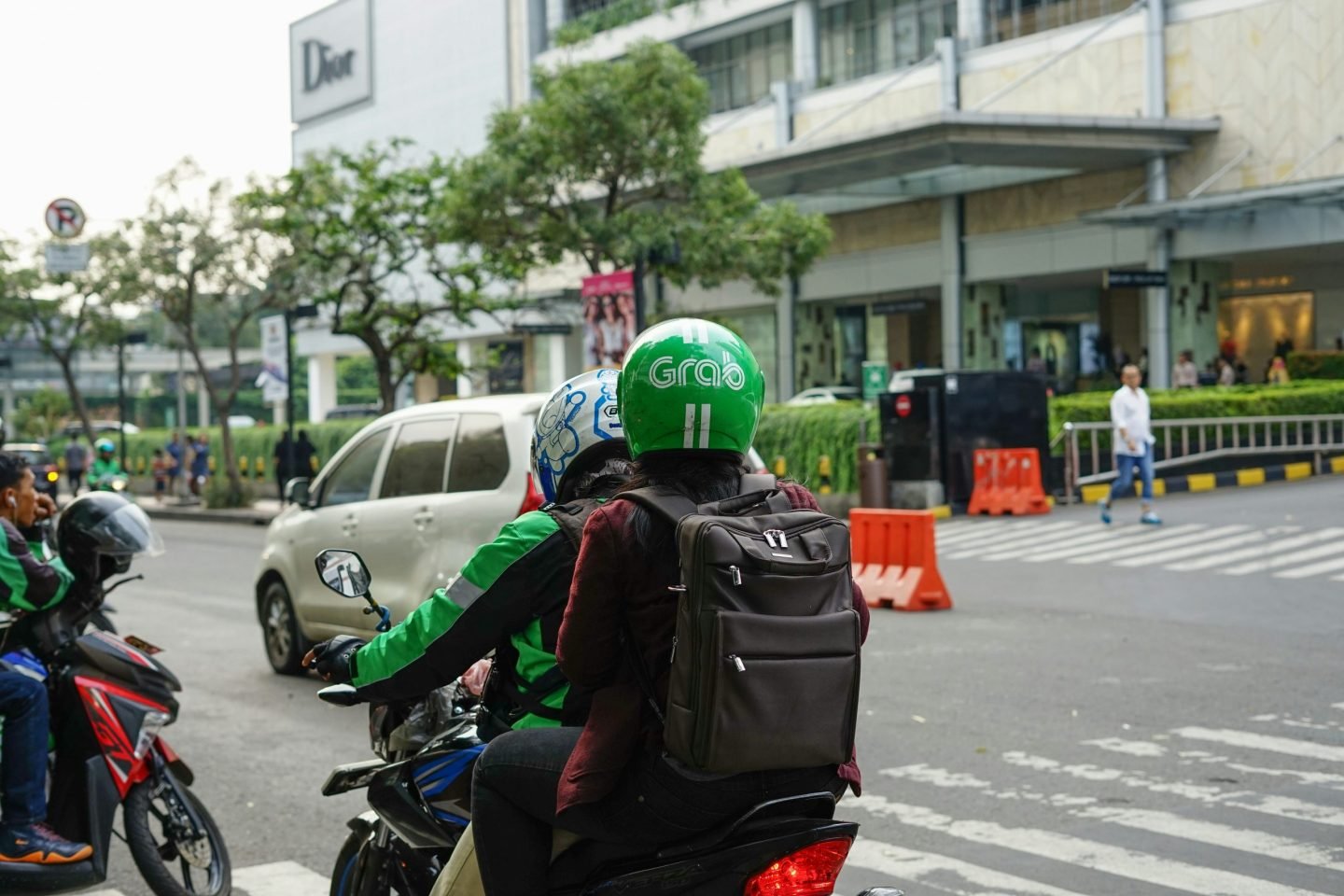
Rising labour costs and tighter delivery margins are pushing large platform operators like Grab to look at automation. It’s moved to bring robotics capability in-house by its acquisition of Infermove.
Grab operates at a scale where small efficiency gains can have out-sized effects. Its platform supports millions of deliveries in Southeast Asia, many of them carried out by riders on scooters and bicycles in dense urban areas, producing complexity that limits how much automation could replace human labour. By acquiring a company focused on robots designed for unstructured settings, Grab sees physical-world AI as mature enough to use in cases outside pilot programmes.
Delivery automation close to core operations
Rather than relying on off-the-shelf systems, Grab is opting to internalise the development loop. Infermove’s technology is designed to learn from real-world movement data, including information generated by non-motorised delivery vehicles. In practical terms, that means robots trained on how people actually navigate pavements, crossings, and crowded drop-off points, rather than how those spaces appear in simulations.
For a delivery operator like Grab, that distinction matters. Simulated environments can support early development, but they often struggle with the edge cases that define real cities. Bringing that learning process in-house allows Grab to shape how automation behaves under its own operating constraints, rather than adapting its delivery network to fit a third-party system.
From an enterprise perspective, the strategic value lies in control. Owning the technology gives Grab more influence over deployment pace, operating scope, and cost trade-offs. It also reduces long-term dependence on vendors whose priorities may not match Grab’s regional footprint or economic realities.
Automation, however, is not positioned as a replacement for human riders. Even as robots take on parts of the workflow, people remain central to service delivery. Grab’s interest appears focused on selective use, like structured first-mile or last-mile segments where tasks are repetitive and distances are short. In these areas, robots may help smooth demand spikes, reduce delays during peak hours, and ease pressure during labour shortages.
Managing cost pressure without breaking service
During an internal meeting in December, Grab’s chief technology officer Suthen Thomas described Infermove’s progress as “impressive,” highlighting both the technology and its early commercial use. He also said the company would continue to operate independently, with its founder reporting directly to him. The structure suggests Grab is prioritising execution and continuity rather than rapid organisational integration.
The approach reflects a broader shift among large digital platforms. Instead of treating AI as a layer added on top of existing systems, companies are embedding it deeper into core operations. In delivery and logistics, that often means moving beyond optimisation software into physical automation, where the risks and costs are higher but the potential gains are more structural.
The timing is also telling. On-demand delivery volumes continue to grow, but margins remain under pressure. Customers expect faster service and lower fees, while operators face rising wages, fuel costs, and tighter regulation. In that environment, automation becomes less about novelty and more about sustaining service levels without eroding profitability.
Bringing robotics development closer to operations may also help align incentives around data use. Training physical AI systems requires large amounts of real-world data, which delivery platforms already generate at scale. Keeping that feedback loop internal can speed iteration and reduce the need to share sensitive operational data externally.
There are still limits. Robots designed for pavements and short routes are unlikely to replace human couriers in an entire network anytime soon. Weather, local rules, and customer acceptance will continue to shape where automation can realistically operate. Expanding in multiple countries adds further complexity, as infrastructure and regulations vary widely.
Industry forecasts suggest rapid growth in last-mile delivery robotics, but those figures offer limited guidance for operators. The more immediate question is whether automation can lower cost per delivery without introducing new failure points. That depends less on market size and more on performance in live environments.
Seen through an enterprise lens, the acquisition of Infermove is not a bet on robotics as a product category. It is a move to tighten the link between AI, data, and physical operations. For platform companies built on logistics and mobility, that integration may become a key factor in managing growth under sustained cost pressure.
(Photo by Afif Ramdhasuma)
See also: The Law Society: Current laws are fit for the AI era
Want to learn more about AI and big data from industry leaders? Check out AI & Big Data Expo taking place in Amsterdam, California, and London. The comprehensive event is part of TechEx and is co-located with other leading technology events, click here for more information.
AI News is powered by TechForge Media. Explore other upcoming enterprise technology events and webinars here.