

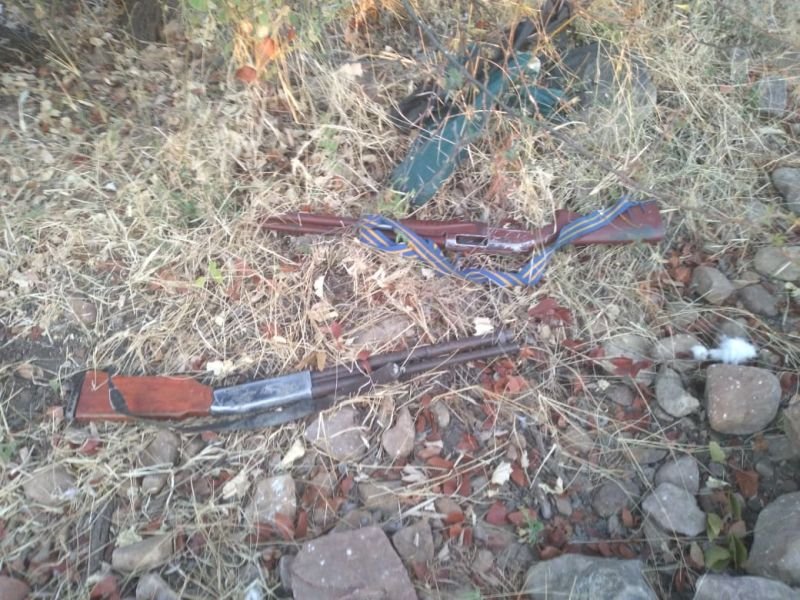

All it takes to manufacture a craft firearm in Ghana is US$9. Gunsmiths produce about 200 000 of these illegal weapons a year, selling them for between US$90 and US$150, depending on their type and technology. Criminals use the guns in most of the country’s home robberies, as well as in banditry, trafficking and reprisal attacks.


Demand for these illicit weapons is also driven by the growing number of organised ethnic youth groups formed to protect their communities. The Global Initiative Against Transnational Organized Crime has estimated that by April this year, 23 such self-defence groups were operating in Bawku, in the Upper East Region, alone.
Demand for illicit weapons is driven by the growing number of ethnic self-defence groups
Although local production of weapons is prohibited in Ghana, the country has one of the most sophisticated craft weapons production and trafficking networks in the region. This poses a serious threat to the country’s security, encouraging crime and prolonging regional conflicts.
Several illegal arms manufacturers are believed to operate discreetly in remote parts of the country. Hotspot or transit zones include Bawku, Sabunjida Machele-ne in Northern Region, Techiman in Bono East Region, Alabar and Suame Magazine in Ashanti Region, Elubo, Kasoa and Ashaiman in the Western, Central and Greater Accra regions.
A security analyst who requested anonymity told the ENACT organised crime project that illicit gun manufacturers were usually blacksmiths whose knowledge was passed on from one generation to the next, or occasionally to apprentices. Blacksmiths making cooking utensils and craft ornaments also produce weapons, which are much more lucrative.
Blacksmiths sell their craft weapons to intermediaries who sell them to traffickers. The traffickers smuggle them over the border and use well-established distribution networks to target buyers. In the local setting, arms are supplied to criminal elements in the regions close to where they are made, and to smugglers from Nigeria and Sierra Leone. And traffickers are not discouraged by the prospect of prosecution if they are caught.
Kwesi Aning, Professor at the Kofi Annan International Peacekeeping Training Centre, told ENACT that if criminals could access all types of guns, including military-grade, that meant Ghana had ‘created a fertile ground both for the acquisition of the necessary tools for violent attacks and also for resupply and supply networks.’
Ghana has made little progress in controlling weapons in the country. Until 2019, there was no system for identifying civilian-owned firearms. More recently though, the Small Arms Commission initiated a coding system to ensure all guns owned by security services and civilians were distinctively marked. Ownership data is captured in a growing national database.
This coding effort aligns with the Economic Community of West African States’ Convention on Small Arms and Light Weapons, which requires member countries to mark firearms to facilitate identification and traceability.
And while illegal manufacturing is of primary concern for Ghana’s internal security, the threat goes beyond its borders. The country’s craft weapons often end up fuelling conflicts in neighbouring states. Some explosive devices found in Mali, Guinea and elsewhere in the region were identified as originating in Ghana. Likewise, the growing instability in neighbouring Burkina Faso has created a fertile illegal trade in craft weapons.
In addition to the coding, several actions could shut down this illicit economy. A database of all Ghana’s blacksmiths would help to identify those engaging in artisanal gun manufacturing. The government could then map and monitor their operations and those of arms dealers across the country.
Authorities could also exercise greater control by registering blacksmiths and their associations. Ensuring compliance in the manufacture of legal products, such as farm implements, would protect the livelihoods of these artisans. A blacksmith representative speaking at a 2023 ECOWAS workshop in Accra said designing a ‘sustainable alternative livelihood programme that provides at least equivalent benefits to arms manufacturing’ was key to controlling the manufacture and trafficking of craft firearms.
More appealing is regulating the craft weapons industry so that blacksmiths operate legally and the state can easily monitor the trade. A mechanism would be needed that offers blacksmiths the opportunity to legalise their activities, such as a time-bound moratorium against prosecution and adherence to certain requirements. This could incentivise blacksmiths to register and enable greater control over artisanal weapons manufacturing.
Acknowledging the probable complicity of state officials in facilitating the illegal trade, especially at the borders, is equally vital. Investigating and prosecuting corruption is essential to disrupt the trafficking chain and make bribe-taking less attractive to government officials.
These measures will make a meaningful contribution to the African Union’s ambitious but important target to Silence the Guns in Africa by 2030.
Written by Abdelkader Abderrahmane, Senior Researcher, ENACT, ISS and Solomon Okai, Senior Programme Officer, Foundation for Security and Development in Africa.
Republished with permission from ISS Africa. The original article can be found here.



