

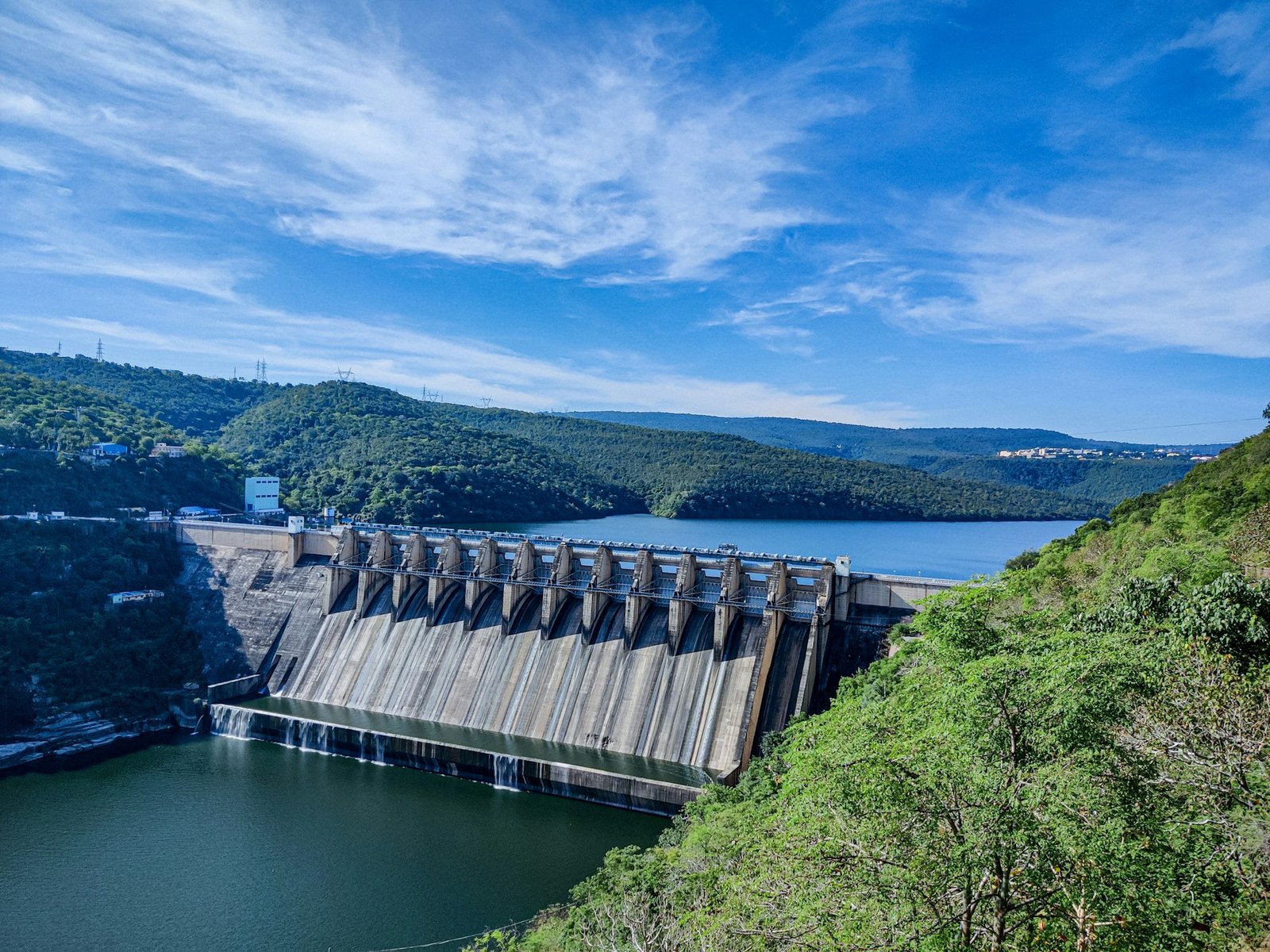
The government of Ghana has announced plans to commence Phase 1 of the nearly $1 billion Pwalugu Dam Project, signalling a renewed effort to advance the long-delayed power infrastructure project.
President John Dramani Mahama made the announcement during a courtesy call by the Upper East Regional House of Chiefs on Tuesday.


He said the project will be executed in two distinct phases due to its scale and complexity.
Phase 1 will focus on hydropower generation, with the dam expected to produce between 60 and 70 megawatts of electricity.
The phase will also include a solar component generating 30 to 40 megawatts. Phase 2 will concentrate on irrigation infrastructure and flood control measures.
The announcement indicates a phased implementation approach for the project, which has experienced delays since its launch in 2019
Project expenditure details
The $993 million project was originally launched by President Nana Addo Dankwa Akufo-Addo in November 2019 for construction to begin.
However, despite nearly $12 million spent by the state, no significant construction work has been completed at the site.
Mahama referred to the current state of the project site as ‘a crime scene’ due to the lack of progress despite expenditures, and stated that the Attorney General is examining the $12 million spent.
The Ghana Irrigation Development Authority explained that the payments were made as per contract terms for pre-construction activities, including feasibility studies, engineering design, and environmental impact assessments
Under the contract, the government was expected to pay $48.57 million as mobilisation to the contractor, with only 25% of that amount paid.
Ghana’s Minister for Food and Agriculture Eric Opoku announced plans to terminate the existing contract and re-award it, describing the project as a key initiative for development in northern Ghana under the current administration.
Mahama disclosed the project may now be funded under his administration’s Big Push Infrastructure programme, with costs potentially reaching GHC 12 billion ($1 billion).
He also confirmed that due to budget constraints, the phased approach will see Phase 1 focus on electricity production first.
Why Pwalugu Dam matters
The Pwalugu Dam is designed to control perennial flooding in northern Ghana caused by heavy rains and spillage from the Bagre Dam in Burkina Faso.
Since 1992, spillage from the Bagre Dam has caused annual flooding affecting Ghana’s Upper East, Upper West, North East and Northern Regions.
The flooding typically occurs between August and September when the Bagre Dam reaches its maximum capacity and Burkina Faso’s power company opens the spillways.
Phase 2’s irrigation infrastructure aims to address chronic food insecurity in northern Ghana. The Northern and Transition Zones account for 56 percent of all food-insecure people in Ghana, despite representing just 28% of the population.
Food insecurity rates reach 48.7% in the Upper East, 33% in the North East, and 30.7% in the Northern Region.
Meanwhile, less than 1% of Ghana’s national crop area is irrigated. Northern Ghana has only one rainy season from May to October, leaving farmers unable to cultivate during the dry season.
The project will include a 20-metre-high weir with primary and secondary canals for a 25,000-hectare irrigation scheme.
When completed, the combined hydroelectricity and solar power complex at Pwalugu is planned to form a significant hydro-solar hybrid facility in Ghana, complementing the hydropower with solar generation for more stable output.



