

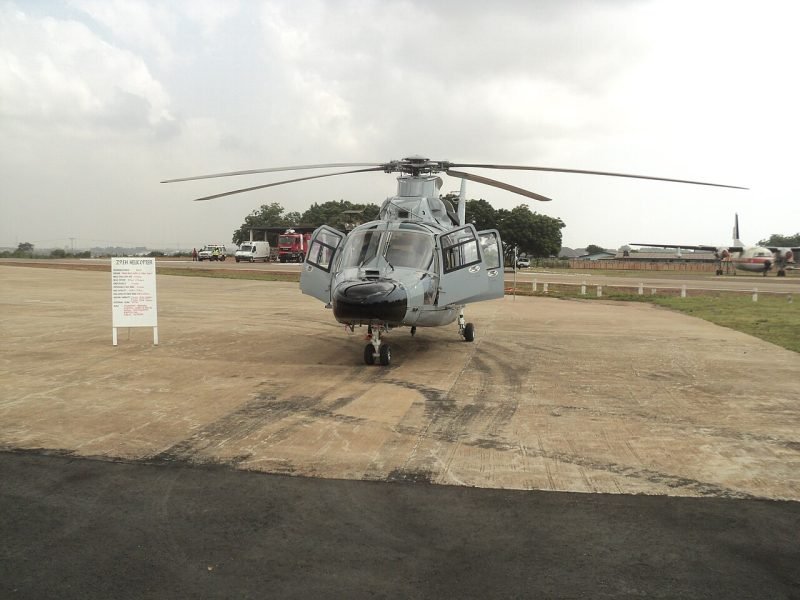
On 6 August, Ghana was struck by a devastating incident when a Harbin Z-9 military helicopter crashed, killing all eight people on board, including two senior government ministers and several high-ranking officials.
The helicopter had taken off from Accra, the nation’s capital, at 0912 hours, bound for a mining conference in the Ashanti Region in the northwest of the country. However, shortly after departure, it lost radar contact and disappeared from tracking systems. Emergency crews later located the wreckage in a forested area near Adansi Akrofuom, in the general vicinity of Sikaman, where they confirmed there were no survivors. The crash claimed the lives of some of Ghana’s most prominent figures.
Among the deceased was Edward Omane Boamah, the Defence Minister, a seasoned politician who had previously served as the Minister of Communications before his recent appointment to lead the defence portfolio. Another key figure lost was Ibrahim Murtala Muhammed, the Minister of Environment, Science, and Technology, whose role was vital in addressing Ghana’s environmental and technological challenges.
The passengers also included Alhaji Muniru Mohammed, the acting deputy national security coordinator, a critical position in the country’s security apparatus, and Samuel Sarpong, the vice chair of the ruling National Democratic Congress (NDC) political party, a influential voice in Ghanaian politics. Samuel Aboagye, the deputy director general of Ghana’s disaster relief agency, was also on board, alongside three military personnel who crewed the helicopter: Squadron Leader Peter Bafemi Anala, Flying Officer Manaen Twum Ampadu, and Sergeant Ernest Addo Mensah. The loss of these individuals, representing a mix of political, security, and military leadership, sent shockwaves through the nation.
The Ghanaian government swiftly responded to the tragedy, with President John Mahama and his administration issuing a statement describing the crash as a “national tragedy.” Condolences were extended to the families of those who perished, reflecting the profound sense of loss felt across the country. Veronica Adzo Arhin, the Acting Director General of Public Relations for the Ghana Navy, provided an official account of the incident, confirming that the helicopter had departed Accra en route to Obuasi when it crashed. Her statement listed the names of the crew and passengers, underscoring the high-profile nature of those on board and the gravity of the event.
As of now, the cause of the crash remains unknown. Authorities have launched a comprehensive investigation to determine what went wrong, with military officials stressing the need to thoroughly examine all possible factors. The Harbin Z-9, a Chinese-manufactured military utility helicopter, is at the centre of this inquiry. Produced by the Harbin Aircraft Manufacturing Corporation, the Z-9 is a licence-built version of the French Eurocopter AS365 Dauphin, adapted for various roles, including armed variants. Ghana acquired four Z-9EH utility helicopters from China in September 2015, primarily to bolster security for its burgeoning oil and gas industry, a key economic sector for the West African nation.
The purchase was financed through a loan from the China Development Bank and came with provisions for spare parts, maintenance facilities, and personnel training, ensuring the helicopters could be effectively integrated into Ghana’s military operations. This was not the first time the Harbin Z-9 has been involved in incidents across African militaries. In 2019, both Cameroon and Mali experienced crashes involving this model, with losses reported in May and January, respectively. These earlier incidents raise questions about the aircraft’s reliability in the challenging operational environments of African nations, though no conclusions have yet been drawn about the Ghana crash.
The ongoing investigation will likely explore whether mechanical failure, human error, or external factors such as weather conditions played a role in the tragedy. The timing of this disaster compounds its impact. Ghana, like many West African countries, is grappling with increasing security threats, including the potential spillover of instability from neighbouring states. The sudden deaths of the Defence Minister and the acting deputy national security coordinator leave critical gaps in the country’s security leadership at a precarious moment. Similarly, the loss of the Environment Minister disrupts efforts to address pressing environmental issues, which are closely tied to Ghana’s economic and social stability, particularly in regions like the Ashanti, known for its mining activities.


