• Business
  • Markets
  • Politics
  • Crypto
  • Finance
  • Intelligence
    • Policy Intelligence
    • Security Intelligence
    • Economic Intelligence
    • Fashion Intelligence
  • Energy
  • Technology
  • Taxes
  • Creator Economy
  • Wealth Management
  • LBNN Blueprints
  • Business
  • Markets
  • Politics
  • Crypto
  • Finance
  • Intelligence
    • Policy Intelligence
    • Security Intelligence
    • Economic Intelligence
    • Fashion Intelligence
  • Energy
  • Technology
  • Taxes
  • Creator Economy
  • Wealth Management
  • LBNN Blueprints

Germany to allow North Sea carbon storage to reduce emissions

Simon Osuji by Simon Osuji
February 27, 2024
in Energy
0
Germany to allow North Sea carbon storage to reduce emissions
0
SHARES
3
VIEWS
Share on FacebookShare on Twitter


Germany will allow heavy industries who don’t have other ways of cutting emissions to transport and store carbon underground, a reversal of the government’s original stance as it bolsters efforts to reach climate neutrality.

A key strategy presented Monday will allow carbon to be exported to storage facilities in places like Norway, and open up exploration of Germany’s exclusive economic zone in the North and Baltic seas for possible sites. The move marks a fundamental turnaround as carbon storage — which was met with massive protests around a decade ago — was practically banned in the country.

Europe’s largest economy and its biggest polluter aims to be climate neutral by 2045 — five years earlier than the EU — a goal that is “impossible to reach” without carbon capture, utilization and storage technologies, economy minister Robert Habeck said at a press conference in Berlin. “Not doing so would put us at a competitive disadvantage and cost us dearly.”

The European Union earlier this month presented a plan asking member states to develop carbon storage sites in a bid to remove up to 400 million tons of CO2 by 2040. Storage on land, however, will remain prohibited in Germany, unless its federal states — which are currently opposed to such a move — explicitly request an exception. This will make CCS technologies much costlier as the waste has to be transported over much longer distances.

The government plans to subsidize the ramp-up of CCS in industries like cement, lime, basic chemistry and waste incineration, as they have practically no other tool to reach net neutrality. A special scheme that foresees supporting operational costs for 15 years already got the green light from the European Commission earlier this month.

The draft strategy says that carbon capture for gas-fired power or biomass plants will be allowed but should be excluded from funding, while usage of the technology for coal plants remains prohibited. Those exclusions should calm critics from Germany’s Green party, which has vigorously opposed using CCS in the power sector.
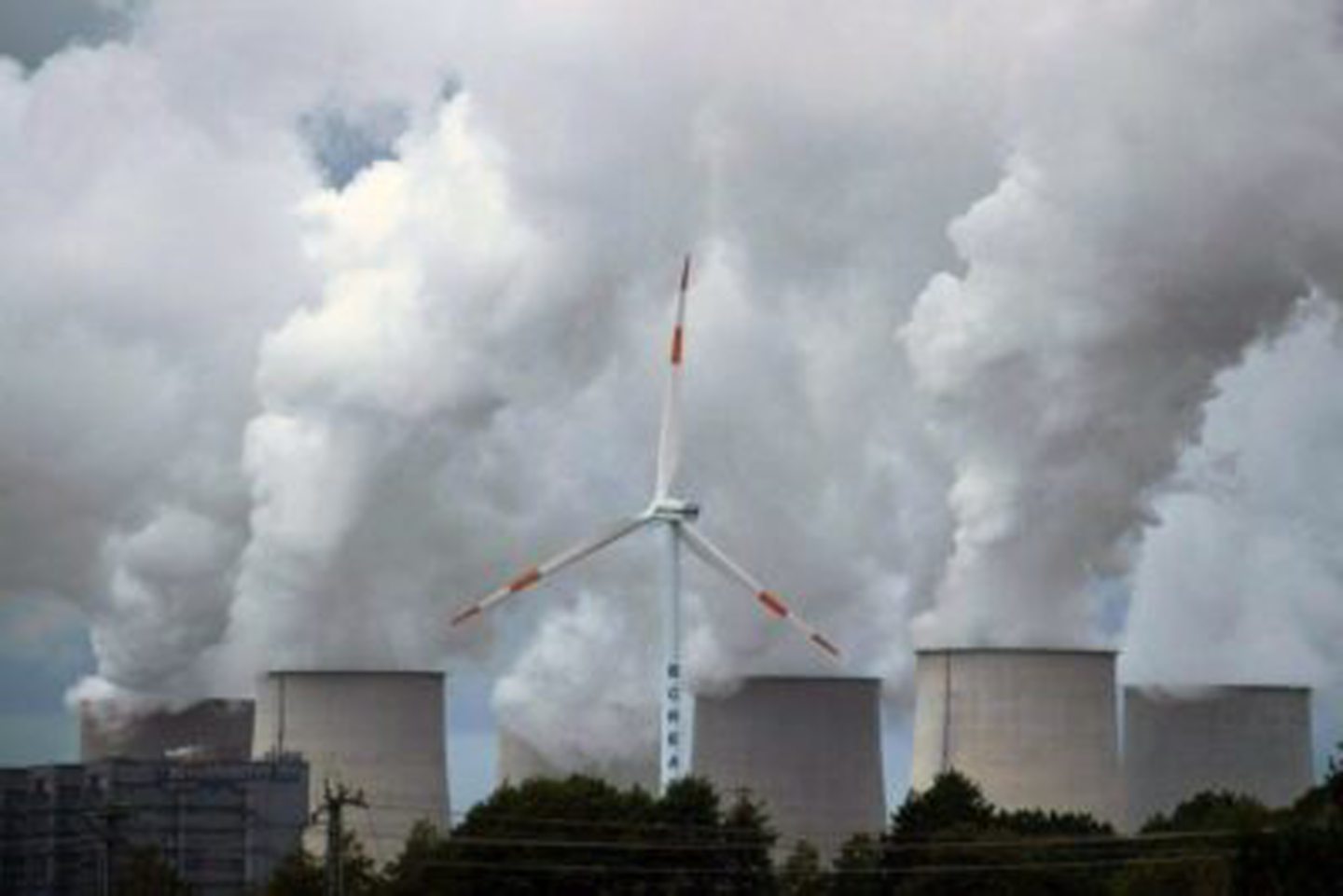
© Supplied by Bloomberg
A wind turbine operates near emissions rising from the Jaenschwalde lignite fired power plant, operated by Lausitz Energie Bergbau AG (LEAG), in Barenbrueck, Germany.

Germany’s largest environmental group NABU said allowing CCS for gas plants is the “wrong signal.” However, its use is unlikely to become a business case in Germany, according to Ottmar Edenhofer, director of the Mercator Research Institute on Global Commons and Climate Change. Carbon prices are set to increase over the medium term, making gas plants more expensive to run, and the country wants to incentivize the switch to hydrogen.

“That’s why I don’t see the danger of a fossil lock-in,” Edenhofer said.

Germany’s biggest industry group BDI welcomed the move as “an important step for the competitive transformation of German industry toward climate neutrality.”

Transporting captured carbon will remain a key challenge, particularly as the government does not plan to subsidize the setup of a CO2 pipeline grid but wants it to be privately funded. Open Grid Europe GmbH, which currently is planning its own network for the transport of up to 18 million tons of carbon, took note of this decision “with interest,” according to Sabine Augustin, head of business development.

Cement producer Heidelberg Materials AG — which will store carbon in Norway’s Brevik for the first time next year and is also planning a CCS project in Germany’s Geseke — said it will face “some difficulties” at its southern plants, which are far away from potential offshore storage sites. Progress here will depend on how they can be connected to a CO2 grid, chief executive officer Dominik von Achten said at the press conference with Habeck.

Recommended for you

Salman Malik, speaking at Prosper's Annual Lecture in Aberdeen.

Veri Energy boss Salman Malik unveils his green dream for UK North Sea


Source link

Related posts

Kenya pipeline exceeds $824.6 million target in oversubscribed IPO debut

Kenya pipeline exceeds $824.6 million target in oversubscribed IPO debut

March 5, 2026
How QatarEnergy’s LNG shutdown could threaten Africa’s gas imports

How QatarEnergy’s LNG shutdown could threaten Africa’s gas imports

March 5, 2026
Previous Post

ITU announces $US9 billion connectivity funding commitments

Next Post

iLima Digital Foundary and Global Connective Center to Accelerate Sustainable Smart Cities in Africa and Beyond

Next Post
iLima Digital Foundary and Global Connective Center to Accelerate Sustainable Smart Cities in Africa and Beyond

iLima Digital Foundary and Global Connective Center to Accelerate Sustainable Smart Cities in Africa and Beyond

Leave a Reply Cancel reply

Your email address will not be published. Required fields are marked *

RECOMMENDED NEWS

Compensate Kenyans, Julius Malema tells the British

Compensate Kenyans, Julius Malema tells the British

2 years ago
How TikTok’s ‘Bed Rotting’ Trend Can Make Symptoms Worse

How TikTok’s ‘Bed Rotting’ Trend Can Make Symptoms Worse

3 years ago
Dell Technologies Ushers in New Era of Storage Collaboration with First Strategy – IT News Africa

Dell Technologies Ushers in New Era of Storage Collaboration with First Strategy – IT News Africa

3 years ago
UNESCO chair on digital technologies and human behavior launched at Hamad Bin Khalifa university

UNESCO chair on digital technologies and human behavior launched at Hamad Bin Khalifa university

1 month ago

POPULAR NEWS

  • Ghana to build three oil refineries, five petrochemical plants in energy sector overhaul

    Ghana to build three oil refineries, five petrochemical plants in energy sector overhaul

    0 shares
    Share 0 Tweet 0
  • Mahama attends Liberia’s 178th independence anniversary

    0 shares
    Share 0 Tweet 0
  • The world’s top 10 most valuable car brands in 2025

    0 shares
    Share 0 Tweet 0
  • Top 10 African countries with the highest GDP per capita in 2025

    0 shares
    Share 0 Tweet 0
  • Global ranking of Top 5 smartphone brands in Q3, 2024

    0 shares
    Share 0 Tweet 0

Get strategic intelligence you won’t find anywhere else. Subscribe to the Limitless Beliefs Newsletter for monthly insights on overlooked business opportunities across Africa.

Subscription Form

© 2026 LBNN – All rights reserved.

Privacy Policy | About Us | Contact

Tiktok Youtube Telegram Instagram Linkedin X-twitter
No Result
View All Result
  • Home
  • Business
  • Politics
  • Markets
  • Crypto
  • Economics
    • Manufacturing
    • Real Estate
    • Infrastructure
  • Finance
  • Energy
  • Creator Economy
  • Wealth Management
  • Taxes
  • Telecoms
  • Military & Defense
  • Careers
  • Technology
  • Artificial Intelligence
  • Investigative journalism
  • Art & Culture
  • LBNN Blueprints
  • Quizzes
    • Enneagram quiz
  • Fashion Intelligence

© 2023 LBNN - All rights reserved.