

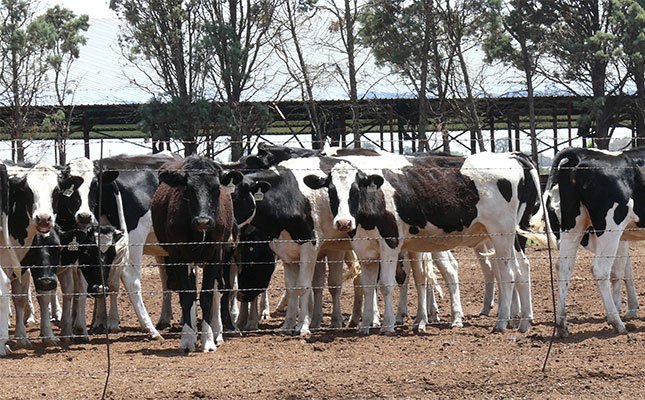
Gauteng’s battle against foot-and-mouth disease has entered what provincial authorities describe as its ‘most decisive phase’, with a scaled-up vaccination programme launched on 26 February as the number of confirmed cases continues to rise.
– ADVERTISEMENT –
Addressing farmers and the media at the Gauteng Provincial Legislature today, Gauteng MEC for Agriculture and Rural Development Vuyiswa Ramokgopa said the province now has 228 confirmed foot-and-mouth disease (FMD) cases, up from 173 at the end of January.
“Since the outbreak began, 297 413 animals have been affected across communal, dairy, and commercial farming operations,” she said.
To date, 268 315 vaccine doses have been administered and 128 925 animals have been slaughtered under controlled conditions at designated facilities as part of containment efforts.
“These numbers tell a story. They reflect the scale of the challenge, but they also demonstrate the scale, intensity, and discipline of our response,” Ramokgopa added.
She stressed that the rise in confirmed cases does not indicate runaway spread.
“Let me be clear: the increase in confirmed cases is the result of intensified surveillance and active case finding. It does not indicate uncontrolled spread. Every [farm with confirmed cases] is under quarantine and strict veterinary supervision,” she explained.
The outbreak remains concentrated in three state veterinary areas: Germiston (150 cases), Randfontein (55), and the City of Tshwane (23 active cases). Of the total, 75 cases involve communal farms, 17 dairy farms, 10 feedlots and 119 commercial farms, highlighting what Ramokgopa described as a ‘whole-of-sector response’.
Who gets the 70 000 doses?
One of the key questions raised during the media briefing concerned the allocation of the 70 000 doses Gauteng received from the National Department of Agriculture’s one million-dose procurement from Argentina.
When asked whether priority would be given to communal farmers or large commercial producers, Ramokgopa replied that the rollout would not favour one category over another.
“Our approach is risk-based and data-driven,” she explained, adding that vaccination teams are being deployed across Randfontein, Germiston, and Tshwane. They will prioritise infected farms near buffalo populations, newly diagnosed outbreaks with active transmission, communal grazing areas, and dairy farms close to confirmed cases.
Ramokgopa emphasised that proximity to buffalo herds, which are known carriers of FMD but cannot be vaccinated, was a critical factor in determining priority areas.
Movement control and enforcement
Since January, Gauteng has operationalised its four-pillar rapid response strategy: contain, vaccinate, enforce, and communicate.
Under the provincial Animal Movement Control Framework, Ramokgopa said, “No animal movement is permitted without prior authorisation from the Gauteng Department of Agriculture and Rural Development. Compliance is not optional.”
Responding to questions about enforcement, she confirmed that a Joint Operations Committee has been established with the South African Police Service, Gauteng Community Safety, and municipal police departments. Roadblocks at key entry points and high-risk transit routes are being activated.
“Any violation of quarantine regulations or unauthorised animal movement will be met with decisive enforcement action. The success of our response depends on discipline, and compliance will be enforced without exception,” she warned.
Journalists also questioned how new cases are being traced and raised concerns from farmers about delays in receiving laboratory results.
Ramokgopa said tracing relies on a combination of self-reporting by farmers, on-farm inspections by state veterinarians, and input from extension officers stationed in affected communities. Intensified sampling has confirmed that the circulating strains are SAT1 and SAT2.
Risk to food prices and dairy markets
In response to a question about the potential inflationary impact of the outbreak, Ramokgopa conceded there is a risk to food prices. She noted that certain animal parts may not enter the food chain even after animals are cleared, which could affect protein supply to lower-income communities.
“Vaccination is our most powerful tool to reduce viral load, interrupt transmission, and stabilise the livestock economy,” she added.
Concerns were also raised about reports of dairy products being mislabelled as infected. While Ramokgopa did not confirm specific cases, she reiterated that dairy farms form a key focus area in the buffer zones, particularly around the Cullinan dairy belt, due to animal welfare and economic implications.
Disinformation and fraudulent vaccine sales
Another issue raised was reports that some individuals were allegedly demanding prepayment from desperate farmers to secure access to FMD vaccines.
Ramokgopa emphasised that vaccines are supplied solely through official state veterinary channels, adding that there is ‘no side shop’ where farmers can buy vaccines and stressing the need to combat disinformation through verified communication platforms.
She added that the province is finalising a live geo-mapped reporting platform to provide real-time data on vaccination progress and high-risk areas. A Gauteng FMD Updates WhatsApp channel has also been launched.
F-branding lifted
In a significant policy shift, Ramokgopa confirmed that the compulsory F-branding requirement has been lifted.
Instead, radio-frequency identification ear tags will be used to ensure traceability while protecting farmers from commercial stigma.
Closing the briefing, Ramokgopa sought to reassure the livestock industry: “Our rapid response plan is not theoretical. It is operational, measurable, and enforced.
“Through disciplined implementation, intergovernmental coordination, and farmer cooperation, Gauteng will stabilise and suppress this outbreak. We remain vigilant and firmly in control as we safeguard Gauteng’s agricultural economy.”


