Africa supplies raw materials to global fashion but captures minimal value. Here’s how the continent fits into and loses out in the global apparel supply chain.
Africa produces some of the world's most critical raw materials for the global fashion industry, yet captures only a fraction of the value generated from finished apparel. From Burkina Faso's cotton fields to Ethiopia's industrial parks, the continent is deeply embedded in global supply chains but rarely at the stages where margins are highest.
The Raw Material Advantage
West Africa accounts for a significant share of global cotton exports, with countries like Burkina Faso, Mali, and Benin acting as key suppliers to international textile markets. According to international trade data, over 90% of cotton produced in several African economies is exported in raw or semi-processed form.
This export structure creates a structural imbalance. While Africa supplies critical inputs, value addition occurs elsewhere primarily in Asia, where spinning, weaving, dyeing, and garment assembly are executed at industrial scale with integrated supply chains.
Manufacturing Without Ownership
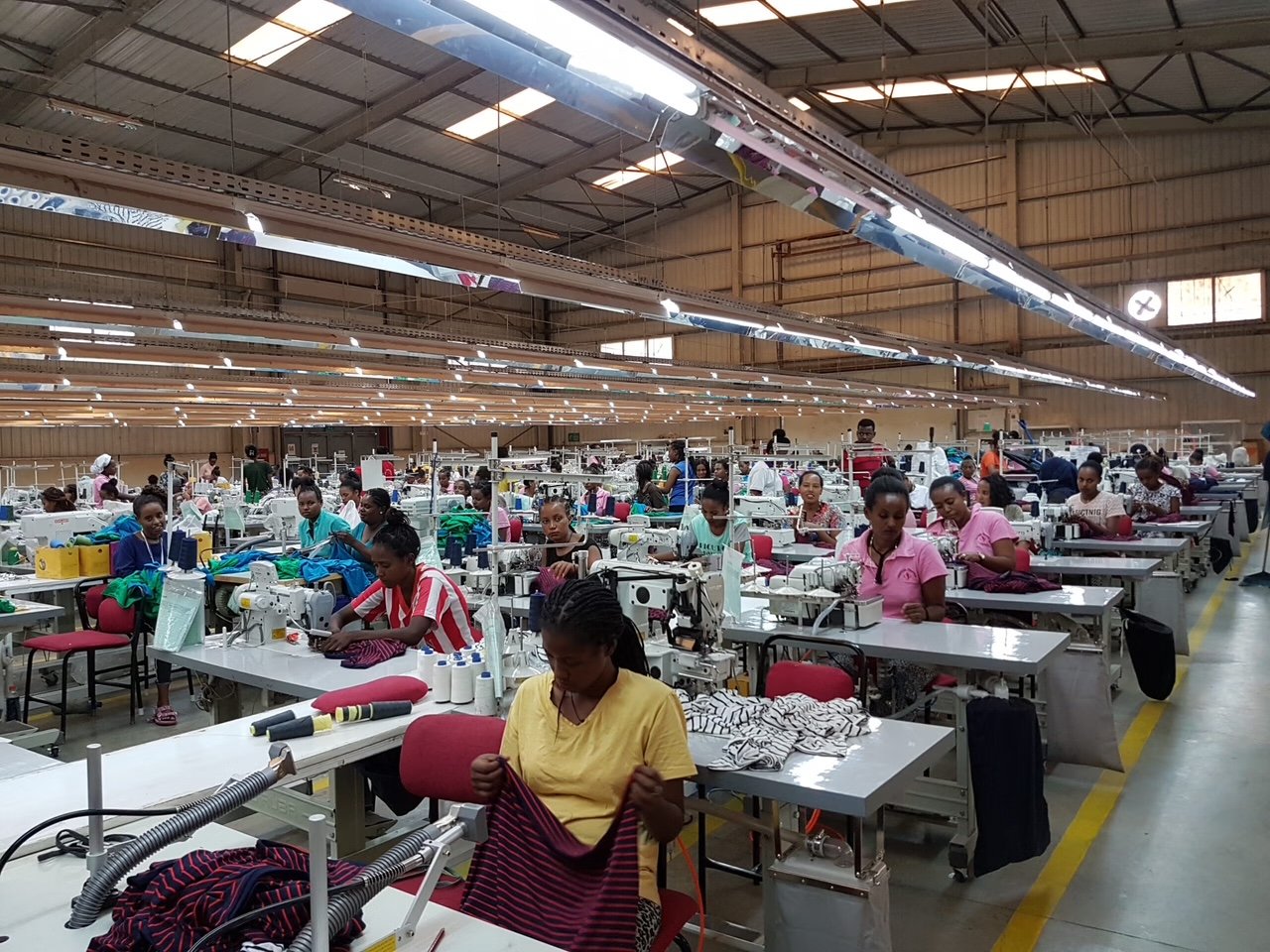
Countries such as Ethiopia and Madagascar have positioned themselves as low-cost manufacturing hubs, producing garments for global brands including H&M, Levi's, and Guess. Ethiopia's Hawassa Industrial Park, for example, was developed to attract foreign manufacturers through tax incentives, low labor costs, and export-oriented infrastructure.
However, much of this manufacturing operates under foreign ownership or contract production frameworks. This limits domestic capital formation, technological transfer, and the development of vertically integrated local industries.
The Value Chain Problem
The global apparel value chain is disproportionately weighted toward design, branding, and retail distribution segments that capture the highest margins. In contrast, raw material production and basic assembly remain the least profitable stages.
For African economies, this results in a persistent disconnect between production volume and value capture. A significant portion of the economic value generated from African raw materials is realized outside the continent, particularly in European and Asian markets where final branding and retail pricing power is concentrated.
Logistics and Infrastructure Constraints
Beyond production, logistics remains a defining constraint. Port inefficiencies, extended dwell times, and elevated shipping costs continue to erode competitiveness. Intra-African trade barriers further limit the development of regional supply chains that could otherwise support textile processing and garment manufacturing within the continent.
While the African Continental Free Trade Area (AfCFTA) provides a framework for integration, implementation remains uneven, and structural bottlenecks persist across transport, customs, and payment systems.
Structural Imbalance in Value Capture
The current configuration of the global apparel industry leaves African economies positioned at the lowest-margin segments of the value chain. While production volumes and export figures may suggest growth, the underlying structure reveals limited participation in higher-value activities such as textile processing, branding, and global distribution.
This imbalance is reinforced by infrastructure constraints, fragmented regional trade systems, and limited industrial capacity in upstream and midstream processing. As a result, the continent remains deeply integrated into global supply chains, but primarily as a source of raw inputs and low-cost labor.
Until value addition shifts closer to the point of origin, the economic gains from Africa's participation in the global fashion industry will continue to be disproportionately captured outside the continent.