
• Business
  • Markets
  • Politics
  • Crypto
  • Finance
  • Intelligence
    • Policy Intelligence
    • Security Intelligence
    • Economic Intelligence
    • Fashion Intelligence
  • Energy
  • Technology
  • Taxes
  • Creator Economy
  • Wealth Management
  • LBNN Blueprints
  • Business
  • Markets
  • Politics
  • Crypto
  • Finance
  • Intelligence
    • Policy Intelligence
    • Security Intelligence
    • Economic Intelligence
    • Fashion Intelligence
  • Energy
  • Technology
  • Taxes
  • Creator Economy
  • Wealth Management
  • LBNN Blueprints

Four industries emerge as largest employer of labour in Nigeria

Simon Osuji by Simon Osuji
October 24, 2024
in Business
0
Four industries emerge as largest employer of labour in Nigeria
0
SHARES
0
VIEWS
Share on FacebookShare on Twitter

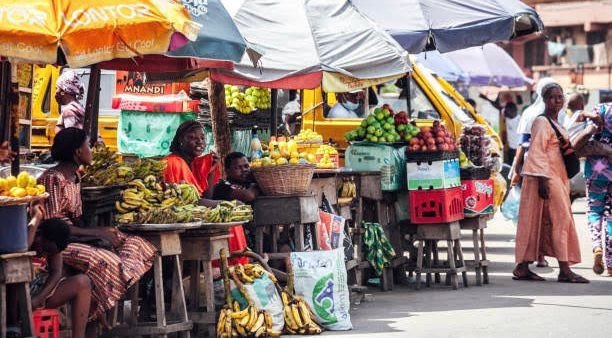
The informal sector includes businesses under the categories – Fashion, Crop production, mobile money, food and catering, handwork, artisans, and agro-processing. According to the report, the sector contributes to 50% of household income in Nigeria, 90% of all jobs, 80% of employment in the agricultural sector and is a source of jobs for 90% of females.

Nigerian informal economy

Nigerians from the informal sector were sampled from three locations in the northern part of the country – Abuja, Kaduna and Kano states, while the southern states sampled included Lagos, Oyo and Ogun states.

According to a UNDP report, over 80% of all employment in Africa and 85% in Sub-Saharan Africa is informal. Poverty remains one of the most significant trends driving the expansion of informal enterprises and workers. According to the National Bureau of Statistics, (NBS) over 100 million Nigerians are multi-dimensionally poor, and about 43.7 million women are living in extreme poverty.

The influence of the informal sector in Nigeria’s employment figures was felt as the unemployment rate dropped to 4% in 2023. as reported by the NBS. During the period, there was a concomitant 76% rise in employment.

Four major sectors from the report emerged as the top industries with the highest contribution to employed labour in Nigeria and they include:

Related posts

Top Ten Shiba Inu’s Largest Holders in 2026: Full Breakdown

Top Ten Shiba Inu’s Largest Holders in 2026: Full Breakdown

February 28, 2026
New or used? A practical guide to second hand farm equipment

New or used? A practical guide to second hand farm equipment

February 28, 2026

Agriculture

Agriculture remains the backbone of Nigeria’s economy, providing employment opportunities for over 36% of the labour force and supporting 70% of Nigerian households.

Agriculture in Nigeria [TheGuardianNigeria]

Despite its significance, the agricultural sector is largely dominated by smallholder farmers, who make up about 80% of the agricultural labour force and contribute an impressive 90% of the country’s agricultural output.

The Creative Industry

The Nigerian creative sector includes categories like food and catering services, fashion and beauty, lifestyle, skit making and hospitality.

The sector has hugely impacted employment contributing about 4 million jobs, making it the second-largest employer of labor in the country. However, despite its growth, the sector’s urban activities remain largely unregulated, leaving workers in informal employment situations without defined benefits or protections.

Digital Sector

This includes the numerous tech start-ups springing up across the country and the mobile POS vendors.

The digital sector currently ranks as the third-largest employer of labour and demonstrates rapid growth in GDP contribution and job creation.

POS machine (image used for illustration) [BNG]

With over 2.5 million jobs created in the last decade, the sector continues to expand, driven by the increasing demand for tech-enabled roles. The financial industry has been one of the most influenced by the digital sector with over 1.3 million registered retail merchants’ point-of-sale devices (POS) agents existing. This emergence of a rapidly growing and highly competitive fintech ecosystem has created a unique opportunity for young people.

Artisans

Nigeria’s construction industry with a market size estimated between $26.9 billion and $40.3 billion, is a significant contributor to the economy. It also accounts for approximately 9% of the country’s GDP. However, there is an urgent need for a substantial increase in the workforce, requiring an additional 10 million skilled artisans in the next 20 years to bridge the gap and address the housing shortage.

The shortage has led to a heavy reliance on foreign artisans such as masons, iron benders, tillers, plaster of Paris installers, electricians, AC repairers, interior decorators, carpenters, and plumbers from neighboring countries.


Source link

Previous Post

Raytheon to Produce Latest TOW Anti-Armor Missile for US Army

Next Post

Extending Social Protection Coverage to Workers in the Informal Economy

Next Post
Extending Social Protection Coverage to Workers in the Informal Economy

Extending Social Protection Coverage to Workers in the Informal Economy

Leave a Reply Cancel reply

Your email address will not be published. Required fields are marked *

RECOMMENDED NEWS

Google’s former security leads raise $13M to fight email threats before they reach you

Google’s former security leads raise $13M to fight email threats before they reach you

6 months ago
After 20 years of dormancy, Nigeria’s P.H refinery marks 6 months of continuous operation

After 20 years of dormancy, Nigeria’s P.H refinery marks 6 months of continuous operation

11 months ago
What is Johannesburg Water doing to end the water crisis

What is Johannesburg Water doing to end the water crisis

1 year ago
US Navy Medical Unit Conducts First Weapons, Threat Recognition Training

US Navy Medical Unit Conducts First Weapons, Threat Recognition Training

2 years ago

POPULAR NEWS

  • Ghana to build three oil refineries, five petrochemical plants in energy sector overhaul

    Ghana to build three oil refineries, five petrochemical plants in energy sector overhaul

    0 shares
    Share 0 Tweet 0
  • Mahama attends Liberia’s 178th independence anniversary

    0 shares
    Share 0 Tweet 0
  • The world’s top 10 most valuable car brands in 2025

    0 shares
    Share 0 Tweet 0
  • Top 10 African countries with the highest GDP per capita in 2025

    0 shares
    Share 0 Tweet 0
  • Global ranking of Top 5 smartphone brands in Q3, 2024

    0 shares
    Share 0 Tweet 0

Get strategic intelligence you won’t find anywhere else. Subscribe to the Limitless Beliefs Newsletter for monthly insights on overlooked business opportunities across Africa.

Subscription Form

© 2026 LBNN – All rights reserved.

Privacy Policy | About Us | Contact

Tiktok Youtube Telegram Instagram Linkedin X-twitter
No Result
View All Result
  • Home
  • Business
  • Politics
  • Markets
  • Crypto
  • Economics
    • Manufacturing
    • Real Estate
    • Infrastructure
  • Finance
  • Energy
  • Creator Economy
  • Wealth Management
  • Taxes
  • Telecoms
  • Military & Defense
  • Careers
  • Technology
  • Artificial Intelligence
  • Investigative journalism
  • Art & Culture
  • LBNN Blueprints
  • Quizzes
    • Enneagram quiz
  • Fashion Intelligence

© 2023 LBNN - All rights reserved.