


While the agriculture sector faced significant headwinds in 2025, the year has ended on a strong note. Dawie Maree, head of agriculture information and marketing at FNB, talks about navigating challenges and opportunities in 2026.


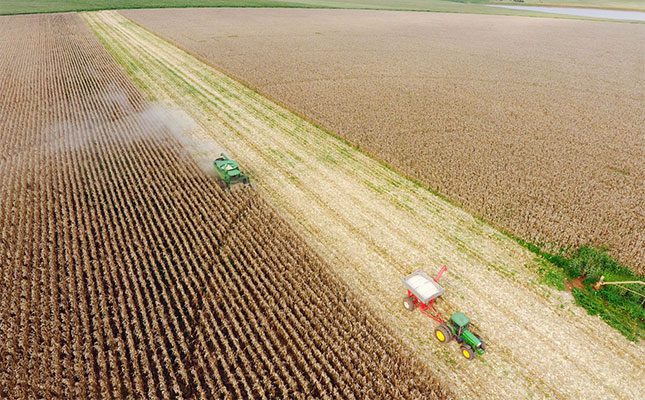
Photo: Supplied
How did the agricultural economy perform over the past year?
Overall, 2025 wasn’t a bad year for the agriculture sector, although performance differed markedly across industries. Export-oriented industries delivered strong results, supported by solid global demand and improved seasonal conditions, while the livestock industry continued to struggle under the weight of ongoing foot-and-mouth disease (FMD) outbreaks.
Margins in the grain industry softened slightly compared with the past three years as lower commodity prices filtered through, although this was partly offset by a moderation in input cost inflation compared with the sharp increases seen in previous years.
From a financial perspective, the sector’s viability remained relatively sound. The long-awaited interest rate cut in the latter part of 2025 provided meaningful relief to farmers, improving cash flow and balance sheet resilience, and this was reflected in an improvement in bad debt provisions.
Confidence indicators reinforced this positive picture. The Agbiz IDC Agribusiness Confidence Index (ACI) rose by five points to 67 in the fourth quarter of 2025, well above the neutral level of 50. Eight of the 10 ACI subindices improved, with capital investment standing out after jumping seven points to 74, signalling renewed appetite for investment amid a more favourable interest rate outlook and expectations of further cuts in 2026.
Agricultural GDP growth was particularly impressive through the first three quarters of 2025, with strong quarter-on-quarter expansion in the first quarter followed by continued, albeit slower, growth in the second and third quarters.
On a year-on-year (y/y) basis, the agriculture, forestry, and fisheries industry surged by 49,9%, driven by field crops, horticulture, and animal products. However, FMD limited gains in livestock, preventing an even stronger performance.
Despite trade uncertainty created by US tariffs, agricultural exports increased by 10% y/y to US$11,7 billion (around R196 billion) over the first three quarters of 2025. Africa remained South Africa’s largest market, followed by Asia, the Middle East, the EU, and the Americas.
While exports to the US faced challenges due to a 30% tariff on certain products, other markets absorbed higher volumes and helped sustain overall export growth.
Confidence was further reflected in a sharp recovery in machinery sales following a weak 2024, with tractor and combine harvester sales rising strongly, pointing to improved production expectations and better seasonal conditions.
What are the prospects for 2026?
The outlook again appears mixed across subsectors. The livestock industry is likely to remain under pressure as FMD continues to disrupt production and market access. While the announcement of a national vaccination programme was welcomed, implementation is expected to be erratic and administratively challenging, limiting the short-term benefits.
Export-oriented industries are likely to enjoy another relatively good season, although a stronger rand against the dollar could temper income growth.
The grain industry may experience a more muted year, given persistently low prices locally and internationally, combined with the prospect of another good production season following this year’s second-largest harvest on record.
Input costs appear broadly flat, which should help farmers manage margins more effectively. Importantly, prospects for further interest rate cuts remain favourable, providing ongoing support to the sector.
The La Niña climate pattern has delivered widespread rainfall across Southern Africa, improving soil moisture and underpinning planting conditions. Seasonal prospects for the 2025/26 production year look excellent, pointing to another solid harvest and a positive contribution to agricultural GDP over the medium term.
What do you see as the biggest challenges and opportunities for the sector in 2026?
Disease management remains one of the most significant challenges, particularly the continued presence of FMD and other livestock diseases.
Ongoing failures in rural infrastructure also pose a serious risk, as poor roads, unreliable electricity supply, and logistical bottlenecks increase costs and disrupt supply chains. Added to this is the prospect of heightened political noise linked to local elections, which can weigh on investor confidence and delay policy clarity.
At the same time, opportunities remain compelling. Producing food and fibre for a growing global population will always underpin demand for agricultural output. Lower interest rates create space for farmers to consolidate operations, improve efficiency, or expand where conditions allow.
Rising confidence indices, growing exports, accelerating machinery sales, and favourable rainfall all suggest that agriculture is well positioned for sustained growth in 2026.
While disease control and global trade dynamics remain key risks, the sector’s fundamentals are strong, and the overall outlook is positive.
What should farmers prioritise in the new year to ensure long-term financial viability?
Farmers should focus on what they can control within their own operations. External noise will remain a feature of the operating environment, but productivity, efficiency, and sound management practices are firmly within every farmer’s control.
Careful cost management is essential, although it is equally important not to cut corners on critical inputs that underpin long-term sustainability, as false savings can ultimately lead to financial distress.
Investment decisions should prioritise productive assets that enhance efficiency and output rather than items that don’t generate returns. Where possible, diversification can help spread risk within agricultural enterprises and, where appropriate, beyond the farm gate.
Finally, succession planning should not be postponed. It is never too early to plan for the future, particularly in family farming businesses, where clear succession strategies are vital for continuity, stability, and long-term financial health.



