

A small recovery in local sugar production coincided with a steep drop in the international sugar price, and slow government response to the volatile international market resulted in record sugar imports during 2025.

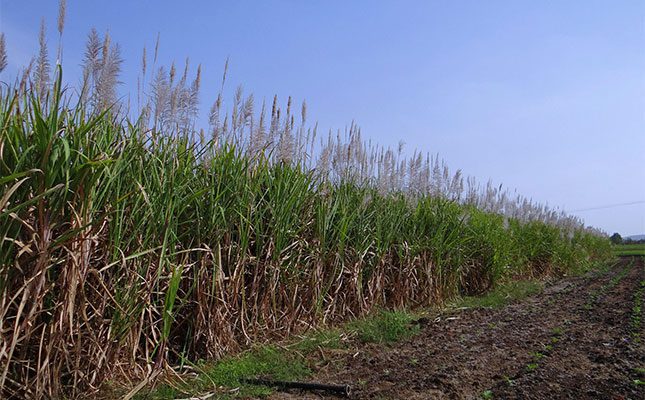
Photo: Wikimedia Commons
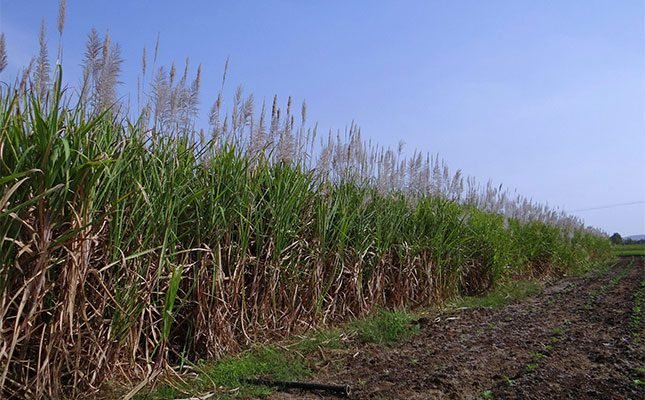
South Africa’s cane growers are expected to harvest almost 5% more sugar cane than in the 2024/25 season. The 17,2 million ton harvest is expected to yield 1,94 million tons of refined sugar, which is about 3,7% more than the previous season’s outcome.
Dr Thomas Funke, CEO of SA Canegrowers, told Farmer’s Weekly: “This year saw some relief from the drier growing conditions of the previous season, with some excessive rainfall in isolated areas interfering with early-season harvests. The 2025/26 harvest is a rebound from the previous year, when drier growing conditions led to a reduction in the sugar cane harvested and the refined sugar and molasses yield.”
Production from small-scale growers, however, showed a marginal decline in cane deliveries despite an increase in hectares planted, Mthokozisi Ndlovu, spokesperson for the South African Farmers’ Development Association, told Farmer’s Weekly.
“Small-scale growers delivered 2,11 million tons of sugar cane during the 2023/24 season, compared with 2,09 million tons in the 2024/’25 season. This decrease occurred despite the expansion of the area under cane by 2 142ha, rising from 45 978ha in 2023/24 to 48 120ha in 2024/25. Ongoing industry challenges, including low sugar prices, import pressures, rising costs of fertiliser, fuel, and agricultural inputs, affected productivity,” Ndlovu said.
“The sugar industry has suffered significant financial losses this season as a result of delays in gazetting higher-triggered import tariffs. The latest tariff schedule indicates that a further duty increase is imminent, driven by the continued decline in world sugar prices. If current market conditions persist, the risk of additional financial deterioration remains high.”
According to industry data, sugar imports between January and October 2025 jumped by 135%, up from 69 338 tons in 2024 to 163 021 tons in the same period in 2015.
“The import tariff was adjusted multiple times in 2025 to reflect the volatile nature of the global sugar price,” Funke said. “The global sugar price has declined dramatically this year to the lowest level since 2020. The import tariff on sugar was adjusted in August and now again in December.”
Funke pointed out that by the end of September, cumulative imports for the year stood on 153 344 tons.
“Just between September and October, 10 000 tons entered the country. This shows that even though the sugar import tariff was adjusted earlier in the year, it did not restrict the flow of imported sugar,” Funke said.
Ndlovu added: “It is critically important to implement a higher sugar import tariff as soon as possible because delays directly harm the sustainability of the local sugar industry and the rural economy it supports. The South African sugar industry relies heavily on the domestic market for viability. When world prices fall and tariffs are not adjusted quickly, cheap imported sugar floods the South African market, displacing locally produced sugar and leading to lost sales that cannot be easily recovered, even after tariffs are eventually raised.
“When imports dominate the local market, surplus domestic sugar is pushed into export markets where prices are significantly lower. This forces producers to export at a loss, further eroding industry profitability. Small-scale farmers are the most vulnerable to price shocks. Delaying implementation of the higher sugar import tariff protection disproportionately affects them and undermines transformation objectives.”
Sustained pressure on growers
Marinus Neethling, production director at Komati Fruit, which produces 1 550ha of sugar cane in the Malelane area of Mpumalanga, told Farmer’s Weekly that market conditions will increasingly pressure growers to farm more efficiently.
“The only options you have when dealing with pressures such as cheap imports and dropping prices is to increase the tonnage you harvest, as well as your levels of mechanisation. We are grateful for the abundant rain we’ve had early in the season; it’s above normal for this time of year, but overall we will have to mechanise more, farm better and harvest higher tonnages.”
Neethling said growers keep a close eye on the oil price and exchange rate, as transport to sugar mills is a significant cost component in growers’ input costs.
Competition reprieve
In August, Parks Tau, Minister of Trade, Industry and Competition, gazetted regulations that would allow the various players in the food value chain to negotiate collectively for the purchase of mainly locally produced sugar without violating the Competition Act.
“The exemption from competition regulations will allow industry-wide discussions without fear of falling foul of the Competition Act for a period of five years,” Higgins Mdluli, chairman of SA Canegrowers, said in a statement. “Such discussions include working towards commitments from local commercial users of sugar and retailers to use and stock mainly locally produced sugar.”
SA Canegrowers added that the exemptions would ease talks on diversification of the industry, including plans to use surplus sugar cane for the manufacturing of sustainable aircraft fuel.
At the end of September, the industry launched its Home Sweet Home campaign, calling on South Africans to buy locally produced sugar instead of cheap imports. Funke said that up until mid-December, more than 77 000 individuals pledged to only buy South African sugar.
At the launch of the campaign, SA Canegrowers said in a statement that 90 000t of sugar were imported in June and July alone, which led to a loss of R684 million to the local industry.
Master plan
Ndlovu said the implementation of the Sugar Master Plan was is still on track and it was anticipated that the full signing of its second phase would be feasible early in 2026. The second phase focuses on alternative products such as sustainable aviation fuel and mechanisms to stabilise and protect the local market. One of these steps is the block exemptions from the Competition Act that Tau gazetted in August.


