

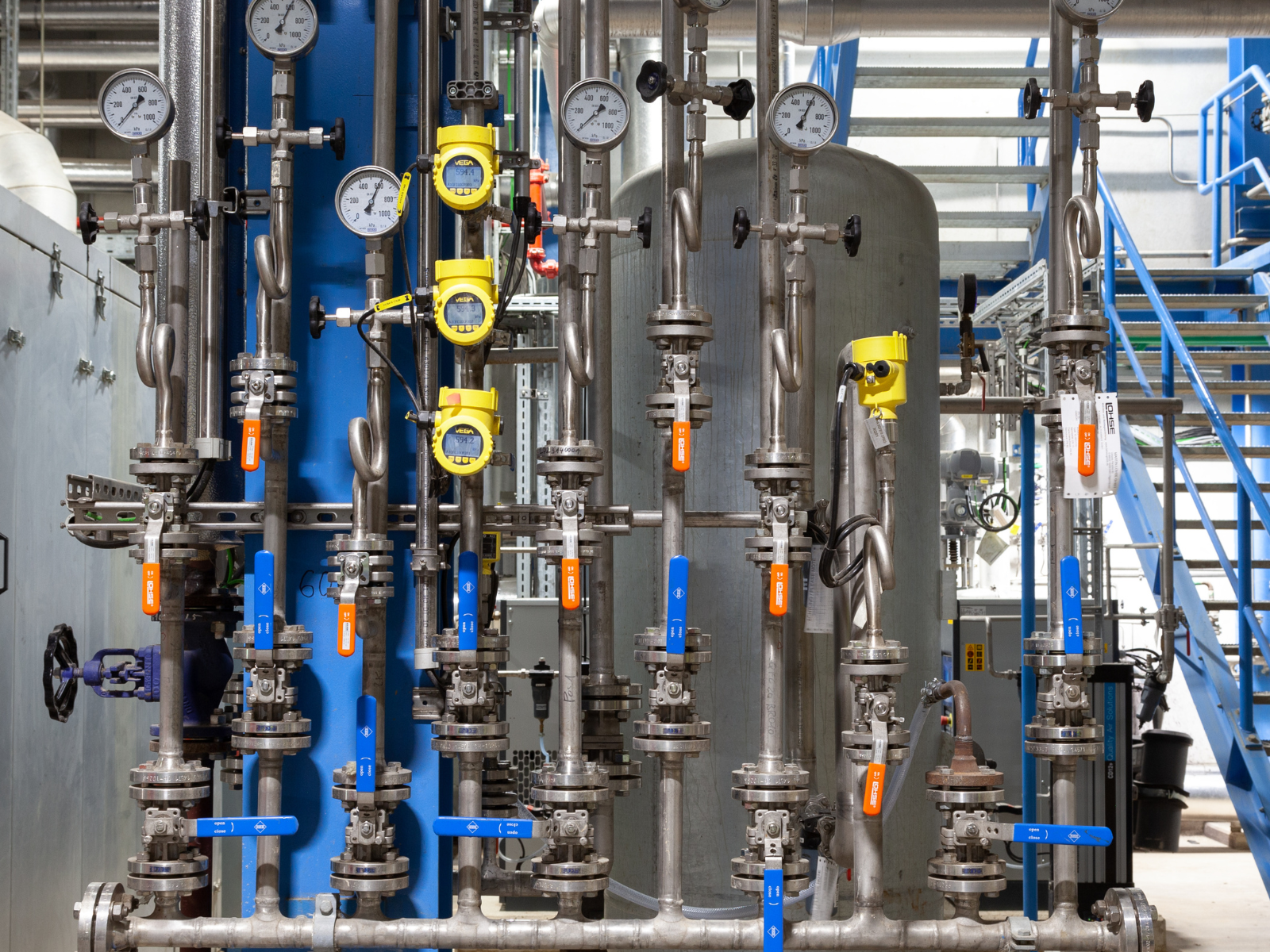
Complex water systems depend on accurate measurement to function effectively. One reliable method is differential pressure sensing, which measures the difference in pressure between two specific points within the system.
Differential pressure sensors employ a metallic measuring cell at their core, which provides several significant advantages. These sensors are particularly well-suited for applications that require managing high static pressures and detecting minimal pressure differences.
They are generally compact, and the design allows for efficient integration into complex systems, while their robust construction ensures high measurement accuracy. This makes them a reliable choice for environments where precision is paramount, and even the slightest pressure variations must be captured and monitored.
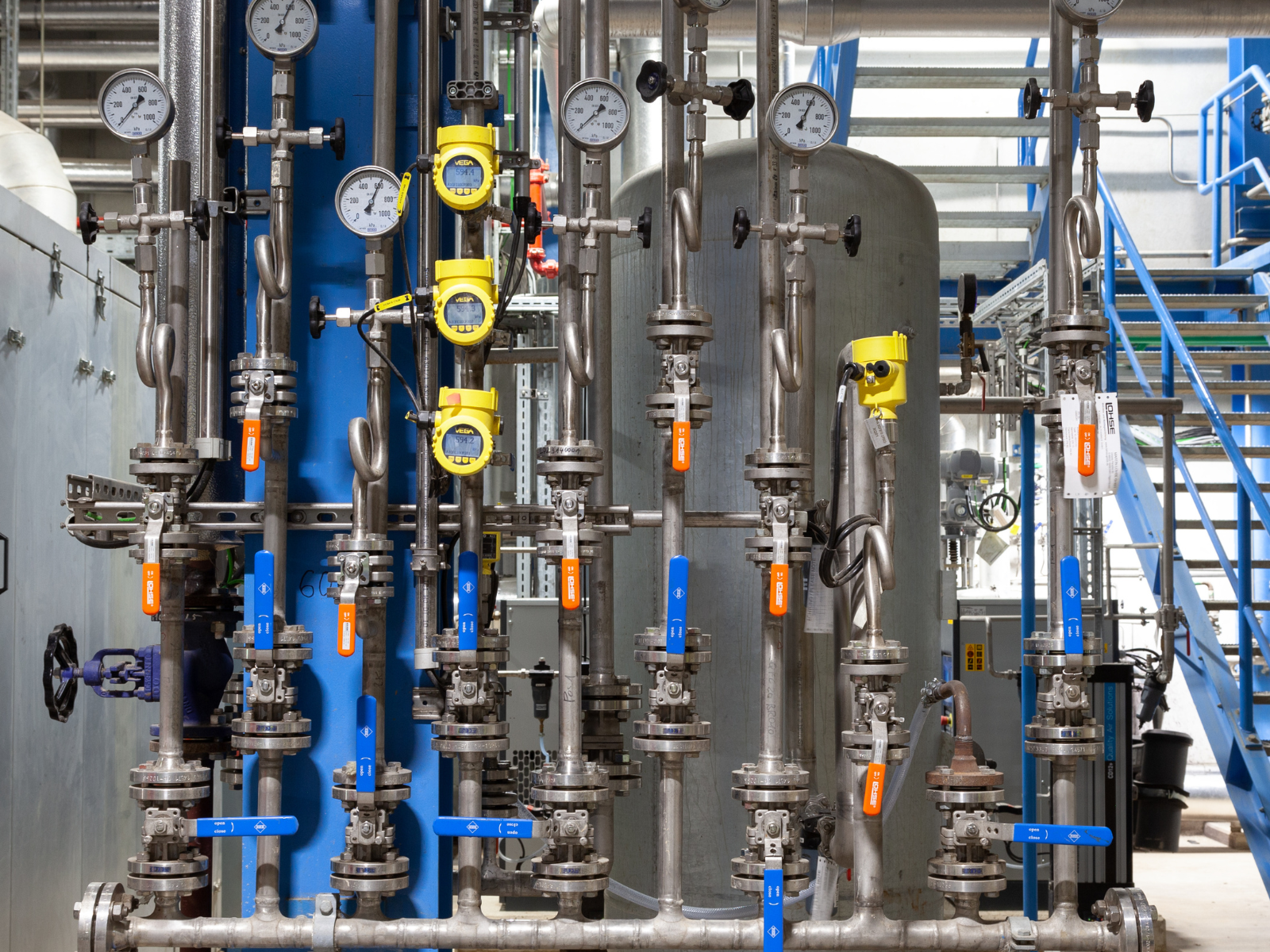
Differential pressure systems measure pressure differences between two points
A notable example within this category is the use of chemical seals, such as the CSB (both high and low pressure points) and CSS (one-sided, either low or high-pressure) variants. Chemical seals are designed for universal application across scenarios involving large pressure differences and high static pressures. Their design typically incorporates an integrated overload diaphragm, which significantly enhances operational reliability by protecting the sensor from damage due to unexpected pressure surges. This feature is especially valuable in industrial settings where process conditions can vary unpredictably and equipment durability is essential for continuous operation.



The VEGADIF 85 is a differential pressure sensor that combines universal applicability with high operational dependability and integrated overload protection. It ensures consistent performance even in the harshest conditions, safeguarding both the measuring cell and the integrity of the readings produced.
Electronic differential pressure measurement has introduced a new level of versatility and ease of use in modern process industries. These systems typically employ two pressure transmitters, often from the VEGABAR PRO series, which are combined to form a comprehensive measurement system. One of the primary advantages of electronic differential pressure systems is their immunity to environmental factors, such as fluctuations in ambient temperature, which can otherwise compromise measurement accuracy. Additionally, electronic systems offer flexibility, allowing for the use of various sensor configurations and measuring cells tailored to specific applications.
The installation, assembly, and ongoing maintenance of electronic differential pressure systems are notably straightforward, minimising operational downtime and reducing overall life cycle costs. In practical terms, these systems can be used for applications such as monitoring pressure overlays in vessels, where sensors from the VEGABAR 80 series are seamlessly combined. This modularity allows users to address challenges such as large temperature differences, vacuum conditions, abrasive media and the need for cost-efficient solutions with minimal installation complexity.
Visit www.vega.com/en-za for more products and information.


