

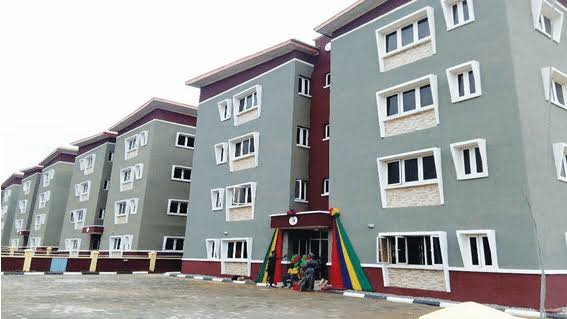
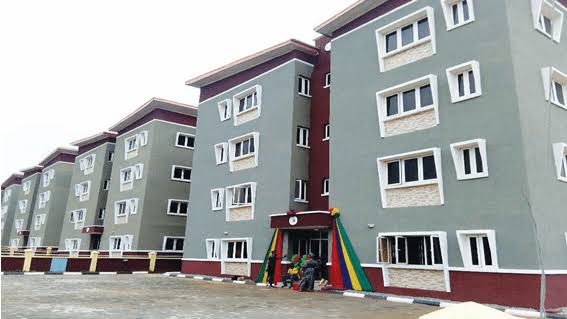

Nigeria’s housing crisis has lingered for decades. Now, the Federal Government is attempting a reset.
In Abuja, officials from the Ministry of Housing and Urban Development sat down with delegates from UN-Habitat to fine-tune a partnership that goes beyond promises. At the heart of the talks is a fresh push for affordable housing in Nigeria and a deliberate shift toward climate-smart cities development.
From what we gathered, this is not another ceremonial handshake. The focus is delivery.
Rethinking Housing Beyond Bricks and Mortar
Nigeria’s housing deficit, officially put at 14.9 million units, tells only half the story. The deeper issue is access. Many families cannot afford mortgage rates. Construction costs remain high. Urban planning is weak.
Minister of Housing and Urban Development, Ahmed Dangiwa, made it clear that the government wants housing that responds to climate threats and social realities.
He said the partnership recognises “the numerous opportunities presented by working with UN-Habitat,” especially in unlocking international climate finance for housing projects.
That statement matters.
Access to climate finance for developing countries has often been slow and bureaucratic. If Nigeria can leverage global funds for climate resilient urban planning in Africa, it changes the scale of what is possible.
Climate Pressure Is Forcing a New Game Plan
Floods in coastal cities. Desert encroachment in the north. Rising temperatures nationwide. These are no longer abstract warnings.
Our findings show that climate responsive housing initiatives are moving from theory to necessity. Homes built today must withstand extreme weather tomorrow.
Compared to traditional block-and-cement estates of the past, climate-smart housing integrates better drainage systems, energy-efficient materials, and smarter land use planning. It may cost more upfront, but lifecycle savings are higher. Maintenance drops. Energy bills fall. Environmental impact shrinks.
That is the technical shift Nigeria is now chasing.
Social Housing and Women at the Centre
There is also a social angle many overlook.
Women and displaced families often carry the heaviest burden during climate disasters. By pushing women-focused housing initiatives and social housing programmes for vulnerable groups, the ministry is trying to correct that imbalance.
Dangiwa acknowledged that women are disproportionately affected by climate change and conflict-induced displacement. That recognition is long overdue.
If executed well, affordable housing public private partnership models could reduce pressure on government funding alone. But execution will be everything. We have seen strong policies fail at the implementation stage before.
Support for Displaced Communities
Nigeria also used the meeting to appreciate the European Union-backed Sustainable Integrated Development Programme for Internally Displaced Persons in Nigeria (SIDPIN).
Through SIDPIN, housing support has reached communities in Adamawa, Kano and Borno states. These are areas still rebuilding from insurgency and displacement.
The intervention goes beyond shelter. It promotes community integration and supports rebuilding livelihoods. That aligns with the broader goal of post-conflict reconstruction housing projects in Nigeria.
In technical terms, rebuilding after conflict requires more than replacing damaged walls. It demands infrastructure upgrades, access roads, drainage systems and social amenities. Without those, housing estates quickly decline.
Urban Policy Under Review
Another quiet but important development is the ongoing review of the National Urban Development Policy.
Urban growth in Nigeria has outpaced regulation for years. Informal settlements continue to expand. Planning approvals are slow. Infrastructure struggles to keep up.
Reforming planning laws alongside housing delivery creates a stronger foundation. It also reduces the risk of building today’s slums tomorrow.
The partnership with UN-Habitat offers technical support in that direction. Global best practices can help Nigeria avoid costly planning mistakes.
A Defining Moment for Nigeria’s Housing Drive
This collaboration arrives at a defining time.
The pressure to deliver affordable housing in Nigeria is intense. Young families are priced out of major cities. Rent consumes rising shares of income. Construction inflation remains stubborn.
By linking housing to climate resilience, international funding, and social inclusion, the government is broadening the conversation.
But ambition alone will not close a 14.9 million-unit gap.
What will matter is speed, transparency, and accountability. If climate responsive housing initiatives move from paper to construction sites, this could mark a turning point.
For now, the ball is in the government’s court.



