

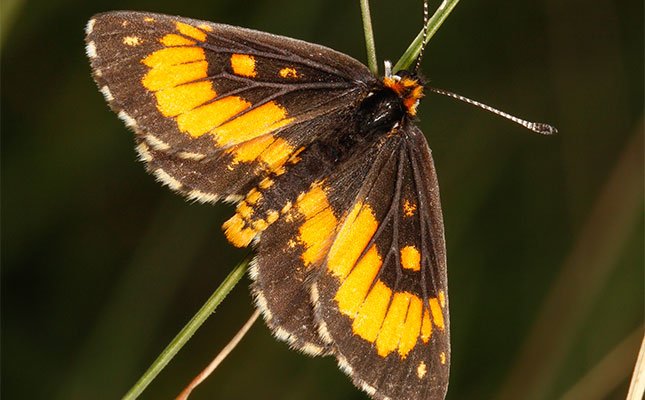
The demarcation of South Africa’s first butterfly conservation servitude on a property owned by Letsitele farmer Gustav Van Veijeren marks a positive step for rare species protection. He and Etienne Terblanche, a Lepidopterists’ Society of Africa custodian, spoke to Farmer’s Weekly.


– ADVERTISEMENT –
With sustainability and the protection of natural resources high on the conversation agenda, it is heartening to know that conservationists and farmers alike are thinking differently about species protection.
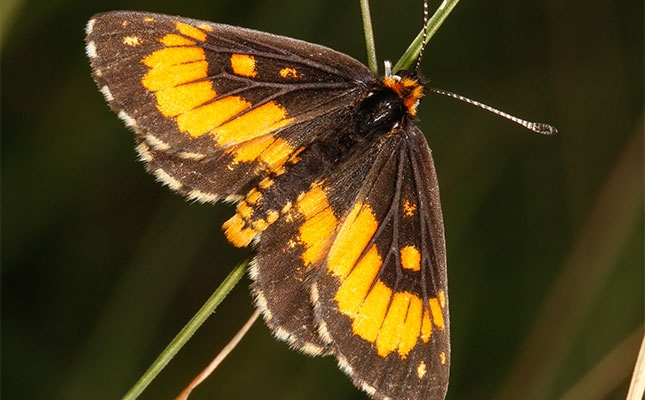
A unique and critically endangered butterfly, the Wolkberg Zulu (Alaena Margaritacea), which occurs in Limpopo, has been given a chance of survival thanks to the foresight of landowner Gustav van Veijeren, the Lepidopterists’ Society of Africa (LepSoc Africa), and the Endangered Wildlife Trust (EWT).
The species was discovered in the Wolkberg area a century ago. Today, the continued existence of this rare butterfly is under threat from forestry, invasive species, agricultural development, and other human activity.
The degradation of the vegetation type known as woodbush granite grassland at the two localities where the Wolkberg Zulu occurs has made its chances of survival slim. The butterfly also has a very unusual diet: the larvae feed on hard rock lichens, which are difficult to digest and sensitive to disturbance.
With its extremely restricted habitat and specialised feeding habits, the species is highly vulnerable to environmental changes. Although it is difficult to count, numbers appear to have declined from occasional hundreds on a good day to between 20 and 30 at present.
Conservation through collaboration
Adding to these challenges, both localities where the butterfly is endemic fall outside officially protected areas, according to LepSoc Africa. This has now changed with the registration of a servitude at the sites where it occurs.
The servitude was made possible through LepSoc Africa’s Custodians of Rare and Endangered Lepidoptera project, which has been running since 2011 and allocates members to act as custodians of threatened species. Etienne Terblanche is responsible for the Wolkberg Zulu.
Terblanche says Van Veijeren played a significant role in making this landmark conservation effort possible.
The legal agreement with Van Veijeren allows for the permanent protection of two pieces of land for conservation while enabling him to retain ownership of said land. It also prohibits certain land uses to preserve biodiversity, specifically the Wolkberg Zulu.
Terblanche explains that state regulations on servitudes made it possible to conserve the butterfly on private land. The process was relatively cumbersome, taking more than a year to draft and finalise the contract to everyone’s satisfaction.
He adds that the servitude also protects a critically endangered vegetation type, woodbush granite grassland, of which only 1% to 10% remains on Earth.
“The support of a landowner is crucial for any such project to succeed,” says Terblanche.
“Since this is the first butterfly servitude in the country, the foundation has been laid for other farmers to follow so that more of these can be created. We hope more landowners will follow in Van Veijeren’s pioneering and big-hearted footsteps.”
Van Veijeren says that when he bought the land, he wasn’t aware of the butterfly’s existence. “Because it only appears for a short period, from December to January, it’s easy to miss,” he explains.
His family immediately agreed to work with Terblanche and LepSoc Africa.
“We all grew up with a love of nature, and as a farmer, I know how dependent we are on the environment. We support LepSoc Africa’s work, and I commend them for their dedication to protecting even the smallest species in our area.”
Threats to the butterfly
According to Terblanche, the Wolkberg Zulu faces several threats:
- Plantations near the sites, which use large amounts of water. The butterfly relies on moisture on hard rock lichens to feed.
- Bush encroachment, where shrubs and forbs overtake the grassland. The management plan outlines how this can be prevented or remedied.
- Agricultural development and crop protection products used to control pests.
- Mining activities.
Next steps
With legal protection now in place, Terblanche outlines the actions needed to safeguard the Wolkberg Zulu:
- Further research: manage the habitat and study interactions between the butterfly and its environment, including optimum moisture levels.
- Clearing bush encroachment: remove shrubs in areas where the butterfly previously occurred, collaborating with stakeholders such as the Department of Forestry, Fisheries and the Environment.
- Managing thorn trees: ensure thorn species with aggressive growth do not overtake the butterfly’s breeding areas.
- Expanding protected areas: identify additional suitable sites to extend conservation coverage.
- Finding new colonies: search for other populations of the species.
Terblanche stresses that the Wolkberg Zulu’s extraordinary rareness and uniqueness demand protection.
“Individuals live in a colony, which means they remain in a particular small area year after year, season after season.”
What farmers can do
Van Veijeren advises other farmers in the area to watch for the butterfly from December to January in rocky areas on their farms.
“If you don’t know where to look, it’s easy to miss these small butterflies. But it’s not just about them; there are also many other small animals, such as swallows and skinks, as well as grasses that are endemic to our area. We all have a responsibility to protect this inheritance.”
Farmers who’d like to become involved can contact LepSoc Africa or the EWT.
For more information, visit lepsocafrica.org, or ewt.org.



