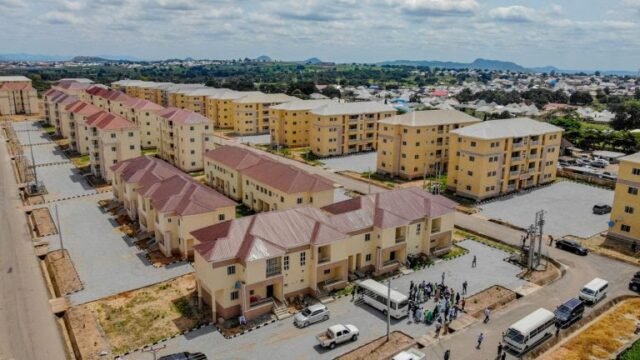


A legal expert and estate surveyor, Olusola Enitan, has asserted that an overwhelming majority of Nigerians are effectively barred from participating in the housing market due to a fundamentally flawed economic structure.
During a recent appearance on TVC’s Breakfast show, Enitan drew attention to the stark contrast between the exorbitant cost of housing in commercial powerhouses such as Lagos and Abuja, and the actual income levels of the Nigerian workforce.
Enitan highlighted the predicament of young graduates who face rental costs as high as ₦9 million for modest two-bedroom apartments in upscale areas like Lekki. He contended that the issue extends beyond simply blaming landlords for excessive pricing, pointing to a core problem of suppressed demand.
“It is practically impossible for a student to acquire housing; housing schemes simply don’t cater to them. Demand suppression reveals the difficulties in accessing the necessary funding to realize homeownership dreams… Finance is truly the Achilles’ heel of the housing sector. Without adequate financial resources, it’s a non-starter,” Enitan stated.
Enitan dissected the current mortgage system, illustrating why the formal housing market remains out of reach for the average Nigerian.
**Related Stories:**
* Thugs Demolish Homes in Lagos, Demand N25m from Landlords
* NDLEA Enlists Ondo Community Leaders, Youths in Fight to End Cannabis Farming
* FG Celebrates Nigeria’s Permanent Seat in AU Bank
He emphasized that even the most nominally “affordable” housing options on the market now command prices starting around N15 million.
“By the time you factor in the mortgage process, you’re looking at monthly interest payments of approximately 1 million naira. To afford 1 million naira in interest… you would need to earn between 3 million and 4 million naira. What percentage of Nigerians earn that kind of monthly income? Less than 1%,” he explained.
Enitan concluded by strongly condemning the existing situation: “This essentially means that 99% of Nigerians are excluded from the housing market, and that’s the fundamental reality.”
In his evaluation of the nation’s real estate sector, the valuer also criticized the scale of government intervention, contrasting current housing “start plans” with the rapid population growth in Nigeria’s major cities. With Lagos expanding at a rate of 3.7% annually and Abuja at 4.4%, the supply of housing is nowhere near adequate to meet the existing need.
“With housing start plans around 15,000 for Lagos State, there is simply no way to close the gap. With a growth rate and a monthly deficit of approximately 400,000 housing units, how can a plan for only 15,000 be considered sufficient? No, we are not addressing the problem effectively,” he added.