This year, galleries are announcing their astounding exhibitions lined up for 2024. From innovations, exploring forms and styles of expression to documenting histories, here’s a look at a number of standout exhibitions you should see and look forward to in the first month of the year.
Leo Robinson, Ivan Forde, Richard Ayodeji Ikhide: Polymythologies
Tiwani Contemporary, London
18 January – 17 February 2024

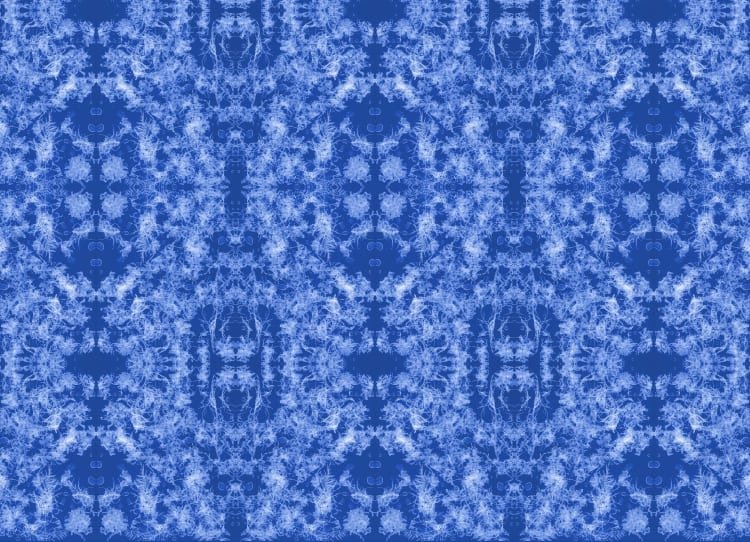
Image courtesy of Tiwani Contemporary.
Tiwani Contemporary opens its 2024 London programme with the group exhibition Polymythologies, featuring Leo Robinson, Ivan Forde and Richard Ayodeji Ikhide. Polymythologies introduces how each artist draws upon a wide constellation of references to a globalized collective unconscious, classical allegory, science fiction, and gaming to explore and ground their aesthetic propositions and engagement to create new mythologies, that foreground excavations, migrations, liminal experiences, and transformations that collapse historical and futuristic perspectives to speculate or speak directly to present conditions.
Leo Robinson will present works that elaborate his research and interest in an array of ancient and modern visual treatises, cosmological drawings and artefacts that observe ritual and the cultivation of belief and knowledge systems. Richard Ayodeji Ikhide eschews conventional paper dimensions, and transposes his inimitable drawing style to an irregular and variably shaped format of mid and large-scale watercolors mimicking ancient Sumerian cuneiform clay tablets or amulets. The works vignette the exploits of a society of demi-gods in progress; initiates learning and performing rites to move onto the next stages of their own personal prowess and evolution.
Ivan Forde’s commitment to the literary genre of the epic narrative depicts the journey and encounters of the Hero protagonist, guided by the poetics of celestial skies and primordial waters. The scenarios Forde’s epic serializes, appear as two and three dimensional compositions: hanging silk and Kozo paper scrolls, painting on linen, mural, moving image and expanded notions of photography are proposed for this exhibition as site-specific sculpture; a tailor made paper suit, is performed and activated in London as a wearable cyanotype, that transforms over the period of the exhibition as a long exposure portrait of London skies.
Young Contemporaries
Rele Gallery, Lagos
7 January – 10 February 2024

Image courtesy of Rele Gallery.
The Rele Arts Foundation announces the return of its annual Young Contemporaries programme which identifies, mentors and promotes early-career artists from Africa, by equipping them with tools and resources for artistic development. This year’s edition presents new projects by four artists —Praise Sanni-Adeniyi, David Ngaji, Atinuke Macaulay-Layinde and Salomon Moneyang — working across traditional two-dimensional mediums in engaging complex issues from shifting states of being and the nature of existence to family dynamics and relationships. The Young Contemporaries 2024 project presents the audience with a collection of distinct and exciting perspectives on contemporary issues while also drawing attention to the exciting and critical work being done by a younger generation of contemporary African artists.
Zanele Muholi: Eye Me
San Francisco Museum of Modern Art (SFMOMA), San Francisco, United States
18 Jan 2024 – 11 Aug 2024
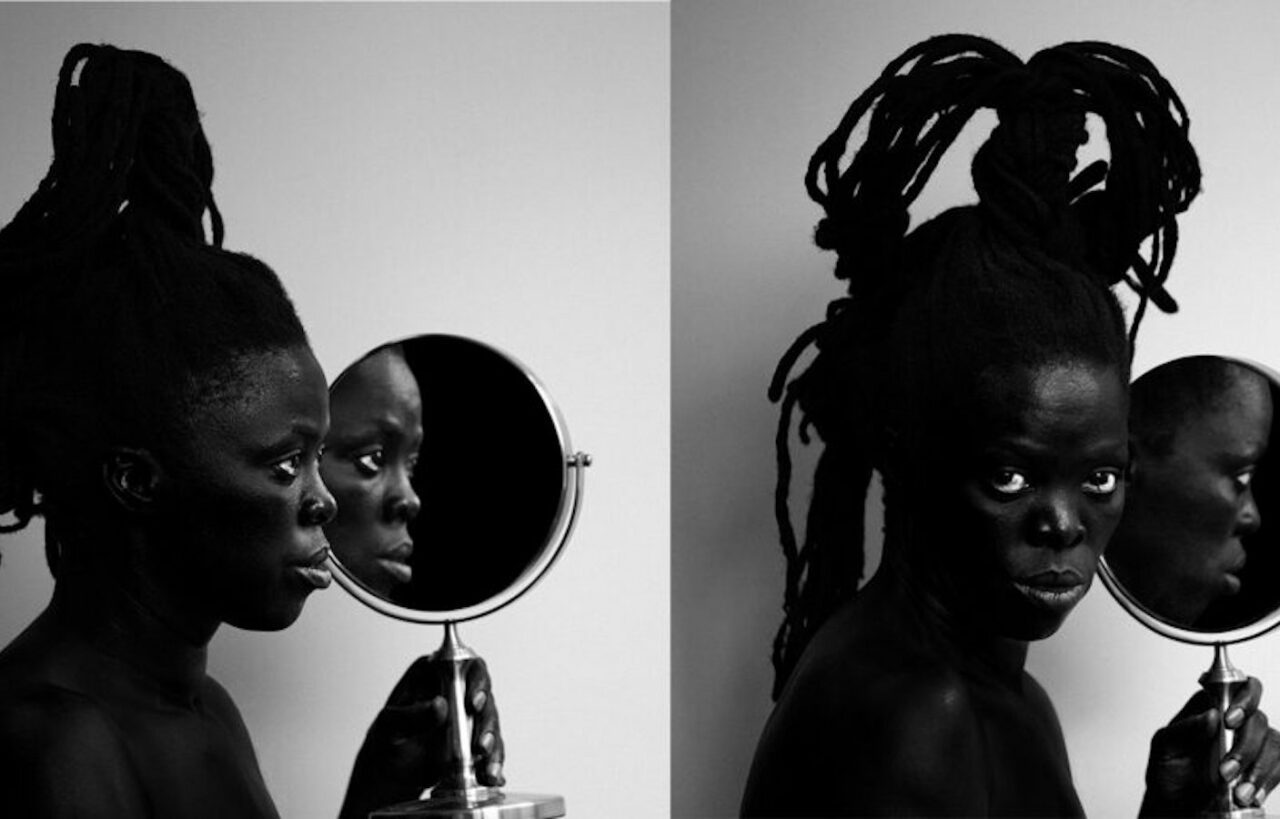
Image courtesy of Zanele Muholi.
The San Francisco Museum of Modern Art (SFMOMA) announces the first major exhibition on the West Coast of South African artist Zanele Muholi. Zanele Muholi: Eye Me brings together over 100 of the artist’s photographs from 2002 to the present alongside paintings, sculpture and video. The exhibition provides an opportunity for audiences to experience Muholi’s expansive artistic project to celebrate and make visible their Black queer community in post-Apartheid South Africa.
A self-described visual activist, Zanele Muholi (b. 1972, Umlazi, South Africa) uses the camera to explore issues of gender identity, representation, and race. Often photographing their own body or members of their LGBTQ+ community in South Africa, Muholi calls attention to the trauma and violence enacted on queer people while celebrating their beauty and resilience. Activism is central to Muholi’s artistic practice, from their early work contending with the dangers of being queer in South Africa to their more recent work embracing their own blackness and gender expression. This exhibition brings together photographs from 2002 to the present alongside the artist’s latest explorations in painting and sculpture. The first major exhibition of Muholi’s work on the West Coast, it provides the opportunity for Bay Area audiences to experience the full range of the artist’s expansive project.
ReThinking Collections
Royal Museum for Central Africa, Tervuren, Belgium
19 Jan 2024 – 29 Sep 2024
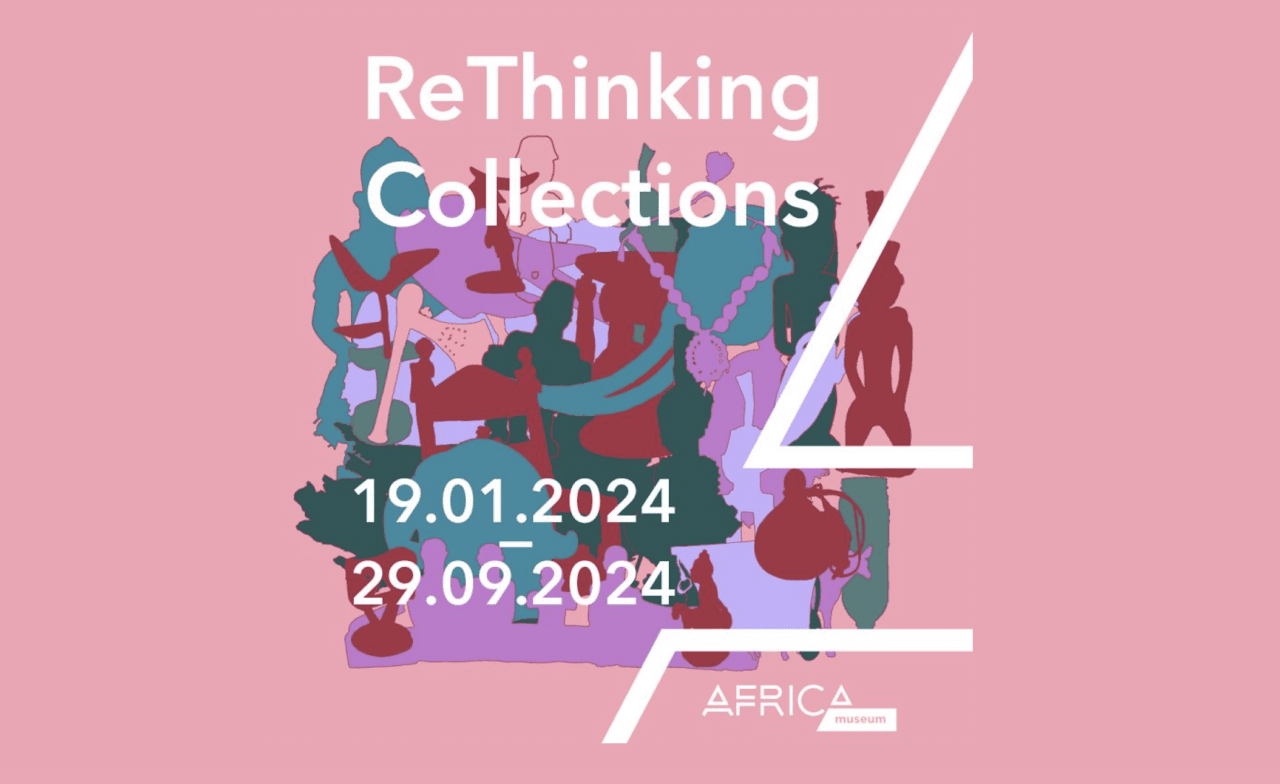
ReThinking Collections is a new temporary exhibition devoted to provenance research. Most of the collections in the Royal Museum for Central Africa were acquired during the colonial era, in what is now the DR Congo. Provenance research and the related topic of restitution are attracting more attention in current social and political debate. But how do we trace the origin of collections? What new insights can be gleaned from these provenances? And what should become of such collections, within and beyond museum walls?
The exhibition attempts to shed light on the many approaches to provenance research and the current issues surrounding it. It presents varied and occasionally surprising pieces, and addresses questions related to this contested heritage. The exhibition also explores new perspectives and future approaches to colonial collections.
David Goldblatt & Kiluanji Kia Henda
Goodman Gallery, Johannesburg
25 January – 06 March 2024

This year, Goodman Gallery, Johannesburg presents a duo exhibition presenting artists David Goldblatt and Kiluanji Kia Henda.
David Goldblatt (1930 – 2018) was born in Randfontein, a small mining town outside of Johannesburg, South Africa. Through his lens, South African he chronicled the people, structures and landscapes of his country from 1948, through the rise of Afrikaner Nationalism, the apartheid regime and into the democratic era – until his death in June, 2018. In particular, Goldblatt documented the people, landscapes and industry of the Witwatersrand, the resource-rich area in which he grew up and lived, where the local economy was based chiefly on mining. In general, Goldblatt’s subject matter spanned the whole of the country geographically and politically from sweeping landscapes of the Karoo desert, to the arduous commutes of migrant black workers, forced to live in racially segregated areas. His broadest series, which spans six decades of photography, examines how South Africans have expressed their values through the structures, physical and ideological, that they have built.
Kiluanji Kia Henda (b. 1979, Luanda, Angola) employs a surprising sense of humour in his work, which often homes in on themes of identity, politics, and perceptions of post-colonialism and modernism in Africa. Kia Henda brings a critical edge to his multidisciplinary practice, which incorporates photography, video, and performance. Informed by a background surrounded by photography enthusiasts, Kia Henda’s conceptual-based work has further been sharpened by exposure to music, avant-garde theatre, and collaborations with a collective of emerging artists in Luanda’s art scene. Much of Kia Henda’s work draws on history through the appropriation and manipulation of public spaces and structures, and the different representations that form part of collective memory, in order to produce complex, yet powerful imagery.