

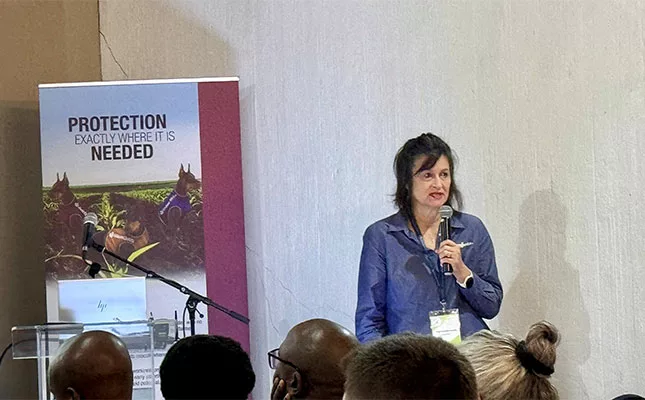
Dr Driekie Fourie, Syngenta Seedcare product biologist for Africa and the Middle East, told the recent 25th Nematological Society of Southern Africa Symposium near Malelane, Mpumalanga, that nematicides have come a long way since their introduction in the mid-19th century.


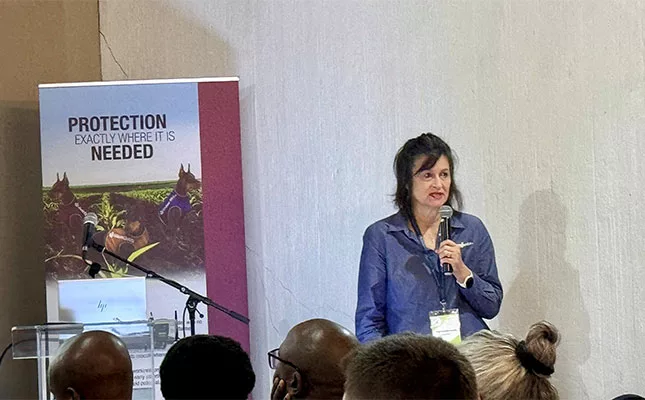
“As the demand for safer, more sustainable chemical products for the control of nematodes increased, the industry focus shifted towards targeted, low-toxicity selective compounds, including seed treatments,” she explained.
Nematodes, which belong to the phylum Nematoda of the kingdom Animalia, are the most abundant multicellular animals on Earth. Most free-living microbe-feeding nematodes and plant-infecting species range from 0,5mm to 2mm in length and can generally only be observed in detail under a microscope.
Different species of plant-parasitic nematodes can inhabit and infect most living parts of plants, including flower buds, stems, leaves, and roots. Many species occur in the top 30cm of soil, although some might occur at deeper levels.
Plant-parasitic nematodes can compromise plant health, as plant roots are often infected and subsequently cannot optimally take up water and nutrients. Thus, infections negatively affect plant growth and yield and, in the end, sustainable crop production and food security.
Fourie said older-generation nematicides were withdrawn because of concerns about the effect they might have on human health, the environment, and groundwater.
However, in conjunction with other methods, chemicals are needed to control nematodes at farm level. The new-generation chemicals have a more favourable profile, superior efficacy, and are also compatible with biologicals.
“Biologicals include biostimulants, biofungicides, bionematicides, and bioinsecticides,” Fourie explained.
She added that modern products were often compatible with each other, and using them in combination was aimed at protecting the soil while still controlling pests.
“A combination of nematode management strategies is the only way to protect crops,” she said.
In the past two decades, new-generation chemical nematicides and biologicals, such as microbial formulations and natural compounds, have gained traction.
“These align more closely with sustainable agricultural practices and stricter regulatory standards. Modern nematicide development now prioritises environmental safety, target specificity, and compatibility with integrated pest management practices,” Fourie explained.
She noted that seed treatments were often underestimated as an option for nematode control: “The agronomic benefits of seed treatments include more effective seedling establishment and early plant growth. They protect the vulnerable seedling against seed- and soil-borne diseases and pests. They also increase the seedling’s ability to withstand external abiotic and biotic stresses.”
Fourie also pointed out that by using seed treatments, farmers could reduce their impact on the environment: “When planting treated seed, [fewer] chemicals are used in comparison with broad-acre pesticide applications.”
Seed treatments also provide targeted protection against soil-borne disease complexes: “Seed treatments are effective against a broad range of insects, nematodes, diseases, and abiotic stresses during the early season, but also later in the season.”
Looking ahead, Fourie noted that advances in molecular biology, soil microbiome research, and nematode diagnostics were accelerating the design of next-generation products.
“Precision agriculture is set to guide future nematicide use by combining chemical, biological, and cultural tools,” she explained.
For more information email Prof Driekie Fourie at [email protected].


