
Ethiopia is in the grip of a civil war between federal government forces and the Fano, a loose alliance of ethnic-based militia in the Amhara region.
This conflict in Ethiopia’s north erupted less than a year after the devastating Tigray war, which ended in 2022.


The Amhara are one of Ethiopia’s largest ethnic groups and played a leading role in the making of the Ethiopian state. Amharic serves as the country’s working language.
The region shares a border with Tigray. During the Tigray war, which began in 2020, various Fano groups allied with the federal government. A peace deal in 2022 to stop the war sidelined the Amhara militia groups, which strained relations with the government.
The Amhara conflict began as minor sporadic clashes with government forces in April 2023. This rapidly escalated into a full-scale insurgency by August when Fano forces launched a full blown attack in an effort to control the region’s major cities.
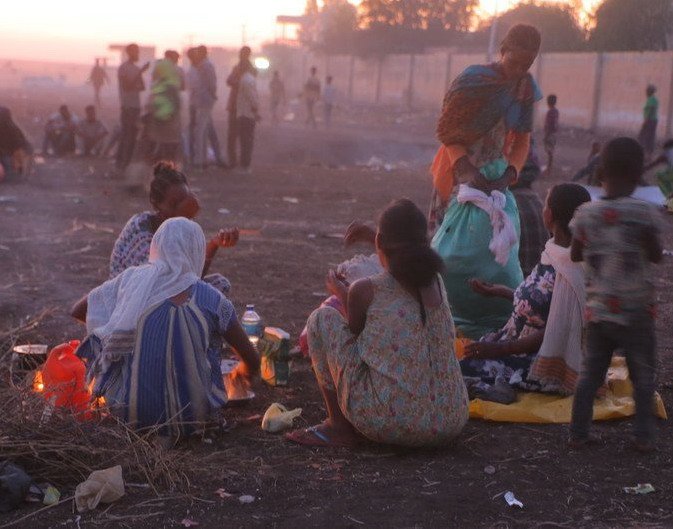
The violence since has displaced more than 100,000 people and left 4.7 million children out of school.
The death toll from the conflict is piling up. In March 2025, the government claimed to have killed more than 300 Fano fighters.
We are researchers studying ethnic nationalism, social movements and insurgency in Ethiopia, with a focus on Amhara. Based on our studies into the Fano and ongoing research on Ethiopia’s political reforms process, we see three factors behind the escalating armed struggle in Amhara:
a mismanaged political transition from 2018 to 2020
fallout from the 2020-2022 Tigray war
a hollow pursuit of peace.
Mismanaged transition
Between 1991 and 2018, Ethiopia was governed by the Ethiopian People’s Revolutionary Democratic Front. This was a powerful coalition of four ethno-national parties representing Tigray, Amhara, Oromo, and Southern nations, nationalities and peoples.
Faced with a political crisis and growing unrest in 2014 following opposition clampdowns and arbitrary arrests, the coalition needed a change. Two members – the Oromo People’s Democratic Organisation and the Amhara National Democratic Movement – joined forces to oust the Tigray People’s Liberation Front from its dominant position. They did this by leveraging youth-led protests, which played out between 2015 and 2018.
Following the resignation of prime minister Hailemariam Desalegn in 2018, the two parties orchestrated Abiy Ahmed’s ascent to power.
For a moment, the relationship between the Oromo and Amhara wings of the coalition looked like one of equals. This didn’t last. In December 2019, Abiy merged the coalition into a single party, the Prosperity Party.
The Oromo wing positioned itself as the core of the Prosperity Party. It monopolised key political positions and economic opportunities. This included asserting control over the capital, Addis Ababa.
Amhara’s outspoken leaders who criticised this dominance faced removal, arrest or exile. The region’s president, Ambachew Mekonnen, was assassinated in June 2019.
Harassment, kidnappings for ransom and arrests were daily experiences for Amhara region residents trying to enter Addis Ababa. Members of the Amhara community also faced ethnic-based violence in various parts of the country.
These incidents provoked anti-government protests throughout Amhara.
Fallout from the Tigray war
A peace agreement signed in 2022 in South Africa ended a brutal two-year war in Tigray and neighbouring regions. However, it deepened the sense of marginalisation in Amhara.
While the agreement silenced the guns in Tigray, it sidelined Amhara constituencies by denying them representation in the talks despite the region being affected by the war. The agreement’s ambiguity regarding the fate of territories disputed between Amhara and Tigray, such as Welkait, further fuelled distrust.
The last nail in the coffin came in April 2023. The government decided to dismantle regional special forces. This was ostensibly aimed at consolidating the country’s fighting forces.
However, with unresolved territorial disputes and Oromo nationalist ambitions at the centre, disarming the Amhara Special Forces was interpreted as a move to weaken Amhara defences. Additionally, the more than 200,000-strong Tigray Defence Forces were left intact. This contributed to a sense of vulnerability in neighbouring Amhara.
Public protests led to clashes with government forces. These protests morphed into an insurgency by the Fano in the following months.
The insurgency has expanded its reach and has public support across the region and in the diaspora.
The Fano insurgency is taking place in a territory three times the size of Tigray, stretching the federal army.
Various Fano factions cite objectives that range from the protection of Amhara interests to constitutional change and overthrowing the federal government.
However, the insurgency is still in its infancy. It lacks unified leadership, a cohesive structure or a chain of command. Factional divisions and competition persist, and there are no clear objectives.
Hollow pursuit of peace
The government seems determined to crush the Fano insurgency by force. A state of emergency was declared in August 2023 for six months. It was later extended.
While the state of emergency in Amhara officially ended in June 2024, some restrictions remain in place. This includes de facto curfews in major cities, including the capital Bahir Dar.
The counterinsurgency relies on heavy Ethiopian National Defence Forces deployments and drone strikes.
On the other hand, the government has indicated its openness to peace talks. However, it has avoided meaningful confidence-building measures, such as releasing Amhara political prisoners. A Peace Council established to mediate between the Fano and the government has proven ineffective. Its spokesperson has noted federal reluctance to negotiate.
The government’s peace efforts have centred on repeated calls for insurgents to surrender. There are reports that the government wants to talk to different Fano factions separately in the hope of fragmenting the insurgency further. Secret talks with one faction of the Fano are an indication of this strategy.
The path forward
The government’s violent counterinsurgency and occasional peace overtures are unlikely to succeed. The Prosperity Party is not popular in Amhara. A meaningful peace process – rather than calls for surrender or attempts to co-opt factions – is essential. This should start with measures like releasing arbitrarily detained Amhara activists, journalists, academics and politicians.
The federal government also needs to be part of a multi-stakeholder negotiation involving all Fano factions, civil society, community leaders, and domestic and diaspora-based opposition groups. Unbiased mediation from regional and international players may also be useful. Past attempts at piecemeal talks with factions of armed groups – be it in Tigray or Oromia – have prolonged insurgencies or fostered new ones. Only a comprehensive, all-inclusive dialogue can address the crisis.
Such a process needs to address deep-seated structural challenges. This includes ensuring the protection of Amhara minorities living in other regions, and the region’s representation within local, regional and federal government structures. Territorial disputes need to be addressed through a process rooted in historical context, constitutional principles and the consent of the people concerned.
Ultimately, enduring peace requires ending the cycle of ethnic dominance in Ethiopia’s federal governance arrangement.
Written by Amanuel Tesfaye, Doctoral Researcher, University of Helsinki, and Yared Debebe, Assistant Professor, Political Science, University of Gondar.
Republished with permission from The Conversation. The original article can be found here.