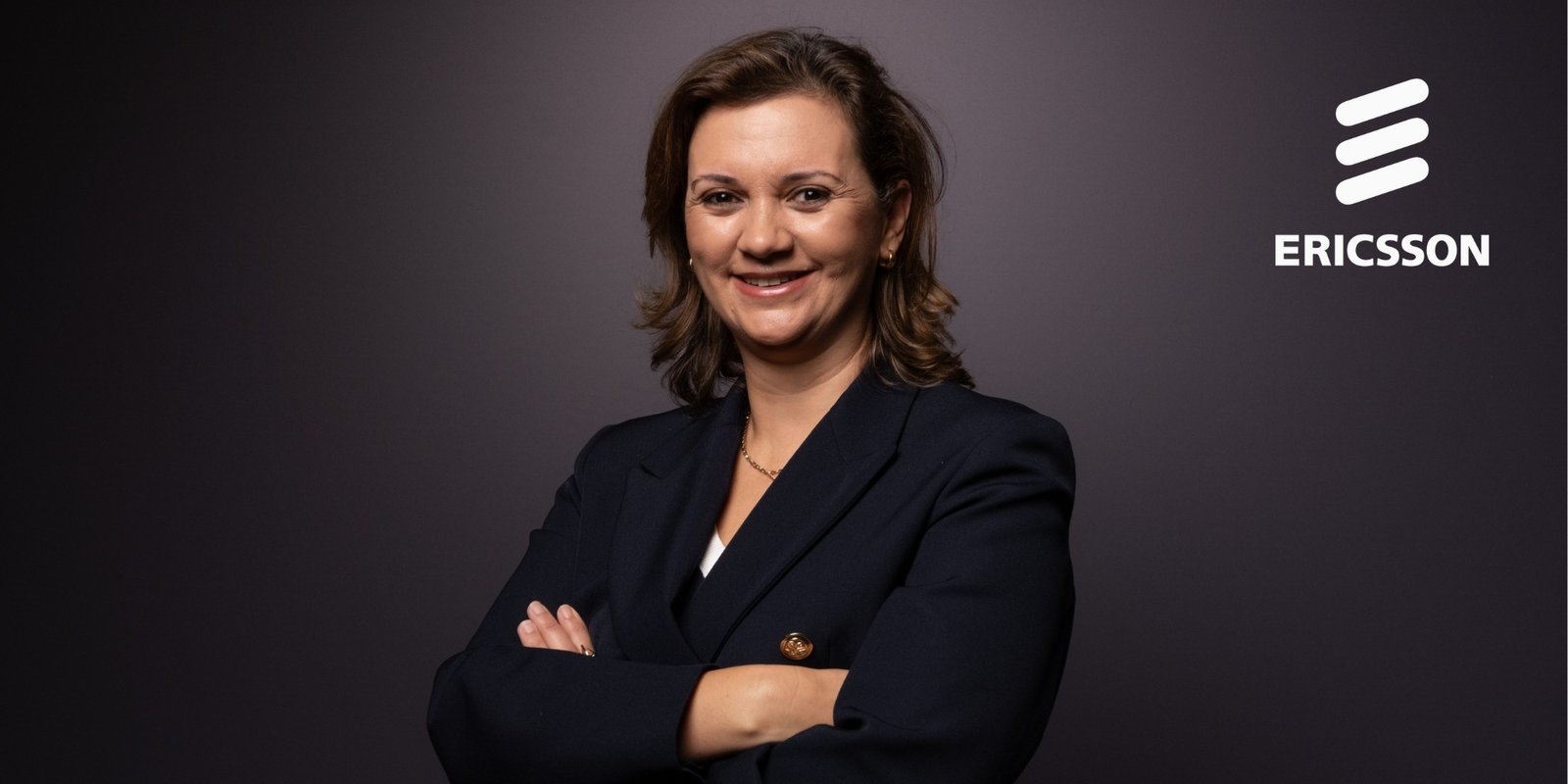
At MWC Kigali 2025, Ericsson showcased the theme ‘What’s Next for Africa,’ a vision through which a digitally empowered Africa can be achieved as a result of strong innovation, connectivity, and collaboration. Central to realizing this is the West and Southern Africa region, a unique market that is helping Ericsson anticipate and design the roadmap for future industries, societies, and geographies.
In an exclusive interview with Telecom Review Africa, Majda Lahlou Kassi, Vice President and Head of Ericsson West and Southern Africa, spotlighted the company’s regional leadership, focus on localized innovation, and overarching strategy for sustainable and inclusive digital transformation.
The ‘Create’ segment at MWC Kigali encompasses designing the blueprint for future industries and societies. How is Ericsson helping stakeholders across West and Southern Africa anticipate and build for that future?
From an Ericsson standpoint, we believe that connectivity is the lifeline for all future innovation and the digital economy, including AI and cloud. These technologies are only successful if we have reliable, scalable, and trusted connectivity.
So, how do we make sure that these technologies are relevant to all industries across Africa? We always try to look at the bigger picture. One major sector that consistently stands out across the industry for us is mining. Africa sits on 30% of global mining resources and we see mining as an area where reliable connectivity enhances the productivity, health, and safety of the miners. We’re actively engaging with the broader ecosystem and the mining industry, working to understand their specific needs and exploring how we can collaborate to identify segments where 5G can help drive productivity gains and enhance safety.
The other element that we’re looking at is port management. From Northern to Southern Africa, there is 26,000 kilometers of coastline and over 100 ports. We’re exploring how we can digitalize the entire value chain within ports, while also ensuring we deliver trusted, reliable connectivity across all operations.
We truly believe that 5G serves as a platform for innovation, enabling us to open up network capabilities and invite the wider ecosystem to innovate on top of it. This creates valuable opportunities for collaboration and partnership across multiple sectors. While CSPs remain our primary customers and partners in this journey, we’re also expanding our focus to include other segments, such as mining, ports, and public safety, as I mentioned, where 5G can unlock transformative impact.
Ericsson champions the idea that ICT standards should serve as development standards beyond basic interoperability. Can you elaborate on this approach?
Standards are very important for Ericsson, and we’ve been at the forefront of driving standards through 3GPP and the ITU, and now we’re also looking at standards for AI. This is an area where we see tremendous potential, not only in promoting open standards and interoperability, but also in creating economies of scale that make technology more accessible and affordable. In the African context, standardization plays a crucial role in harmonizing efforts across countries and industries, enabling consistency that drives down costs and broadens access to innovation.
Equally important, standards strengthen security. As we deploy increasingly complex technologies, new vulnerabilities inevitably arise. By embedding security standards into the design and architecture of our systems, we’re building more reliable and trusted networks that now serve as critical infrastructure not just for consumers, but also for governments and public authorities across the continent. We take a comprehensive, end-to-end approach to security. This includes offering security consultancy services to our clients and supporting them in assessing and strengthening every layer of their network security, not just in the areas where Ericsson operates, but across the entire value chain, ensuring holistic protection and long-term resilience.
Since taking on your role earlier this year, how have you been steering Ericsson’s efforts in West and Southern Africa to drive innovation, connectivity, and meaningful impact across the region?
One element that I really wanted to put at the center of our strategy is staying close to the realities of Africa, building deep, meaningful connections not only with our clients but also across the entire ecosystem. We’re committed to forming partnerships that go beyond traditional business, working alongside governments to understand local challenges and contribute through our expertise in capacity and capability building.
One area that is very important for us at Ericsson is developing skills for the future, not just within our own workforce, but across the broader ecosystem. Through multiple MoUs and partnerships with governments, we’re helping to nurture digital talent and strengthen national innovation capacity. Understanding the local context and building deep connections are key elements of our strategy that are very important to me.
On the innovation front, we take pride in bringing the latest technologies that are “fresh out of the oven” to Africa, some of which have even been developed in Africa, for Africa. These platforms are designed with built-in efficiency to help operators manage rapid data growth and evolving user needs. Collaborations such as our partnership with MTN in South Africa exemplify this approach, showcasing how locally relevant innovation can drive global-first advancements and support the continent’s accelerating digital momentum.
Since the beginning of the year, I’ve had the opportunity to onboard key markets in my portfolio, such as Nigeria, South Africa, and Ghana, all of which are vital technology hubs in Africa’s digital journey. Of course, these markets are dynamic and influenced by macroeconomic and geopolitical factors, which means conditions are constantly evolving. That’s why we remain committed to staying close to our markets, continuously listening, learning, and adapting to ensure we can respond quickly to new opportunities and challenges as they arise. In that respect, we are quite reactive to the continent’s changes.
The third pillar of our focus has been strengthening our own teams by making sure we have the right profiles, expertise, and customer-facing capabilities to deliver on these ambitions. At Ericsson, we also say, “What brought us here will not keep us here”. We employ a challenger mindset and are always striving to see how we can stay relevant in the context of Africa.
Can you elaborate on ‘What’s Next for Africa’ in alignment with the company’s trajectory?
I think Africa is really at a turning point today, and I was very happy to hear some of the panelists talking about the acceleration of investments in digital infrastructure. This means that we can expect to see more innovation for Africa, by Africa.
Africa is increasingly being recognized not just as a consumer of technology, but as a producer of it, a shift that signals a defining moment for the continent’s digital evolution. From an Ericsson perspective, this represents the next phase of opportunity, where Africa is shaped and led through innovation.
With 5G deployments accelerating across the continent, projections suggest that by 2030, around 400 million subscribers will be connected. But the journey doesn’t stop at 5G. The real transformation will come with 5G-Advanced, which unlocks use cases particularly relevant to Africa, such as fixed wireless access (FWA), delivering fiber-like quality at a fraction of the cost and with faster rollout times.
We also believe that differentiated connectivity will empower local industries and startups to innovate, helping drive the development of African-built applications and services. By opening up network capabilities to local developers, the ecosystem can foster new digital solutions tailored to African contexts.
The momentum is strong, but realizing Africa’s full potential will require deep partnerships, openness, and security across sectors. Now is the time to accelerate the buildout of digital infrastructure, ensuring that Africa not only connects but creates and competes globally.