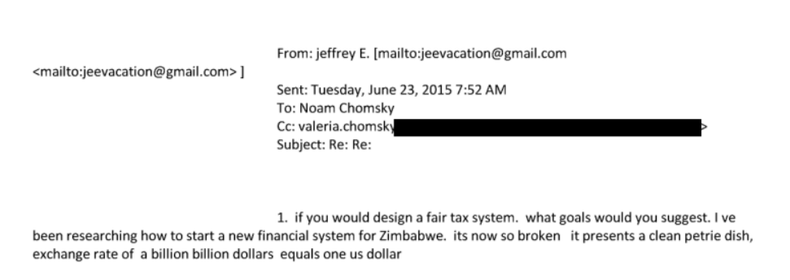
Per the recently released Epstein files, on the website of the United States’ Department of Justice (DOJ), Epstein revealed how he wanted to begin a new financial system in the Southern African country.
The formerly respected financier seems to have been interested in taking advantage of some of the socio-economic challenges on the African continent.
As previously reported, Peter Mandelson, the United Kingdom’s former Labour minister and US ambassador, attempted to persuade Epstein to establish a private bank for the management of the Republic of Congo’s oil funds.
While Epstein’s response to this is unknown, his interest in Zimbabwe has been very pronounced.
Emails released by the JOD show that Epstein and former president of Zimbabwe, Robert Mugabe had some financial ties.
Epstein also seemed to be interested in the Zimbabwean economy as a whole, especially its currency, which at the time wasn’t the best on the continent.
“If you would design a fair tax system, what goals would you suggest. I’ve been researching how to start a new financial system for Zimbabwe,” read an email sent from Epstein to one Noam Chomsky, June 23, 2015.
“It’s now so broken it presents a clean petrie dish, exchange rate of a billion billion dollars equals one US dollar,” the email showed.


Zimbabwe’s recent economic gains
In 2009, Zimbabwe effectively abandoned its national currency, adopting a multi-currency system dominated by the U.S. dollar and ushering in a prolonged period of dollarization.
Till now, most transactions in the country are conducted in U.S. dollars, with companies such as Delta Corp Ltd. reporting that around 80% of sales occur in the foreign currency.
This is despite the fact that the ZiG, short for Zimbabwe Gold, an indigenous currency, was introduced April 2024,
Since its introduction it has depreciated only 0.7% against the dollar in 2025, a stark contrast to the wild swings that have historically defined Zimbabwe’s currency market.
The reduction is attributed by analysts to stricter monetary policies, ameliorated supply chain conditions, and comparative stability within foreign exchange markets.