

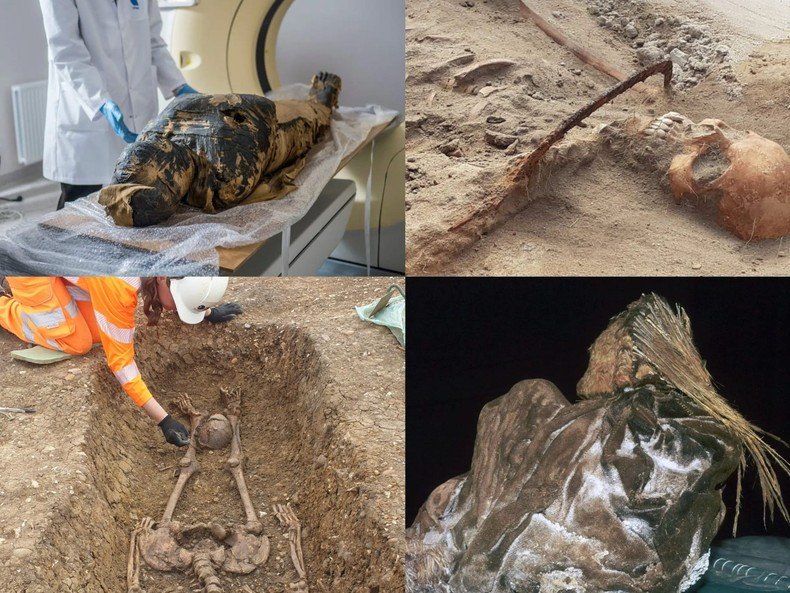
According to Earth.com, the mummy was found at the bottom of a 15-metre shaft inside a rectangular limestone sarcophagus that had remained sealed with ancient mortar for more than four millennia.
Egyptian archaeologist Zahi Hawass, working with the Supreme Council of Antiquities, identified the deceased as Heka-shepes based on inscriptions within the burial chamber.
The tomb dates back to Egypt’s Fifth and Sixth Dynasties during the Old Kingdom period.
Gold as a symbol of divinity and status
Earth.com reported that the body was wrapped in sheets of gold leaf that had remained undisturbed since burial. In ancient Egypt, gold symbolised the flesh of the gods and eternal life.
Artisans hammered the metal into thin sheets and pressed it onto the wrappings using resin, a process reserved for a small elite.
The use of gold in burial rites signalled both immense wealth and spiritual aspiration. Most Old Kingdom tombs were looted over time, making intact discoveries of this scale rare.
For modern Egypt, gold remains economically strategic. The country is among Africa’s notable gold producers, with mining exports contributing to foreign exchange earnings.
The ancient association with gold continues to shape Egypt’s global brand as a cradle of wealth, craftsmanship and civilisation.
Cultural capital and tourism
The discovery comes as Egypt expands its tourism offering with the opening of the Grand Egyptian Museum, a landmark project near the Giza Pyramids that is now welcoming visitors.
The museum, one of the largest archaeological museums in the world, houses more than 100,000 artefacts and is expected to significantly boost visitor numbers.
Tourism remains a key foreign currency earner for Africa’s second-largest economy, and high-profile discoveries often fuel renewed global interest in Egypt’s heritage.
Saqqara, located near the Step Pyramid of Djoser, has produced a series of major finds in recent years. Each announcement reinforces Egypt’s soft power and its status as a global centre of ancient civilisation.
Officials say conservation teams are now working to stabilise the mummy and associated artefacts. Preserving fragile materials such as wood, textiles and pigment requires controlled conditions and detailed scanning before items are moved or displayed.
For Egypt, the gold-wrapped mummy is more than an archaeological milestone.
It is a reminder that gold has long been intertwined with the country’s wealth, belief systems and global standing, from the pharaohs of the Old Kingdom to modern export markets across Africa and beyond.


