


The United States has negotiated a truce so humanitarian assistance can be given to more than seven million people, including children, caught in the grip of the conflict in the eastern part of the Democratic Republic of the Congo.
The initial cessation of hostilities was for two weeks. It was extended by a further two weeks.
Armed conflicts and other forms of violence have triggered wave after wave of internal refugees in the Democratic Republic of the Congo (DRC).
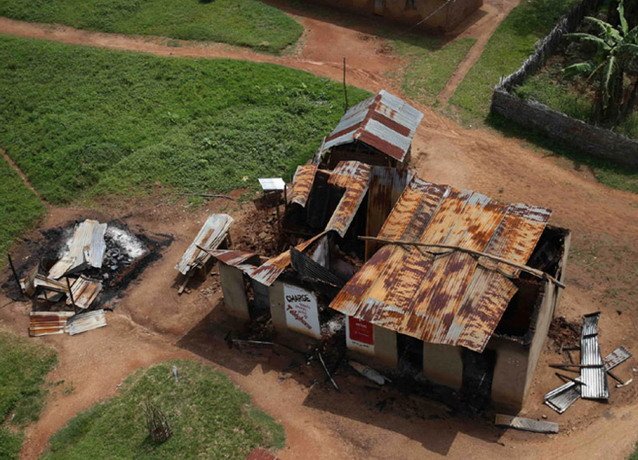
More recently, fighting between government troops and the M23 rebels has trapped millions in and around Goma, the main eastern city. The internally displaced persons have been living in precarious conditions with limited access to food, clean water, healthcare, and education.

The truce is a commendable intervention. But, based on my many years of researching the conflict in the eastern DRC, I would argue that the resolution of the conflict requires recognition of grievances that fuel it. Notwithstanding the truce’s weaknesses, I argue that the warring parties should see the truce as an opportunity for seeking long-term solutions to the underlying causes of the conflict. In eastern DRC, these include local communities facing rampant insecurities caused by several actors including the Congolese army and hundreds of local armed groups and foreign armed militias, persecution and discrimination of some ethnic groups seen as “foreigners”, corrupt Congolese elite and state institutions, regional countries interference into DRC.
Temporary truce in a complex landscape
First let me deal with the truce’s weaknesses. It does not stipulate how the ceasefire will be monitored. In this socio-security context, monitoring mechanism should deploy observers on the ground to prevent parties’ manoeuvres to get around it. However, the US communique says the US will use its own means to monitor compliance by the warring parties.
It’s hard to establish a formal scheme to monitor such a short ceasefire, and on such a huge geographical area. The areas where armed confrontation is taking place are generally inaccessible by road, communication is poor and some localities are isolated. The conditions listed above open a breach to parties in conflict to break the truce knowing that there are limited ways to collect factual evidence of who has first broken the truce.
It is also difficult to determine with certainty who has broken the truce in a conflict underpinned by a complex history. There are myriad armed groups, including the Democratic Forces for the Liberation of Rwanda (FDLR), Allied Democratic Forces, Mai-Mai militias, and various local defence groups. Some of these fringe groups claim to not be concerned with a ceasefire negotiated between Rwanda (on behalf of M23) and the government. The US’s own means to monitor the truce will certainly encounter above-mentioned challenges.
There are also challenges around the preparedness of humanitarian agencies to take advantage of the truce at short notice. The easiest way to reach out to those caught in remote areas is through airlifts as the eastern DRC, and mostly the rural areas, have poor, or no roads.
It can therefore take two to three weeks to drive 150-200 kilometres from Goma to Lubero, one of the northern territories of North Kivu that shelters around 100,000 displaced. This population fled recent battles around Kanyabayonga localities.
Humanitarian work in eastern DRC comes with its risks. Prior assessment of the operation area and planning is essential. In July 2024 two staff from Tearfund were attacked and killed possibly because of their ethnic affiliation. They were singled out because of their names and physical characteristics, local sources and videos shared on social media have shown.
This year so far, there have been more than 170 incidents targeting humanitarian staff across eastern DRC in which four were killed and 20 injured.
Long-term peace
Given the dire humanitarian conditions of the displaced and local populations, the truce is a most welcome intervention. However, the DRC needs peace. And peace can only be achieved by dealing with the underlying causes of the conflict.
A starting point would be existing peace initiatives. The initiative led by neighbouring Angola, which is aimed at getting the DRC and Rwanda around the negotiating table is one such opportunity.
Then there is the “stalled” East Africa Community initiative – the Nairobi process – aimed at bringing together Congolese armed groups, local communities along with the Congolese government to discuss their claims and grievances.
As countries, the parties in the Luanda process can equally advance their agenda in a balanced manner. However, tensions between the DRC and Rwanda have revived exiting regional tensions such those between Rwanda and Burundi. It is possible that others will emerge in the future. Therefore, the stability of eastern DRC and the region need to account for and anticipate these developments.
Specifically, those seeking to find long-term solutions to the cyclical violence in eastern DRC should reconsider the Nairobi process to make it a well-balanced scheme, where all parties and local communities will be engaged without political interference either from Kinshasa, Kigali or other regional players. Though it stalled, the Nairobi process was yet hesitant to engage direct talks with M23 as Kinshasa sees the group as a Rwandan puppet. Also, during the Nairobi talks, some participants (mostly countries’ representatives) had more power than others to select communities and armed groups’ representative.
In the meantime, current US efforts to engage the DRC and Rwanda-M23 should also seek to recognise other entities and armed groups. These disparate groups have their own claims and grievances that need to be accounted for so that the Eastern DRC can find stability.
Written by Delphin R Ntanyoma, Visiting Researcher, University of Leeds.
Republished with permission from The Conversation. The original article can be found here.


