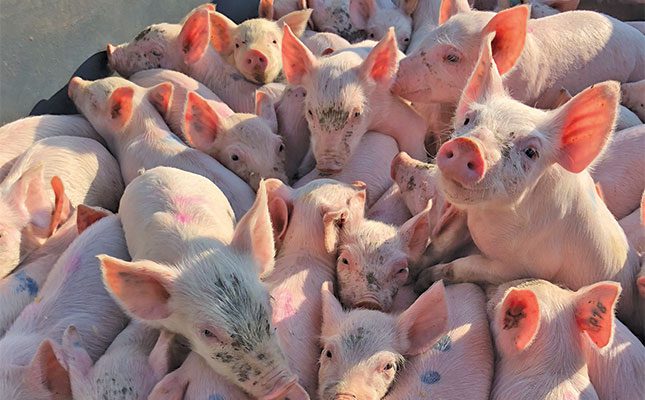
A one-size-fits-all diet for pigs can lead to overfeeding or underfeeding, producing varying results, and lost production. Instead, JD Mostert, independent swine nutritionist, advocates for a stronger focus on digestible amino acids to get the most from feed rations.
![Ghana takes control of its gold as local refining operation begins [PHOTOS]](https://lbnntv.com/wp-content/uploads/2026/02/Ghana-takes-control-of-its-gold-as-local-refining-operation-120x86.jpeg)

– ADVERTISEMENT –
Pig farmers face an increasingly difficult balancing act; feed costs remain high, performance margins are slim, and pressure is mounting to reduce antibiotic use and nitrogen emissions.
Yet, many feeding strategies still rely on broad formulas with theoretic nutritional values, not taking into account the vast variations that can occur between feed batches.
The result is varying feed conversion ratios, and pigs whose immune systems are left to falter during times of high stress.
“There is a better way to feed pigs, one that is more precise, cost-effective, and built around real, digestible nutrients, not just crude protein numbers,” says independent swine nutritionist JD Mostert.
He explains that by focusing on digestible amino acids instead of crude protein, producers can reduce waste, improve gut health, and unlock stronger performance in both sows and piglets.
Rethinking protein at critical stages
Protein levels in feed are often measured in broad strokes, using industry norms rather than actual results.
Mostert notes that to get the most from pig feed, the focus should not be on crude protein.
“Pigs can’t digest crude protein; they need amino acids, the building blocks of muscle, milk, and tissue repair.
“So what really matters is the digestible amino acid profile – lysine, methionine, threonine, and tryptophan. Feeding high crude protein diets without balancing these amino acids is inefficient and costly.”
The shift to digestible amino acids is especially important during lactation and weaning. Lactating sows need a well-balanced amino acid profile to sustain milk production while minimising body weight loss.
Diets based on digestible amino acids have been shown to improve feed intake, reduce sow depletion, and increase piglet weaning weights. These outcomes directly affect sow longevity and herd profitability.
Mostert explains that weaner piglets have immature digestive systems and cannot efficiently handle high levels of protein, especially from plant-based sources such as soya bean meal.
Overloading weaner diets with crude protein leads to undigested residues in the gut, which feed harmful bacteria, trigger diarrhoea, and often require antibiotic treatment.
By shifting to lower-protein, amino acid-balanced diets, gut health improves, nitrogen waste decreases, and feed efficiency rises.
“Lower crude protein with the right amino acids is a win on every front,” says Mostert. “You get better growth, fewer gut problems, and more sustainable production.”
The role of amino acids
A common misconception is that supplementing just a handful of amino acids is enough. In reality, pigs require 10 essential amino acids, which they cannot produce themselves.
“Commercial diets usually top up only lysine, threonine, and tryptophan, while assuming the rest will come from protein sources like soya. But if those raw materials vary in amino acid composition or digestibility, you’re unintentionally underfeeding one or more of the essentials,” says Mostert.
What makes amino acid composition more challenging is that one missing amino acid caps the pig’s entire performance potential. Mostert notes that some are even conditionally essential, meaning that during stress, rapid growth, or disease, the pig’s demand exceeds what its body can produce.
Amino acids such as arginine, glutamine, and glycine are particularly important during weaning, tissue growth, and immune challenges. Threonine is vital for gut repair, while methionine supports antioxidant defences.
“Precision nutrition means checking if all 10 essentials are covered, not just the big three,” notes Mostert.
Variability in raw materials
Even when formulations are balanced on paper, the raw materials themselves introduce hidden risks. Mostert warns that not all maize or soya oilcake is created equal.
“Maize protein content, for example, can swing from 7% to over 9% depending on variety, soil, region, and rainfall. Drought years often push protein higher, while heavy
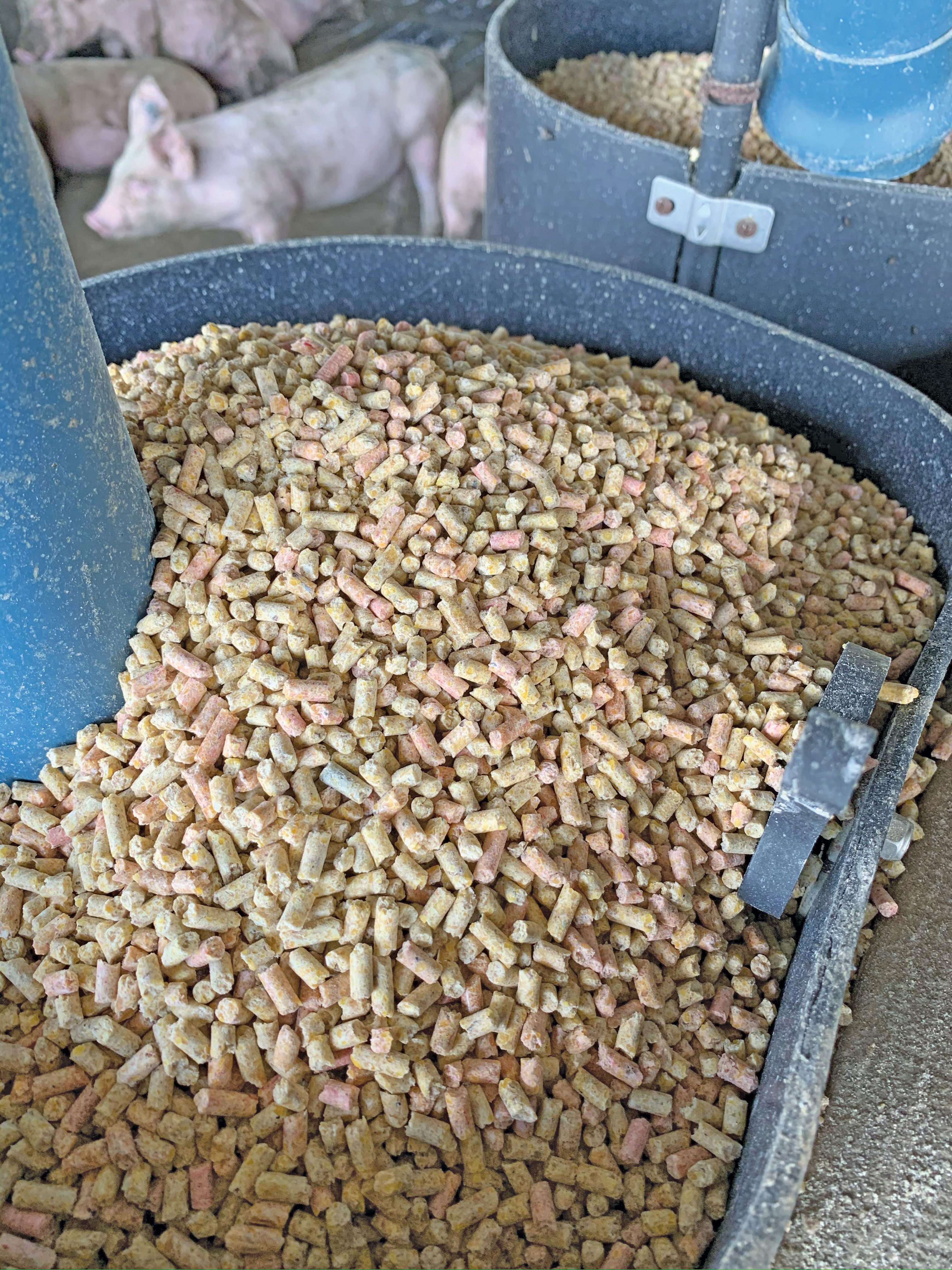
rains dilute it. Even within the same harvest, fields can differ.
“The kicker is that two maize samples with the same crude protein percentage may deliver vastly different levels of digestible lysine, the amino acid pigs actually use. Studies show this variation can reach 33%.”
Soya oilcake is just as inconsistent. Depending on processing, it may contain anti-nutritional factors (if under-processed) or reduced usable lysine (if over-processed). A sample might test at 46% crude protein, but the pig can only access a portion of that.
“Every time a load of maize or soya comes in with a different amino acid profile, you’re effectively feeding a different diet,” says Mostert.
“Performance drops, feed conversion worsens, and variation across litters increases, even though the formulation looks fine on paper.”
The solution lies in regular testing.
“Don’t just ask what the crude protein is. Ask what the standardised ileal digestible lysine is. Test every load, or at least every month, and adjust your formulations accordingly,” advises Mostert. “If the inputs vary, the diets must adapt. Otherwise, you’re feeding on guesswork.”
Precision feeding for profitability
One-size-fits-all diets are convenient, but costly. Mostert notes that feeding too much crude protein wastes money, stresses the metabolism, and increases nitrogen excretion. Feeding too little limits growth and reproduction.
“Precision feeding is more than a buzzword, it’s a mindset. It’s about getting more back from every gram you put in. By focusing on digestible amino acids and real nutrient needs, we can fine-tune sow diets to improve milk quality, support piglet growth, and maintain sow body condition, all while cutting unnecessary costs,” says Mostert.
This approach also helps pigs cope with stress periods such as weaning, heatwaves, transport, or lactation. During stress, feed intake often declines, and amino acids are diverted from growth to immune function and repair.
Supplying the right amino acids at the right time, such as arginine for immunity, threonine for gut repair, and methionine for antioxidant defence, helps pigs maintain performance even under pressure.
“Research confirms that reducing crude protein by 2% to 3% during stress phases, while balancing amino acids, improves feed efficiency, survival rates, and overall health.
“We don’t need to tolerate stress periods as inevitable slumps. With precision feeding, we can maintain production, protect sow health, and improve piglet growth. It’s not about feeding more, it’s about feeding smarter,” Mostert concludes.
For more information email JD Mostert at [email protected].
Get trusted farming news from Farmers Weekly in Google Top Stories.
➕ Add Farmers Weekly to Google
✔ Takes 10 seconds · ✔ Remove anytime