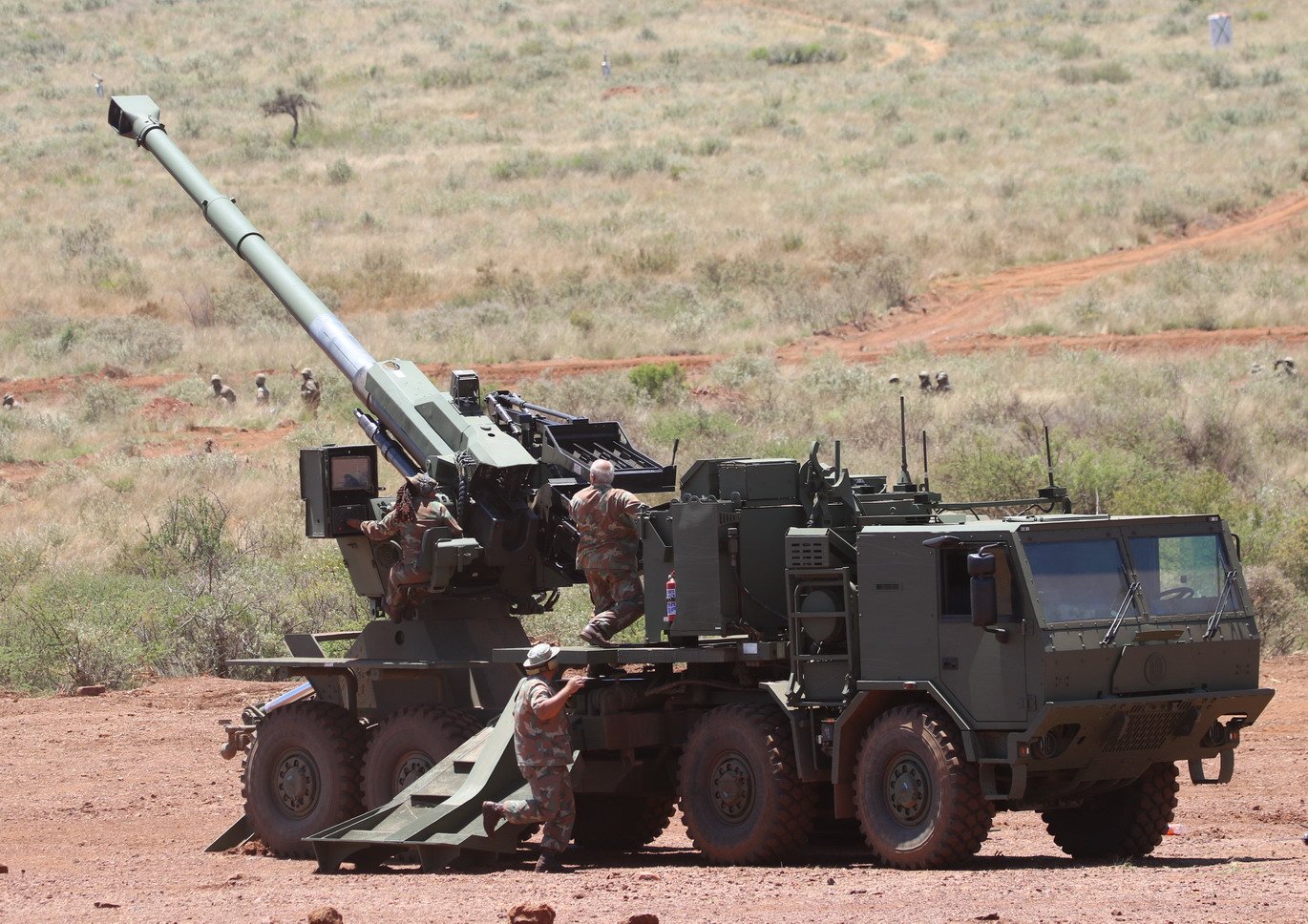

In the wake of a year-end Denel statement “painting” the State-owned defence and technology conglomerate as being on the road to recovery, a dissenting voice has it numbers – not honeyed words – are needed.
The voice is that of Chris Hattingh, one of three Democratic Alliance parliamentarians tasked with defence oversight.
Responding to the 27 November statement titled “Restructuring of Denel showing encouraging results” he said information Denel shared with Parliament this year “tells a different story”.
“For six years in a row Denel has failed to produce proper annual financial statements. The Auditor General has been issuing disclaimers since 2017 and this is mainly because Denel cannot provide reliable records or show that it has proper internal controls,” Hattingh told DefenceWeb.
The statement, which carries no attribution, refers to Denel’s 2025 annual report reflecting “the progress we are making on our journey of transformation.” The report, including financial statements, is still not available on the company website. The latest available annual report and financial statements on the Denel website is for 2020.
“After receiving more than R10 billion in bailouts since 2019,” Hattingh continues, “Denel continues to make losses”.
“Its revenue crashed from R8.4 billion in 2015/16 to about R1.3 billion in 2023/24. The damage caused during the state capture years stripped out key skills and resulted in several important SANDF (SA National Defence Force) capabilities weakening or disappearing”.
He criticised the corporate plan Denel tabled in Parliament this year as “not even a proper plan” noting “it was an unsigned PowerPoint presentation with no approval from the Minister [Angie Motshekga]”.
Not mentioned in the statement, but given to Parliament is Denel projecting a R155 million loss for 2025/26 with “none of the big contracts it talks about confirmed”.
“This looks like an attempt to gloss over issues that are still far from being fixed,” Hattingh said adding “South Africa needs Denel to work because it is a key defence asset”.
He maintains a real recovery will need more than positive messaging. “Denel needs clean audits, strong and credible leadership, proper engineering capacity, real accountability and a funding model that rewards delivery instead of repeated bailouts.”
“Until these basics are fixed, talk of encouraging results will remain wishful thinking,” said the man who wore military uniform first as a National Service conscript at 4 Field Regiment and the School of Artillery before what was then Citizen Force service in the then Regiment Potchefstroom Universiteit.
In a June presentation to Parliament, Denel reported an unaudited profit of R223 million for the 2024/25 financial year, its first since 2016, but projected several years of subsequent losses. For the 2024/25 financial year, revenue stood at R1.3 billion, well below the R8.4 billion high it achieved in 2015/16.
During the 2023/24 financial year, R1.4 billion worth of orders were placed with Denel, and this increased to R4.3 billion in 2024/25. Denel said it has an order opportunity pipeline worth more than R53 billion, with R45 billion in high value potential contracts for artillery, armoured vehicles, missiles, and unmanned aerial vehicles (UAVs).
Denel Group CEO Tsepo Monaheng told Parliament the company is stabilising, but its position remains precarious. “We stretch every rand. Liquidity is our biggest constraint, and though we’ve made progress, it’s far from resolved.”
Denel’s corporate plan forecasts breakeven by 2027/28, when revenue is projected to grow to R3 billion.
Denel’s performance has been severely compromised since 2016 by governance failures, the effects of state capture, and the collapse of internal systems. Since April 2025, Denel has fallen under the shareholder control of the Department of Defence and Military Veterans, marking a shift from its previous position under the Department of Public Enterprises.