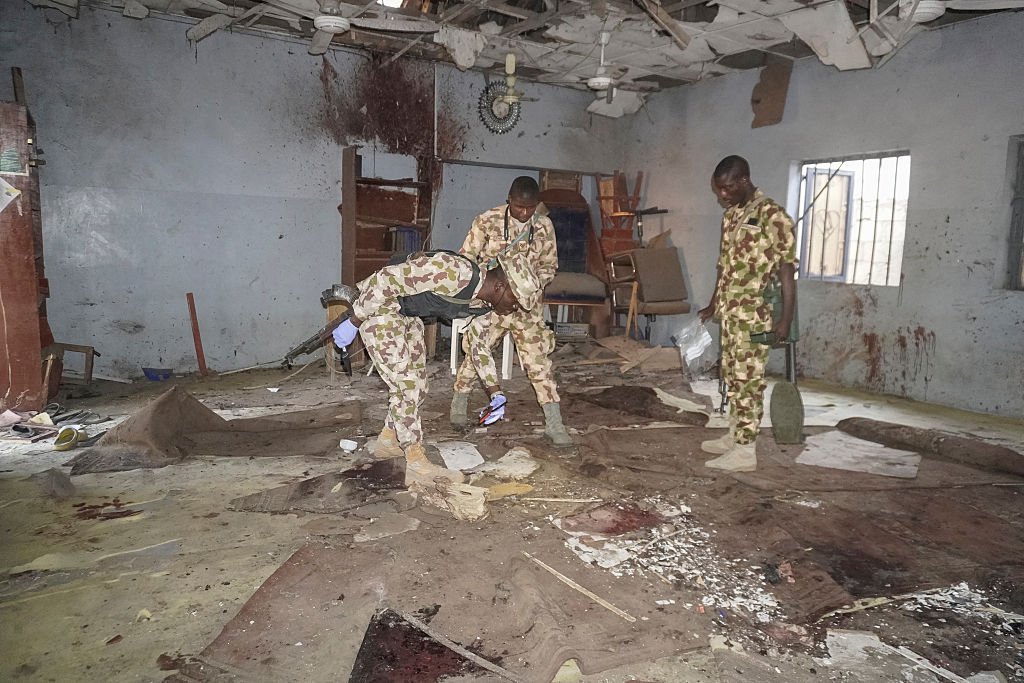
The killers came from the Kainji forest in central Nigeria. By the time they were done, the village of Woro was in ashes, and 170 residents were dead.
The attack in early February by Boko Harm fighters brought Nigeria’s fight against terrorists out of the northern states of Borno and Sokoto and into the heart of the country. Terror groups are on a quest to create a supply corridor connecting the Sahel to the sea.
The Woro attack and three more two weeks later in Borno State follow the same pattern: Terror groups, including Islamic State West Africa Province (ISWAP), Lakurawa and Jama’at Nusrat al-Islam wal-Muslimin (JNIM), operate from ungoverned rural areas such as the Sambisa and Kainji forests while security forces remain concentrated in urban areas. That strategy must change, according to analyst Ebenezer Obadare at the Council on Foreign Relations in Washington.
“The best way to prevent future attacks is to take the battle to the groups in the forest and border locations where they are known to be hiding and continue to give the Nigerian armed forces the equipment they need to be successful in their counterterrorism campaigns,” Obadare told The Africa Report.
Operation Savannah Shield, which launched in February, aims to do exactly that across the center of Nigeria from Kwara State on the Beninese border to Nasawara State. A challenge to Nigeria’s counterterrorism campaign, however, is the fact that after years of fighting among themselves, Nigeria’s terror organizations have begun working together.
Boko Haram and ISWAP have collaborated on attacks in the northeast. Boko Haram has sent advisors to work with Lakurawa in northwest Nigeria. Lakurawa fighters launched attacks in Benin in December 2024 and Niger in January 2025 from their base in Nigeria’s Sokoto State. Cooperation among terror groups raises the stakes for security forces accustomed to dealing with each one individually, according to analyst Abiodun Ramon Oseni at the Institute of Security Nigeria.
“Joint training efforts are now coordinated among the terrorist groups, who are attempting to incorporate modern technology and drone warfare,” Oseni wrote “Various terrorist groups are now progressing toward collaborative logistics efforts to sustain their malicious activities.”
Collaboration has enabled Boko Haram and ISWAP to shift their operations from tactical planning — either to fight each other or the government individually — to a more strategic approach. Terror groups have begun to emphasize their shared strategic and economic interest, Oseni notes.
“The collaborative logistics efforts align, since they operate within the same industry – utilising comparable routes and sharing geographic areas,” Oseni wrote.
The attacks on Cross Kauwa, Mandaragirau, and Pulka in Borno State in mid-February echoed the attack on Woro, with fighters emerging from the forest to attack Soldiers and burn their base. ISWAP alone raided military bases 16 times in 2025, a significant increase driven by IS leaders’ call for increased violence by all of its affiliates, according to analysts. “The tactical sophistication of these attacks, including their timing (mostly nocturnal) and precision, underscores a growing threat,” analyst Malik Samuel wrote for Good Governance Africa.
The groups share intelligence, work together on logistics and training, and share finances. They also share information about how Nigeria’s security agencies work, according to Oseni.
Other elements bolstering the shift from tactical to strategic planning include the exchange of intelligence, collaboration on financial matters, joint training, sharing information regarding logistics, and efforts to acquire intelligence from inside and outside Nigerian law enforcement agencies.
“Given the operations of the terror groups, it is crucial for the Nigerian government to genuinely investigate potential insider threats,” Oseni wrote.