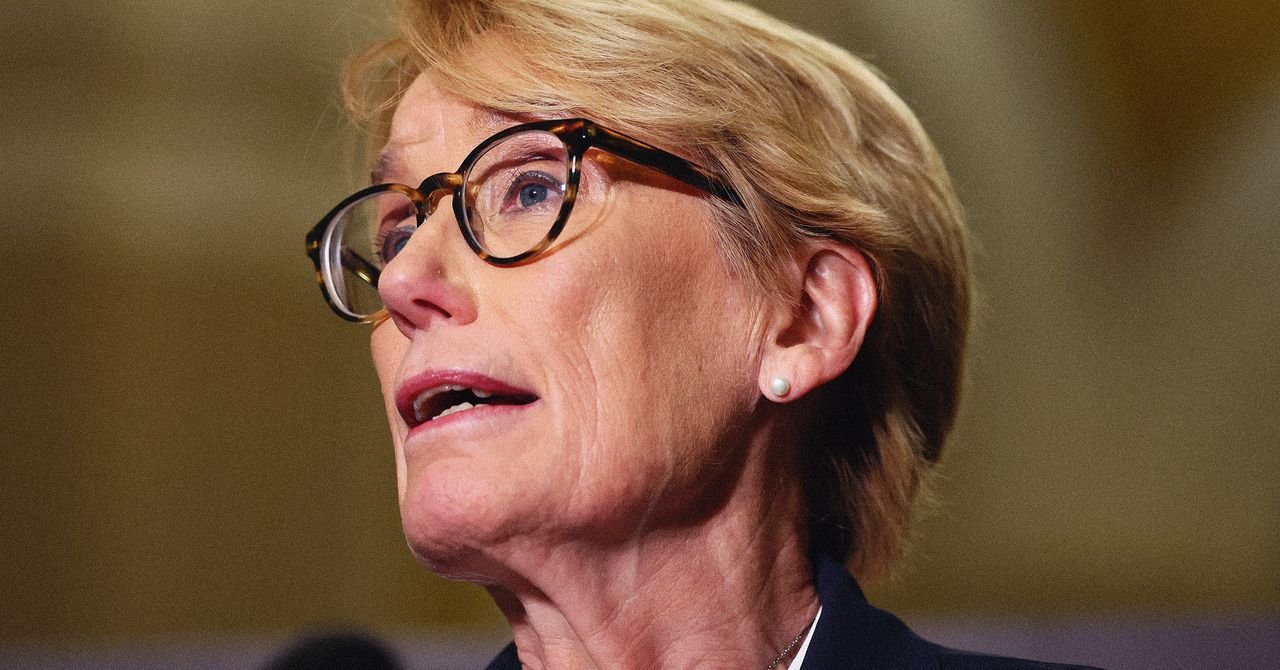
United States senator Maggie Hassan is pressing major data brokers after an investigation by The Markup/CalMatters and copublished by WIRED found at least 35 firms hid opt-out information from search results, making it harder for people to take control of their own data and safeguard their privacy online.
Hassan, the top Democrat on the Joint Economic Committee, put five of the top firms—IQVIA Digital, Comscore, Telesign Corporation, 6sense Insights, and Findem—on notice Wednesday, demanding that each explain why code on their sites appears designed to frustrate deletion requests.
None of the companies immediately responded to WIRED’s request for comment. None previously responded to requests for comment during the investigation.
California law requires brokers to provide a way to delete personal data; however, the investigation found dozens of registered brokers obscuring their opt-out tools by hiding them from Google and other search results. Consumer advocates called it a “clever work-around” that undermines privacy rights and may qualify as an illegal dark pattern—a design decision that, according to California’s privacy regulator, erodes consumer “autonomy, decision making, or choice when asserting their privacy rights or consenting.”
Hassan wants the firms to justify the placement of their opt‑out pages; acknowledge whether they used code to block search indexing and, if so, against how many users; pledge to remove any such code by September 3; and provide Congress with recent audit results and steps taken since the investigation, if any, to improve user access.
“Data brokers and other online providers have a responsibility to prevent the misuse of consumer data, and Americans deserve to understand if and how their personal information is being used,” Hassan wrote, citing other tactics variously employed by the firms—forcing users to scroll through multiple screens, dismiss needless pop-ups, and hunt for links in shrunken text.
Behind the scenes, data brokers fuel a multibillion-dollar industry that trades in detailed personal information—often gathered without a person’s knowledge or consent. They compile sprawling dossiers often packed with precise location histories, political leanings, and religious affiliations, then sell and resell those profiles, powering everything from hyper‑targeted ads to law‑enforcement surveillance.
Even among the small share of Americans who know this surveillance ecosystem exists, fewer still grasp its true scale—or the ways it can shape, influence, or intrude on their lives.
Earlier this year, the Trump administration quietly abandoned a proposed rule that would have sharply limited brokers’ collection and sale of Americans’ data by treating certain brokers as “consumer reporting agencies” under the Fair Credit Reporting Act. At the same time, contract documents show the US intelligence community is preparing a centralized marketplace to streamline purchases of commercially available data—giving agencies shared access to large repositories of sensitive information without the court orders otherwise required for traditional surveillance.
For survivors of domestic violence, sexual assault, and stalking, the risks are acute. The National Network to End Domestic Violence’s Safety Net Project warns that data brokers collect and sell vast amounts of information that can put survivors at risk, adding that opting out is already a burdensome, piecemeal process, forcing people to contact companies one by one, navigate hard-to-find forms, and resubmit deletion requests regularly as information is re-collected and re-listed.
“Instead of requiring people to navigate byzantine labyrinths to protect their personal information, these companies have a responsibility to make the tools that allow Americans to exercise their right to privacy easy to find and use,” Hassan tells WIRED.
Sean Vitka, the executive director of Demand Progress, a nonprofit advocacy group critical of the industry, compares the surveillance ecosystem underlying commercial data markets to the knotted tails of a rat king—an inseparable tangle of entities sustained by unchecked data flows. “The damage done by data brokers manifests in countless ways,” he says, “but it’s all enabled by the same predatory abuse of consumers’ data.”
“And consistent with what we’re seeing here, the industry cannot be trusted to mitigate its own harms.”