


From its inauguration in May 2023, the 650,000-barrel-a-day Dangote refinery promised to revolutionise fuel supply, pledging to meet domestic demand and arrest Nigeria’s dependence on costly imports.
By early 2024, Dangote had begun full operations, processing diesel, aviation fuel, and gasoline.
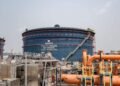
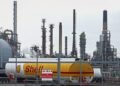
The business case seemed airtight: with a storage capacity of 500 million litres and rising production, the refinery could undercut prices and force more efficient, market-driven supply dynamics.
However, as output rose and prices dropped, lines began to draw between Dangote’s vision and the interests of marketers.
In early 2025, oil marketers struck back, importing N436 billion worth of petrol and challenging the refinery’s role in the market amid claims the Dangote facility cannot meet demand, accusations the refinery strongly denies.
That denial crystallised into legal action: Dangote filed a suit at the Federal High Court, seeking to stop import permits issued by regulators, and is pursuing N100 billion in damages, while the objecting parties argue that domestic demand still exceeds production.
Now the conflict moves beyond supply logistics.
At the heart of the matter lie questions of market dominance, regulatory fairness, consumer impact, and power dynamics in Nigeria’s much-debated oil and fuel sector.
Is Dangote challenging a cartel or building a monopoly?
Are marketers acting in public interest or protecting rent-seekers? And what does the government’s intervention—with NNPC, NMDPRA, even the presidency involved—signal for industry regulation?
This article unpacks the Good, the Bad, and the Ugly of the Dangote-marketers showdown, revealing how ambition, resistance, and systemic friction collide in a sector that affects every Nigerian at the pump—and in the economy.
The good: Capacity, competition, and consumer relief
The commissioning of the Dangote Refinery was not just a milestone for Africa’s biggest conglomerate—it marked a potential turning point for Nigeria’s troubled downstream sector.
For decades, the country has struggled with the paradox of being one of Africa’s largest crude oil producers yet relying on imported refined products.
Dangote’s entry into the space offered a rare glimmer of hope that the narrative could change—if only the politics and vested interests would allow it.
The refinery, with a projected output capacity of 650,000 barrels per day, is designed to produce up to 50 million litres of petrol daily, enough to meet and even exceed domestic demand.
With its modern infrastructure and deep-seaport access, the refinery is poised to eliminate many of the inefficiencies that have plagued Nigeria’s fuel supply chain—from costly demurrage to long shipping queues and subsidy-related distortions.
In addition, Dangote’s early moves to reduce petrol prices—from over N950/litre to around N825/litre—created ripple effects across the market.
Marketers, who had historically held pricing power, were suddenly forced to respond to a new competitive reality.
Consumers, often at the mercy of opaque pricing and artificial scarcity, benefitted.
Not only did the refinery promise price relief, but it also signalled a shift toward energy independence—a long-standing goal of Nigerian economic planners.
In essence, the good in this saga lies in the disruption itself.
By investing billions of dollars and building capacity that rivals that of global refiners, Dangote has forced a conversation around efficiency, pricing fairness, and local value addition.
For a country where oil has long bred dependency rather than innovation, that alone is a significant gain.
The bad: Conflict with marketers and market friction
Despite the refinery’s promise, the road to full adoption has been anything but smooth.
One of the major friction points has been between Dangote and the existing ecosystem of marketers—particularly independent and major marketers who have traditionally dominated the fuel supply chain through imports.
Independent marketers have expressed concerns that they are being edged out of a market they have helped sustain for decades.
Many complain about the lack of formal lifting agreements, delays in pricing clarity, and currency mismatches—Dangote initially sold in dollars, whereas domestic retailers operate in naira.
This created a barrier for smaller marketers who were unable to navigate foreign exchange constraints.
To make matters worse, several marketers ramped up imports, spending over N436 billion on foreign petrol despite Dangote’s claims of readiness to meet domestic needs.
This not only undermined the refinery’s pricing strategy but also reignited Nigeria’s foreign exchange pressure, which Dangote’s operations were meant to ease.
The result has been a fragmented market, characterised by parallel supply chains and growing distrust among stakeholders.
For consumers, the promised relief remains uneven. For the industry, the absence of a unified framework for integrating local refining into national supply continues to hinder progress.
The ugly: Legal tussle, monopoly fears
As optimism grew around Dangote’s refinery output, so did the resistance—from within the industry and the state.
What began as whispers of a potential monopoly has now exploded into full-blown legal warfare.
In March 2025, Dangote Industries Limited sued the Nigerian National Petroleum Company Limited (NNPCL), the Nigerian Midstream and Downstream Petroleum Regulatory Authority (NMDPRA), and five oil marketing firms in court, accusing them of sabotaging its operations by issuing new petrol import licences despite the refinery’s capacity to meet domestic needs.
In response, NNPCL and others argued that Nigeria’s demand is still too large to be met by a single refinery alone, especially given ongoing logistics bottlenecks, dollar pricing complications, and the need for supply chain diversity.
But Dangote’s legal action suggests deeper frustrations—not just with import competition but with what the company views as regulatory sabotage.
Seeking N100 billion in damages, the suit underscores a widening gap between Dangote’s vision and the state’s current posture.
Meanwhile, civil society groups and some economists have raised concerns over market concentration. Dangote already dominates the cement sector, controlling more than 60% of the national supply.
If unchecked, they warn, a similar pattern in fuel could emerge—with reduced competition over time, potential price control, and institutional complacency.
The judiciary’s decision to allow the case to proceed has raised eyebrows and tensions.
The Federal High Court’s rejection of NNPC’s preliminary objections indicates the courts are willing to entertain the refinery’s grievances in full.
This litigation is not just about trade permits—it is now a litmus test for Nigeria’s regulatory credibility, the rule of law, and the delicate balance between promoting local content and enabling market freedom.
Who stands to gain or lose?
This ongoing dispute will significantly reshape the balance of power in Nigeria’s energy sector—and various stakeholders have a lot at stake in the outcome.
Consumers, for instance, are caught in the crosshairs but potentially stand to gain the most. If Dangote continues to produce and distribute locally refined petrol at competitive rates, Nigerians could benefit from lower prices, improved access, and the end of exploitative scarcity tactics.
However, if the conflict persists or if Dangote is eventually allowed to dominate the entire market unchecked, prices could creep upward again—especially in the absence of strong regulatory oversight.
Independent and major oil marketers, many of whom rely heavily on import margins and distribution monopolies in certain regions, face a more precarious future.
The refinery’s capacity and logistics advantages could render many of their business models obsolete unless they evolve rapidly.
Some may adapt by becoming domestic distributors for Dangote, but others—particularly smaller marketers—risk being squeezed out of the supply chain altogether.
Their resistance is as much about survival as it is about ideology.
For the federal government, the stakes are double-edged. On the one hand, Dangote’s success supports the “Renewed Hope” agenda by promoting domestic refining and alleviating foreign exchange pressure from imports.
On the other hand, the Tinubu administration must ensure that it does not appear complicit in enabling a monopoly.
The roles of the NNPC and NMDPRA are being closely scrutinised, and how they manage this delicate balance will have long-term implications for public trust in institutions.
Investors—both local and foreign—are also watching.
The way this conflict is resolved will shape investor confidence in Nigeria’s business climate, especially for capital-intensive sectors where local champions and state actors often clash.
If Dangote wins full market control without sufficient checks, investors may be wary. If he’s unfairly stifled by legacy players, the message could be worse: Nigeria punishes risk-takers.
Ultimately, the winners will be those who can adapt—whether by reforming their business models, enhancing transparency, or fostering genuine competition.
For everyone else, the cost could be substantial.


