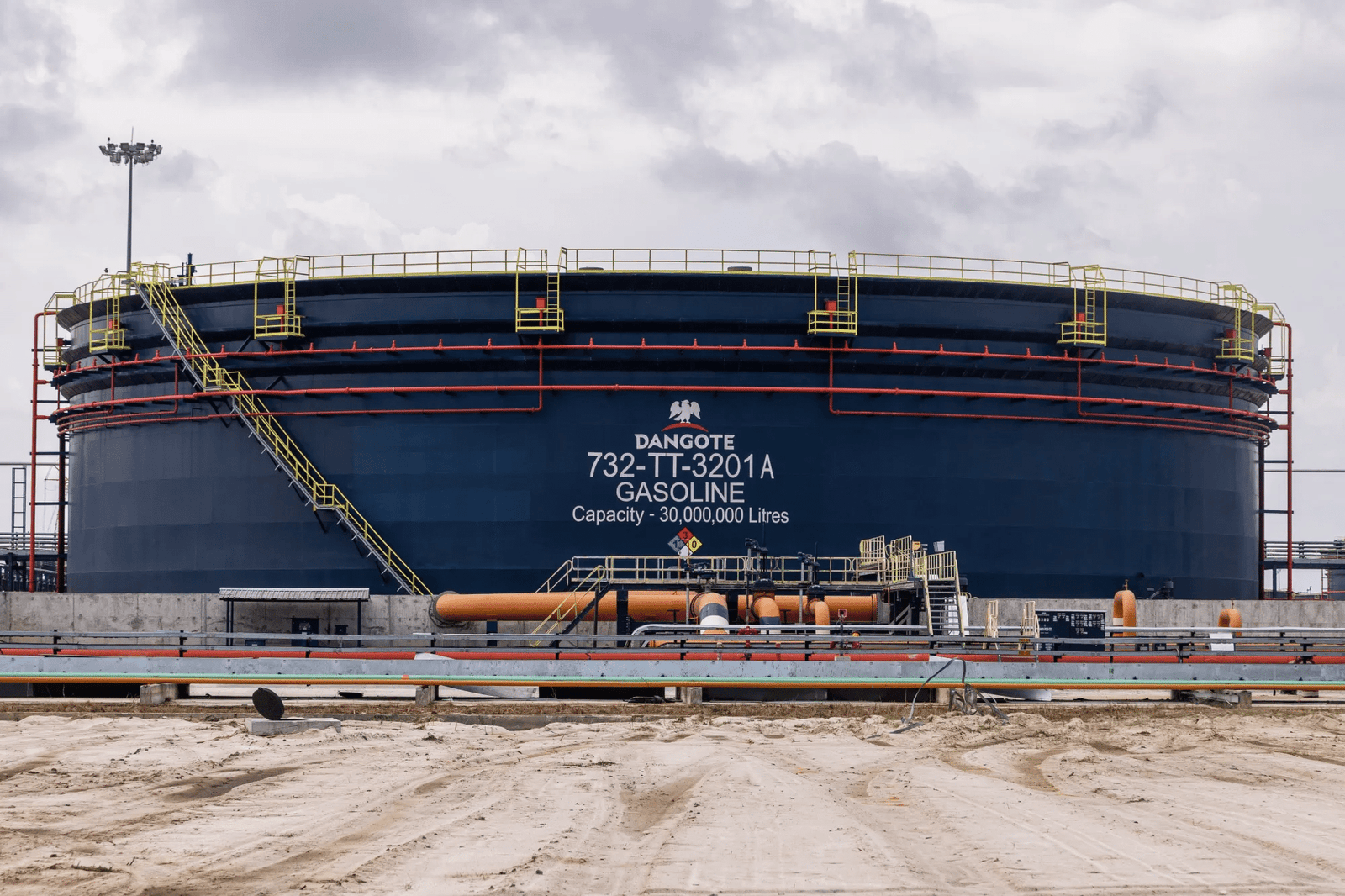
Nigeria’s petrol imports have fallen to a nine month low as increased production from the Dangote refinery reduced the country’s need for foreign supply.
The drop follows the refinery’s return to higher crude processing levels after completing maintenance work at key units.


Data from Kpler shows petrol arrivals into Nigeria fell to about 50,000 bdp. The figure represents a steep decline from previous levels and signals a shift in supply patterns in West Africa’s largest fuel market.
The country has historically depended on imported petrol to meet domestic demand because local refineries operated below capacity.
However, stronger output from the Dangote refinery and tighter control of import permits have begun to change the market structure.
Europe remained the largest supplier of petrol cargoes into Nigeria during the period. Shipments from the region averaged about 38,000 bdp, maintaining Europe’s position as the country’s primary external source of supply.
However, Nigeria’s share of European petrol exports dropped to about 4%.
A year earlier the country accounted for roughly 12% of shipments from Europe, showing how import demand has weakened.
Petrol cargo arrivals from Europe into Nigeria were only slightly higher than volumes shipped to Ghana.
Imports into Ghana reached about 34,000 bdp during the same period.
How Dangote refinery reduced petrol imports
Moreover, domestic petrol production increased after the Dangote refinery resumed stronger crude processing after the completion of the maintenance at its crude distillation unit.
The refinery has a nameplate capacity of about 650,000 bdp and is the largest single train refinery in Africa.
The facility processes crude oil into several refined products including petrol, diesel, aviation fuel and naphtha.
Higher output from the plant has begun to replace a portion of imported petrol that previously dominated Nigeria’s market.
Several secondary processing units at the refinery returned to operations after earlier maintenance activities. These units include the naphtha hydrotreater, isomerisation unit and catalytic reformer, which help upgrade fuel components.
The refinery’s petrol producing residual fluid catalytic cracker also resumed operations after earlier shutdowns. The unit has a processing capacity of about 218,000 bdp.
In addition, Dangote recently expanded its domestic distribution network to strengthen product supply within Nigeria. The refinery signed a petrol distribution agreement with 12 petroleum marketers to supply between 60 million and 65 million litres of fuel per day.
The arrangement is expected to improve fuel availability across the country while reducing the need for large volumes of imported petrol.
Import permit limits
Another factor reducing petrol imports is the limited issuance of import permits by Nigeria’s downstream regulator, the Nigerian Midstream and Downstream Petroleum Regulatory Authority (NMDPRA).
Import permits are required for companies bringing refined petroleum products into the country.
Restrictions on these permits reduced the number of cargoes arriving at Nigerian ports.
Only one petrol import permit was issued within the period under review. The permit covered about 300,000 tonnes and was granted to domestic fuel marketing company MRS.
Regulatory authorities have slowed down additional approvals while reviewing supply arrangements in the downstream sector. Officials are also prioritising petrol supply from domestic producers.
As a result, marketers have increasingly relied on existing fuel inventories rather than securing new cargoes from overseas suppliers. Domestic petrol stocks had earlier reached about 1.27 million tonnes, providing a buffer for the market.
The Dangote refinery also remained active in the import market because of its location within the Lekki free zone. Facilities within the free trade area can import certain products without going through the standard permit process applied to domestic marketers.
Dangote accounted for about 70% of all petrol cargo arrivals into Nigeria during the period. This represented roughly 35,000 bdp of total imports.
Nigeria remains the largest petrol consuming country in West Africa. For decades the country relied heavily on foreign supplies due to poor performance of state owned refineries.
The emergence of the Dangote refinery has started to reshape that pattern. Higher domestic production is gradually reducing import dependence and altering trade flows for petrol across the region.
If local refinery output continues to rise, Nigeria’s demand for imported petrol may continue to decline. This would further reshape fuel supply dynamics in the West African market.