

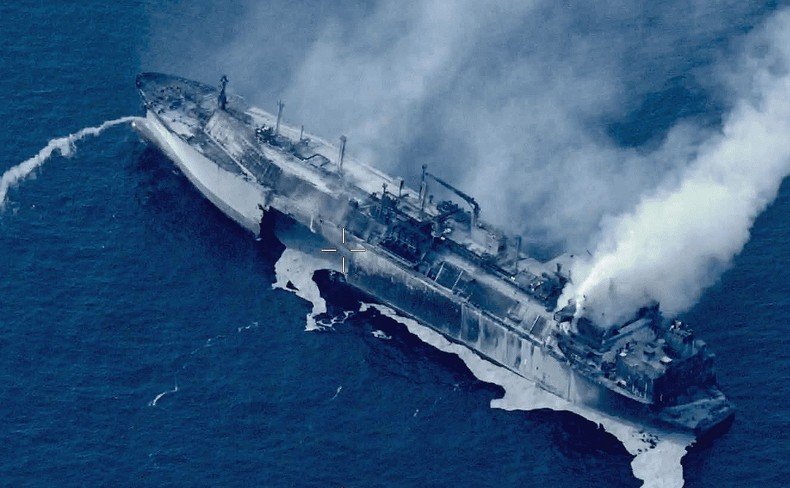
The North African country’s National Oil Corporation (NOC) said it had hired a specialist firm to secure the vessel, known as the Arctic Metagaz, and tow it to a Libyan port.
The operation, being coordinated with Italy’s Eni through Mellitah Oil and Gas, came after days of growing concern among European governments and environmental groups.
The tanker, which had been carrying liquefied natural gas (LNG) from Russia’s Arctic port of Murmansk to Egypt, was left unmanned earlier this month after sustaining heavy damage in an attack.
Moscow said Ukrainian naval drones were responsible for the incident, which triggered explosions onboard. All 30 crew members were rescued, but the vessel was abandoned and left drifting in international waters between Malta and Libya.
Over the following weeks, wind and waves pushed the damaged ship gradually towards the Libyan coast.
Authorities said the vessel was carrying significant fuel reserves, estimated at hundreds of tonnes of heavy oil and diesel, alongside an uncertain quantity of LNG, some of which may already have evaporated.
European countries, including Italy, France and Spain, warned that the drifting tanker posed “an imminent and serious risk of a major ecological disaster,” highlighting the sensitivity of the Mediterranean ecosystem.
The area is one of the most biodiverse marine regions in the world, making any potential spill particularly damaging.
Libya’s NOC sought to calm those fears, saying the situation was under control and that emergency coordination structures had been activated.
“Managing this environmental threat is fully achievable,” the company said, adding that steps had already been taken to reduce pollution risks.
Still, the recovery effort was expected to be complex. Italian authorities noted that the tanker had suffered major structural damage, including a large breach in its hull, complicating towing operations.
Aerial footage showed the vessel listing to one side, with burn marks and visible holes along its midsection.
The incident also drew attention to the growing risks tied to Russia’s so-called “shadow fleet”, vessels used to transport oil and gas outside Western sanctions imposed after the Ukraine war.
The Arctic Metagaz had reportedly been linked to this network, raising broader concerns about safety standards and oversight.
While Libyan officials insisted that oil facilities along the coast were not under threat, the episode underscored how geopolitical tensions are increasingly spilling into global energy routes, with potentially costly environmental consequences.
For now, the focus remained on stabilising and towing the vessel before it could run aground, a race against time to prevent a crisis that could affect multiple countries along the Mediterranean coast.


