Tiktok Youtube Telegram Instagram Linkedin X-twitter
  • Business
  • Markets
  • Politics
  • Crypto
  • Finance
  • Energy
  • Technology
  • Taxes
  • Creator Economy
  • Wealth Management
  • LBNN Blueprints
  • Business
  • Markets
  • Politics
  • Crypto
  • Finance
  • Energy
  • Technology
  • Taxes
  • Creator Economy
  • Wealth Management
  • LBNN Blueprints
  • Home
  • Business
  • Politics
  • Markets
  • Crypto
  • Economics
    • Manufacturing
    • Real Estate
    • Infrastructure
  • Finance
  • Energy
  • Creator Economy
  • Wealth Management
  • Taxes
  • Telecoms
  • Military & Defense
  • Careers
  • Technology
  • Artificial Intelligence
  • Investigative journalism
  • Art & Culture
  • LBNN Blueprints
  • Quizzes
    • Enneagram quiz
  • Newsletters
    • LBNN Newsletter
    • Divergent Capitalist
  • Fashion Intelligence
  • Home
  • Business
  • Politics
  • Markets
  • Crypto
  • Economics
    • Manufacturing
    • Real Estate
    • Infrastructure
  • Finance
  • Energy
  • Creator Economy
  • Wealth Management
  • Taxes
  • Telecoms
  • Military & Defense
  • Careers
  • Technology
  • Artificial Intelligence
  • Investigative journalism
  • Art & Culture
  • LBNN Blueprints
  • Quizzes
    • Enneagram quiz
  • Newsletters
    • LBNN Newsletter
    • Divergent Capitalist
  • Fashion Intelligence

Crop rotation is key in vegetable and crop production

Simon Osuji by Simon Osuji
November 19, 2025
in Business
0
Crop rotation is key in vegetable and crop production
0
SHARES
2
VIEWS
Share on FacebookShare on Twitter

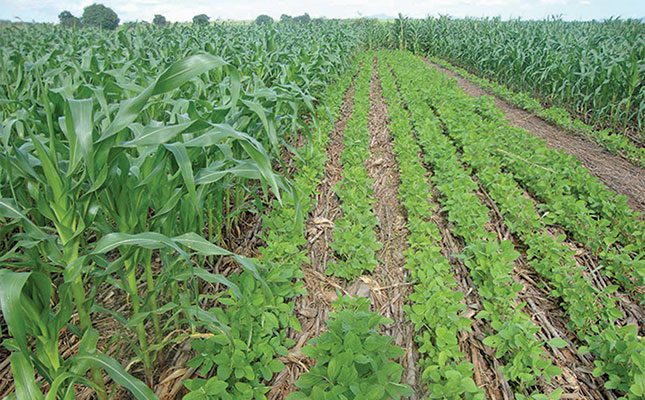
The continual practice of ‘monoculture’ planting by farmers is becoming increasingly detrimental to the quality of produce in the longer term, so cyclical rotation is a better option, writes Shane Brody.

Related posts

De-Dollarization Comes In Cycles, Not a One-Way Path: US Fed

De-Dollarization Comes In Cycles, Not a One-Way Path: US Fed

December 19, 2025
Growing greenery for the South African flower market

Growing greenery for the South African flower market

December 19, 2025
Crop rotation is key in vegetable and crop production

Having spent my formative years in what eventually became the Transkei region and having rum donor-funded farming projects in the former Ciskei region, over time I witnessed the gradual degradation of crop and vegetable production.

I would, in some instances, see the ongoing practice of ‘monoculture’: this effectively means the planting of the same crops, year-in and year-out, on the same croplands. Because maize is part of the staple diets of many communities in South Africa, the previously mentioned monoculture invariably involved this crop.

Each planting season I would notice maize plants becoming progressively smaller and increasingly yellow in colour and this is invariably caused by nutrient deficiencies, and even perhaps by high pathogen and parasite levels in the soil. Without fail, the food produced by such plants will be substandard.

The problem with monoculture is that many parasites and fungal infections are specific to certain plants, and if new plants are not introduced in cycles onto croplands, and into vegetable gardens, parasites and fungal infections are allowed to systematically and progressively increase in number.

Impact on production

This starts to impact heavily on production. When a producer institutes crop rotation on the other hand, this not only assists in breaking the life cycles of pests, it allows different types of plants to ‘work their magic’ on the soil.

Essentially, different types of plants that produce food for us require different nutrients, and some add to the soil what others have extracted or removed. This also saves you in the long term because you will be less reliant on expensive fertilisers.

Irrespective of how small your land or garden is, you can divide the area into four different areas because there are roughly four different classes of vegetable or food crop.

Some commonly grown food-producing plants are mentioned below, and I’ll offer some advice on how you can rotate these from area to area each growing season.

Before doing this however, you need to understand more about the benefits of crop rotation:

  • Vast improvements in nutrient status of the soil and improvements in soil characteristics;
  • Increased range and activities of crucial and beneficial soil organisms;
  • A marked reduction in plant parasites and diseases;
  • Reduced erosion of the soil in the rainy season; and
  • Having continual coverage (if you’re able to plant in winter in your region) of the soil by valuable and profitable plants.

While some countries may use different words or terminologies for some of these, the basic four types of food-producing plants are classified into the following:

  • Legumes: these are vegetables such as green beans, soya beans, fava beans, chickpeas, peas, lupines, and peanuts. These plants add valuable nitrogen to the soil;
  • Root vegetables: these are vegetables like carrots, radish, beetroot, onion, and turnips. These are light feeders and like more potassium and phosphorous than nitrogen;
  • Leafy greens/brassicas: these are produce like lettuce, spinach, herbs, cabbages, cauliflower, and broccoli. They require lots of nitrogen and are thus heavy feeders and will extract nitrogen from the soil;
  • Fruiting vegetables: these include squash, tomatoes, potatoes, melons, pumpkin, cucumbers, corn, and butternut. These plants require lots of phosphorous and some nitrogen.

More holistic approach

So, an example of a four-year cyclical rotation each new growing season would be to plant legumes in the first area or bed in your first season of growing, greens in the second plot, fruiting vegetables in the third, and root vegetables in the fourth.

The second year, move the legumes to where the greens were planted, the greens to where the fruiting vegetables were planted, the fruiting vegetables to where the root vegetables were planted, and the root vegetables to where the legumes were planted. Keep records each year, and keep the rotational cycle going.

If you live in a tropical or subtropical region, then effectively you can adapt the cycle to become a two-year cycle.

Crop rotation can be regarded as a more holistic approach to production, and this increases your ability to use nature to save on costs, and simultaneously reduce risk.

Shane Brody is involved in an outreach programme aimed at transferring skills
to communal farmers.

Source link

Previous Post

Stocks stabilise; investor nerves fray ahead of Nvidia earnings, jobs data

Next Post

American-Canadian billionaire opens $2-billion platinum mine in South Africa after 37 years of planning

Next Post
American-Canadian billionaire opens $2-billion platinum mine in South Africa after 37 years of planning

American-Canadian billionaire opens $2-billion platinum mine in South Africa after 37 years of planning

Leave a Reply Cancel reply

Your email address will not be published. Required fields are marked *

RECOMMENDED NEWS

MediaTek and RIOT Network Expand Affordable Wi-Fi Across South Africa – IT News Africa

MediaTek and RIOT Network Expand Affordable Wi-Fi Across South Africa – IT News Africa

2 years ago
Code, Connect, Change: Women Shaping the Future of ICT Innovation

Code, Connect, Change: Women Shaping the Future of ICT Innovation

1 month ago
Korea’s Myrealtrip cashes in on travel rebound with $56M in new funding

Korea’s Myrealtrip cashes in on travel rebound with $56M in new funding

2 years ago
Australia to Buy Advanced US Missiles in $4.7B Deal

Australia to Buy Advanced US Missiles in $4.7B Deal

1 year ago

POPULAR NEWS

  • Ghana to build three oil refineries, five petrochemical plants in energy sector overhaul

    Ghana to build three oil refineries, five petrochemical plants in energy sector overhaul

    0 shares
    Share 0 Tweet 0
  • The world’s top 10 most valuable car brands in 2025

    0 shares
    Share 0 Tweet 0
  • Top 10 African countries with the highest GDP per capita in 2025

    0 shares
    Share 0 Tweet 0
  • Global ranking of Top 5 smartphone brands in Q3, 2024

    0 shares
    Share 0 Tweet 0
  • When Will SHIB Reach $1? Here’s What ChatGPT Says

    0 shares
    Share 0 Tweet 0

Get strategic intelligence you won’t find anywhere else. Subscribe to the Limitless Beliefs Newsletter for monthly insights on overlooked business opportunities across Africa.

Subscription Form
© 2023 LBNN – All rights reserved.

Privacy Policy | About Us | Contact

Tiktok Youtube Telegram Instagram Linkedin X-twitter
No Result
View All Result
  • Home
  • Business
  • Politics
  • Markets
  • Crypto
  • Economics
    • Manufacturing
    • Real Estate
    • Infrastructure
  • Finance
  • Energy
  • Creator Economy
  • Wealth Management
  • Taxes
  • Telecoms
  • Military & Defense
  • Careers
  • Technology
  • Artificial Intelligence
  • Investigative journalism
  • Art & Culture
  • LBNN Blueprints
  • Quizzes
    • Enneagram quiz
  • Newsletters
    • LBNN Newsletter
    • Divergent Capitalist
  • Fashion Intelligence

© 2023 LBNN - All rights reserved.