

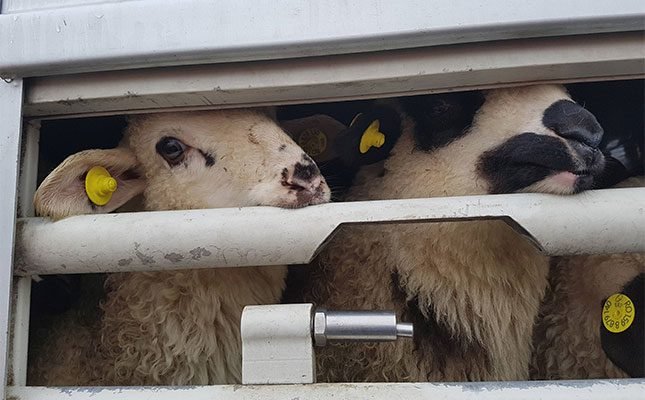
Government’s draft regulations for the export of live animals by sea have sparked sharp criticism from animal welfare groups, who argue the measures will do little to protect livestock and instead entrench cruelty in law.


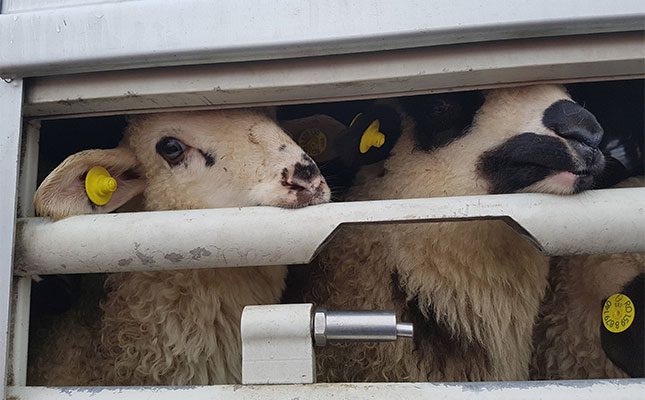
Photo: Supplied | Stop Live Export SA
Public comments on the draft closed on 25 August, and the Department of Agriculture (the department) said submissions were received from NGOs, industry stakeholders, the public, and other interested parties.
The department told Farmer’s Weekly that the standard administrative process would now be followed and further consultation would be undertaken if necessary. Following ministerial approval, the aim was to publish the final regulations during the 2026/27 financial year.
Details of draft regulations
Published under the Animals Protection Act (No. 71 of 1962), the regulations aimed to formalise standards and set out detailed requirements for transporting cattle, sheep, and other livestock by sea.
The requirements included strict specifications for the condition of vehicles and vessels, the qualifications of onboard veterinarians, and the design of pens. All ships must be fitted with ventilation systems capable of functioning throughout the journey, while drainage facilities must remove waste to prevent ammonia build-up.
Animals must be given enough space to stand naturally, move, and lie down, with unrestricted access to feed and water troughs. Said troughs must be designed to prevent contamination by urine or faeces. Ships would be required to carry sufficient feed and fresh water for the duration of the journey, with reserves to cover at least seven additional days in the event of delays.
Veterinarians travelling onboard would be tasked with monitoring panting scores to detect early signs of heat stress in the animals. Sick or injured livestock must be isolated and treated without delay, or humanely euthanised if their suffering was deemed severe.
Objections from welfare groups
Critics of the draft regulations have, however, pointed out that they did not contain any mention of penalties for non-compliance. Furthermore, they said that once vessels left South African ports, the country’s laws become unenforceable.
Animal welfare organisations, including FOUR PAWS, Humane World for Animals South Africa, and Stop Live Export South Africa, have called for an outright ban on the live transport of animals by sea. They pointed to countries such as New Zealand, Germany and the UK that have outlawed such practices, and Australia, which will phase them out by 2028.
The National Council of Societies for the Prevention of Cruelty to Animals (NSPCA) has been fighting for this ban since 2019. In February 2024, public outrage erupted when the Al Kuwait docked in Cape Town with 19 000 cattle in cramped, poorly ventilated conditions. NSPCA officials found unsanitary pens and overwhelming odours on the vessel bound for Iraq.
“The minister of agriculture is legally charged with upholding animal welfare. These draft regulations are not a sincere attempt to protect animals but rather a cynical effort to greenwash a practice that should never have been allowed in the first place,” Tony Gerrans, executive director of Humane World South Africa, said in a statement.
He added that, while government maintained its regulatory approach prioritised animal welfare, there was ample global evidence these systems resulted in immense animal suffering and were near-impossible to monitor once the animals left South African shores.
Michelle Taberer, co-founder of Stop Live Export SA, was equally firm in her position on the issue.
“To justify this trade in the name of economic growth is to build prosperity on a foundation of pain. It is nothing more than a modern profit-for-pain exchange. South Africa must be a beacon of ethical progress, not a participant in outdated and cruel systems. The world is watching.
“Other countries have banned this trade, recognising that kindness and economics are not mutually exclusive. We must follow suit, not with lukewarm regulations but with an unambiguous ban,” she said.
Endorsement from industry
Despite public concern, industry stakeholders insist that live exports remain critical for South African farmers. According to the Red Meat Producers’ Organisation (RPO), exporting live animals supported the industry’s sustainability by providing access to international markets, particularly in the Middle East and Southern Africa, where cultural preferences for live animals remained strong.
“[These markets are] part of a robust global live export trade, with nearly two billion animals transported across international borders each year,” Frik van Rooyen, chairperson of the RPO’s Live Export Forum, said.
“The guidelines that have been in place for the past few years will be replaced by these new regulations once gazetted. The regulations will create a balance between the economic benefits to the industry and animal welfare, which the industry supports,” Van Rooyen concluded.


