
• Business
  • Markets
  • Politics
  • Crypto
  • Finance
  • Intelligence
    • Policy Intelligence
    • Security Intelligence
    • Economic Intelligence
    • Fashion Intelligence
  • Energy
  • Technology
  • Taxes
  • Creator Economy
  • Wealth Management
  • LBNN Blueprints
  • Business
  • Markets
  • Politics
  • Crypto
  • Finance
  • Intelligence
    • Policy Intelligence
    • Security Intelligence
    • Economic Intelligence
    • Fashion Intelligence
  • Energy
  • Technology
  • Taxes
  • Creator Economy
  • Wealth Management
  • LBNN Blueprints

Could AI Data Centers Be Moved to Outer Space?

Simon Osuji by Simon Osuji
February 20, 2026
in Artificial Intelligence
0
Could AI Data Centers Be Moved to Outer Space?
0
SHARES
0
VIEWS
Share on FacebookShare on Twitter


Here ε is the emissivity of the object—how effective it is as a radiator (0 < ε < 1), σ is the Stefan-Boltzmann constant, A is the surface area, and T is the temperature (in Kelvin). Since we have temperature to the fourth power, you can see that hotter things radiate much more power than cooler things.

OK, say you want to play Red Dead Redemption in space. Your computer is gonna get hot—maybe 200 F (366 Kelvin). To keep it simple, let’s say this is a cube-shaped PC with a total surface area of 1 square meter, and it’s a perfect radiator (ε = 1). The thermal radiation power would then be around 1,000 watts. Of course your computer is not a perfect radiator, but it looks like you’d be fine. As long as the output (1,000 watts) is greater than the input (300 watts), it’ll cool down.

Now say you want to run some modest AI stuff. That’s a bigger job, so let’s scale up our cubical computer with edges twice as long as before. That would make the volume eight times larger (23), so we could have eight times as many processors, and we need eight times as much power input—2,400 watts. However, the surface area is only four times (22) larger, so the radiative power would be about 4,000 watts. You still have more output than input, but the gap is narrowing.

Size Matters

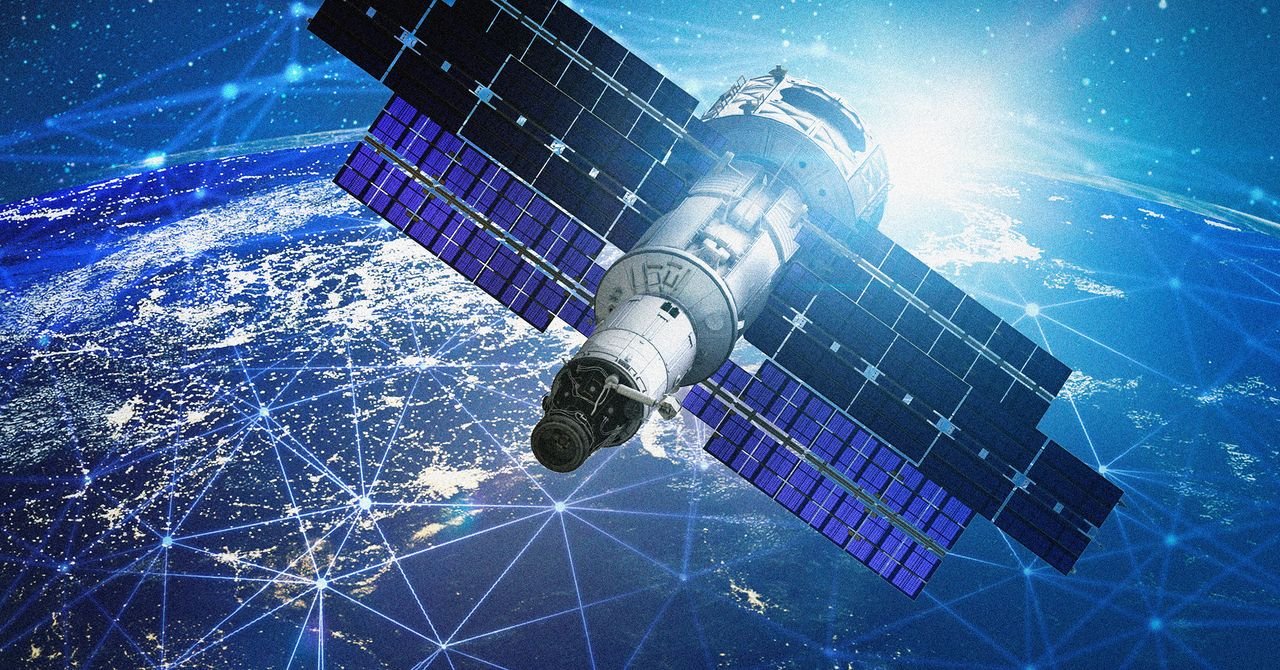
You can see where this goes. If you keep scaling it up, the volume grows faster than the surface area. So the larger your space computer, the harder it is to cool. If you were picturing an orbiting Walmart-size structure, like the data centers on Earth, that’s just not going to happen. It would melt.

Of course, you could add on external radiation panels. The International Space Station has these. How big would they have to be? Well, say your data center runs on 1 megawatt. (Existing AI data centers on Earth use 100 to 1,000 megawatts.) Then you’d need a radiating area of at least 980 square meters. This is getting out of hand.

Oh, and these radiators aren’t like solar panels, connected by wires. They need systems to conduct heat away from the processors out to the panels. The ISS pumps ammonia through a network of pipes for this. That means even more material, which makes it that much more expensive to hoist into orbit.

So let’s take stock. Even though we set this up with favorable assumptions, it’s not looking very good. We’re not even taking into account the fact that solar radiation will heat up the computer as well, which will require even more cooling. Or that intense solar radiation will likely damage the electronics over time. And how do you make repairs?

However, one thing is clear: Because cooling is inefficient in space, your “data center” would have to be a swarm of small satellites with better area-to-volume ratios, not a few large ones. That’s what most proponents, like Google’s Project Suncatcher, are now suggesting. Elon Musk’s SpaceX has already requested FCC permission to launch a million small AI satellites into orbit.

Hmm. Low Earth orbit is already congested with 10,000 active satellites and some 10,000 metric tons of space junk. The risk of collisions, maybe even catastrophic Kessler cascades, is already real. And we’re going to add a hundred times as many satellites? All I can say is, “Look out below.”



Source link

Related posts

Quantum computer breakthrough tracks qubit fluctuations in real time

Quantum computer breakthrough tracks qubit fluctuations in real time

February 20, 2026
Epilogue GB Operator Review: Play Your Game Boy Games on a Laptop

Epilogue GB Operator Review: Play Your Game Boy Games on a Laptop

February 20, 2026
Previous Post

Steenhuisen: ‘FMD is not under control

Next Post

Will SHIB Make a Comeback?

Next Post
Will SHIB Make a Comeback?

Will SHIB Make a Comeback?

Leave a Reply Cancel reply

Your email address will not be published. Required fields are marked *

RECOMMENDED NEWS

Indian fintechs amplify sound box pitches to woo merchants

Indian fintechs amplify sound box pitches to woo merchants

2 years ago
Roberto’s Muscat: A new jewel on the Omani coastline

Roberto’s Muscat: A new jewel on the Omani coastline

1 year ago
Biden envoy in Israel as northern border tensions flare

Biden envoy in Israel as northern border tensions flare

2 years ago
Facebook Finally Puts a Price on Privacy: It’s $10 a Month

Facebook Finally Puts a Price on Privacy: It’s $10 a Month

2 years ago

POPULAR NEWS

  • Ghana to build three oil refineries, five petrochemical plants in energy sector overhaul

    Ghana to build three oil refineries, five petrochemical plants in energy sector overhaul

    0 shares
    Share 0 Tweet 0
  • The world’s top 10 most valuable car brands in 2025

    0 shares
    Share 0 Tweet 0
  • Top 10 African countries with the highest GDP per capita in 2025

    0 shares
    Share 0 Tweet 0
  • Global ranking of Top 5 smartphone brands in Q3, 2024

    0 shares
    Share 0 Tweet 0
  • When Will SHIB Reach $1? Here’s What ChatGPT Says

    0 shares
    Share 0 Tweet 0

Get strategic intelligence you won’t find anywhere else. Subscribe to the Limitless Beliefs Newsletter for monthly insights on overlooked business opportunities across Africa.

Subscription Form

© 2026 LBNN – All rights reserved.

Privacy Policy | About Us | Contact

Tiktok Youtube Telegram Instagram Linkedin X-twitter
No Result
View All Result
  • Home
  • Business
  • Politics
  • Markets
  • Crypto
  • Economics
    • Manufacturing
    • Real Estate
    • Infrastructure
  • Finance
  • Energy
  • Creator Economy
  • Wealth Management
  • Taxes
  • Telecoms
  • Military & Defense
  • Careers
  • Technology
  • Artificial Intelligence
  • Investigative journalism
  • Art & Culture
  • LBNN Blueprints
  • Quizzes
    • Enneagram quiz
  • Fashion Intelligence

© 2023 LBNN - All rights reserved.