

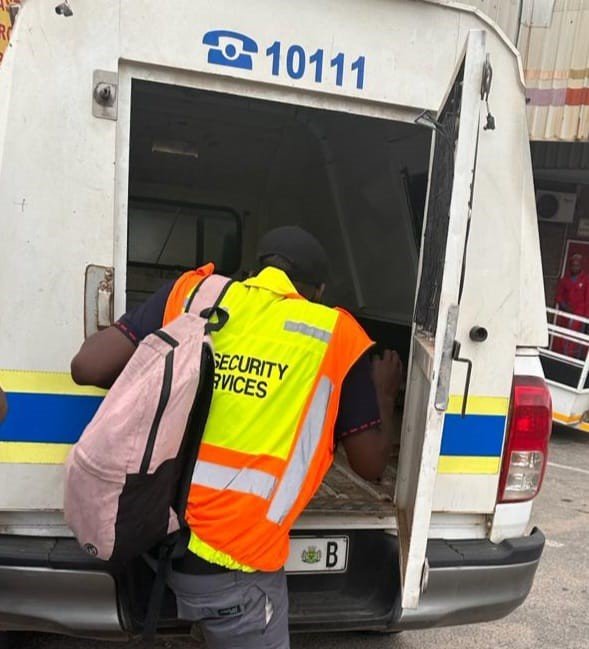
In response to a parliamentary question by Economic Freedom Fighters (EFF) representative Chumani Matiwane, the Minister of Police, Senzo Mchunu, has provided assurances that the Private Security Industry Regulatory Authority (PSiRA) is sufficiently resourced to regulate the private security sector, despite growing concerns about the emergence of private security companies linked to the taxi industry and reports of paramilitary-style training operations.
Budget and Staffing Deemed Sufficient
According to the Minister, the Law Enforcement Unit within PSiRA has been allocated R203 million for the 2024/25 financial year. This budget primarily funds inspector salaries, travel, and equipment, and includes provisions for the recruitment of 30 additional inspectors. A further R5 million is earmarked for law enforcement vehicles and other operational resources.

The unit currently comprises 68 inspectors, six prosecutors, five forensic investigators, three legal advisors, and 34 interns. The Department claims this staffing level is sufficient to regulate the industry, particularly when supported by inter-agency collaboration with the South African Police Service, Department of Employment and Labour, and Department of Health.
However, questions remain about whether this capacity is adequate for the scale and complexity of the sector, which now includes actors operating at the edges of legality. The Authority also relies on broader regulatory tools such as self-assessments and compliance forums, which are useful, but inherently dependent on voluntary cooperation from the industry.
Enforcement Claims and Transparency Gaps
The Minister described the Law Enforcement Unit as “highly effective,” pointing to a 93% compliance rate within the private security sector for 2023/24. Yet, such figures may warrant scrutiny, given the reported rise of security operations linked to taxi violence and unregistered training camps.
By the end of February 2025, PSiRA had conducted 8,221 inspections of security businesses and 41,450 inspections of security officers. While these figures appear robust, the Authority admitted that it does not disaggregate inspection data specific to the taxi industry, limiting transparency in one of the most controversial areas of the sector.
This omission is notable, particularly given long-standing concerns about the use of security personnel in taxi-related violence and intimidation. Further, at the end of March 2025, over 639,000 registered security officers were registered with PSiRA, according to figures from the Security Association of South Africa (SASA).
Paramilitary Training Under Watch, but Not Clearly Regulated
PSiRA does not accredit or recognise paramilitary training as part of its regulatory mandate. Nevertheless, it did take action against one accredited training provider found to be offering such training in the past financial year. The provider was charged and prosecuted.
Two other complaints, one each in Limpopo and KwaZulu-Natal, were investigated but found to fall outside the PSiRA’s jurisdiction. This highlights a critical legal grey area, as paramilitary training remains largely outside PSiRA’s formal oversight, raising questions about the adequacy of current legislation in addressing the full scope of security-related risks.
The Authority does inspect accredited training providers to ensure they adhere to legal standards. Yet it concedes that resources remain stretched in covering all providers comprehensively.
Prosecutions and Key Violations
In the current financial year, 1,219 security providers were prosecuted, with a 99.8% success rate, 1,216 successful cases. While this appears impressive on paper, it offers little insight into the severity or nature of the offences involved.
Violations linked to paramilitary training largely involved non-compliance with approved training standards and breaches of the Immigration Act and Foreign Military Assistance Act. Meanwhile, violations associated with the taxi industry were primarily related to the unlawful possession and use of firearms, an issue governed by the Firearms Control Act.
The Minister also cited lack of integrity, criminality, and greed as underlying drivers of these violations, though it remains unclear how these systemic problems are being addressed at a policy level.
Broader Questions of Oversight
While PSiRA appears to have the basic infrastructure and authority to manage conventional regulatory tasks, the expanding scope of private security, particularly where it intersects with organised transport and quasi-military operations, raises important questions about regulatory sufficiency.
Current oversight mechanisms may be adequate for standard compliance, but may fall short in confronting actors who deliberately operate beyond the boundaries of the existing framework. The lack of specific data on high-risk sectors and the legislative limitations surrounding paramilitary training suggest that further reforms may be necessary to prevent abuses and ensure public safety.


