Since 2018, Africa has been the global epicentre of violent extremism, with devastating effects on the lives and livelihoods of millions, especially civilians. Over 23 000 people died at the hands of terrorists in Africa last year, up 20% from 2022.
Half of the world’s 16 top countries impacted by violent extremism are in Africa, according to the Global Terrorism Index. These include Burkina Faso, Mali, Somalia, Nigeria, Cameroon, Niger, the Democratic Republic of the Congo, and Mozambique. And in 2023, the United Nations (UN) warned that terrorism was spreading further across Africa.
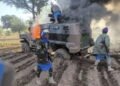

Despite national, regional and continental efforts to tackle terrorism, as well as various UN peace missions, the crisis is deepening. African organisations, including the African Union (AU) and regional economic communities, should revisit their approaches and find the right means to address the problem.
Could community-oriented policing work? It has been used successfully worldwide to reduce civilians’ fears of security threats, prevent crime and improve public safety. It’s particularly effective in preventing and countering radicalisation at a local level.
The approach encompasses five key elements: problem solving, partnership, service delivery, empowerment and accountability. These help the police build trusting relations with local civilians by regularly engaging with residents, community groups, business owners and other stakeholders.
Community members are best placed to recognise suspicious activities in their areas – including those associated with radicalisation and extremism. Established partnerships with communities allow the police to act proactively, solve crime and violence problems, and build local resilience to extremism.
However, community-oriented policing has been underused in Africa as a counter-terrorism response. Most regional and continental interventions have relied on military measures. The AU has authorised over 25 peace support operations across Africa in the past 20-plus years to help resolve conflicts and curb violent extremism – but only a few have included a small policing element.
Since 2007, the AU’s largest mission has been in Somalia. AMISOM, now called the AU Transition Mission in Somalia (ATMIS), has focused on degrading the violent extremist group al-Shabaab and building local and national capacity for peacebuilding. In the Lake Chad Basin area, the AU’s Multinational Joint Task Force (MNJTF) was deployed in 2014 to fight Boko Haram. And the G5 Sahel Joint Force was formed in 2017 to deal with various terror groups and organized crime in the Sahel.
Of these missions, only that in Somalia has included police elements – with limited capability. Both the MNJTF and G5 Sahel Joint Force were purely military operations.
Most terror groups targeted by these missions are linked to radical Islamist ideology and focus on mobilising support and recruiting from Africa’s large youth population. They use force, but also appeal to those who have lost faith in their governments due to poor service delivery or violence meted out by security forces. A United States Institute of Peace study found that Boko Haram was able to radicalise youth disaffected by their governments’ harsh tactics and excessive use of force.
Applying community-oriented policing in peace support operations and other missions can help. Instead of raising the risk of radicalisation through military crackdowns, police can provide local security services, engage communities as partners – not adversaries, and win public trust. Police deployed on peace missions can also train local police to follow the same approach, which would reduce the risk of radicalisation and recruitment into terror groups.
The effectiveness of community-oriented policing in combating extremism is globally recognised. The UN Security Council has highlighted the importance of community-oriented policing institutions with well-trained officers to help counter violent extremism, including by building trust and dialogue between government officials and the public.
The underlying causes for the proliferation of terror groups are complex and varied. Religion and political ideology play a role, but so do weak state structures, discriminatory law enforcement practices, conflict and organised crime. Violent extremists co-opt illicit economies and get involved in other crimes. In the Sahel, terror groups like Jama’at Nusrat al-Islam wal-Muslimin are involved in trafficking, kidnapping, artisanal gold mining, and cattle and livestock rustling. In Somalia, al-Shabaab collects taxes from illicit economies such as the charcoal trade.
For peace support operations to deal with these organised crime dynamics, enough police officers must be included in peace missions. The absence of police from most AU missions aimed at countering terrorism has led to weak community engagement and missed opportunities to build local police capacity, support crime investigations and track criminal syndicates.
Research by the Norwegian Institute of International Affairs into the MNJTF’s effectiveness identified the lack of policing capability as one of the mission’s key challenges. ATMIS in Somalia has a police component, but it’s insufficient in capacity and number. As a result, areas liberated by the mission’s soldiers and Somalia’s security forces often fall again to al-Shabaab extremists. This is due to inconsistent engagement with local populations and a failure to provide ongoing security services.
While military operations are important for weakening terrorists’ military capabilities, community-oriented policing is essential to building peace by winning the hearts and minds of local communities.
The MNJTF recently reported the effectiveness of such approaches in countering terrorism and fostering stability in its mission. Its ‘non-kinetic operations have been instrumental in persuading terrorists to embrace peace and renounce violence in the Lake Chad area,’ the report asserts. Had the mission included police elements, it could have been even more successful.
Well-resourced community-oriented policing would help combat radicalisation and terrorism in Africa. The AU, regional economic communities and African countries should prioritise the approach and include more police in their peace mission deployments. African countries should provide the AU and regional missions with personnel trained and qualified in community-oriented policing.
This article was first published in Africa Up Close, a blog of the Wilson Centre’s Africa Program.
Republished with permission from ISS Africa. The original article can be found here.
.