– Advertisement –
The re-election of Donald Trump has thrown global climate leadership into uncertainty, with a rollback of Biden-era clean energy policies, withdrawal from the Paris Agreement, and a focus on fossil fuels over renewables. This moment offers Africa a critical opportunity to strengthen its partnership with Europe for green industrialisation. African policymakers must seize this opening to position the continent as a leader in the global green economy, significantly moving beyond resource extraction to industrial value creation.
Africa and Europe have long recognised the need for a mutually beneficial industrial partnership to achieve net-zero ambitions and effective climate action. However, practical measures to realise this vision have fallen short. The EU’s new Clean Industrial Deal, promised within the first 100 days of the new Commission’s mandate, presents a chance to rethink this partnership.
While the Draghi report, which foundates the deal, focuses on improving EU competitiveness, it also acknowledges the need for stronger external partnerships, particularly with Africa. EU Commission President Ursula von der Leyen has announced new clean trade and investment partnerships, but how these will differ from past initiatives remains unclear.
Africa’s climate competitiveness is a key asset in this partnership. The continent’s vast renewable energy potential, coupled with its critical raw material reserves, positions it as a vital player in the global green economy. Sub-Saharan Africa is endowed with 30% of global reserves of critical raw materials. African leaders, such as Kenya’s President Ruto, have already emphasised the need to industrialise while decarbonising, reduce the cost of sustainable energy, and build green skills and jobs through initiatives like the Africa Green Industrialisation Initiative (AGII).
These priorities align with Europe’s goals, but the starting points and means to achieve them differ. Africa must leverage these differences to forge complementary partnerships with Europe, ensuring that value addition and industrial jobs remain on the continent.
However, current narratives often reduce Africa to a supplier of raw materials, echoing post-colonial patterns that have historically benefited elites and foreign companies while leaving little added value for local populations. This approach erodes trust and fails to recognise Africa’s potential as a future market for intermediary or final products. For example, instead of exporting raw lithium, African countries could develop local battery manufacturing capabilities, tapping into the growing global.
In the same vein, green iron imports from countries like Namibia and South Africa, rooted in their renewable energy advantages, are not only technically feasible but economically sound. Such partnerships could transform value chains, with Africa supplying processed inputs to Europe, enhancing the competitiveness of industries like steel while creating jobs and value on the continent.
Europe’s energy scarcity further strengthens the need for Africa’s partnership. Many African countries, with their ample renewable energy resources, can offer the climate competitiveness Europe lacks. Energy-intensive industries, such as steel production, could be more efficiently located in Africa, where renewable energy is cheaper and more abundant. Technological innovations, like hydrogen direct reduced iron (HDRI) furnaces, present opportunities to locate production in countries with competitive green energy, such as those in Southern Africa. This would not only reduce costs for European industries but also accelerate global decarbonisation efforts.
Yet, one must acknowledge that challenges remain. African countries must negotiate investment partnerships that ensure fair terms and local value capture. Past deals have often favoured buyers, leaving African nations with limited benefits. To attract EU investments, African governments must develop clear, country-led industrialisation pathways and Just Energy Transition Investment Plans (JETIPs).
These plans should focus not only on export markets but also on domestic and regional markets, fostering industries like food processing, e-mobility, and textiles. African can gain EU support for this with the continent investing in skills, innovation, and technology transfer, ensuring that African economies are not just recipients of technology but active participants in the global green economy.
There are lots of potential and concrete opportunities for dialogue and partnership agreements, with the inauguration of the Green Industrialisation Initiative on the African side, a new African Union presidency coming up and a new EU commission focused on green industrialisation and competitiveness.
The upcoming AU-EU Summit in 2025 creates a momentous room for African leaders to set the tone for the future of Africa-Europe partnerships. African policymakers can ensure that green industrialisation delivers tangible benefits for their citizens by advocating for fair terms, local value addition, and regional integration. Such collaboration would allow both continents to pursue their industrial and climate goals more effectively, ensuring stable progress in the face of shifting U.S. policies and reinforcing mutual benefits in sustainable development, competitive markets, and energy security.
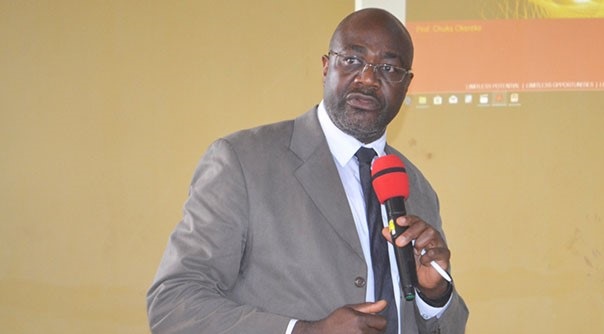
Professor Chukwumerije Okereke, a Professor of Global Governance and Public Policy at University of Bristol, is Visiting Professor at the London School of Economics, UK and Co-Chair of Ukama Platform, a group of thought-leaders that aim to strengthen Africa-Europe relationship to achieve just sustainability transformation