

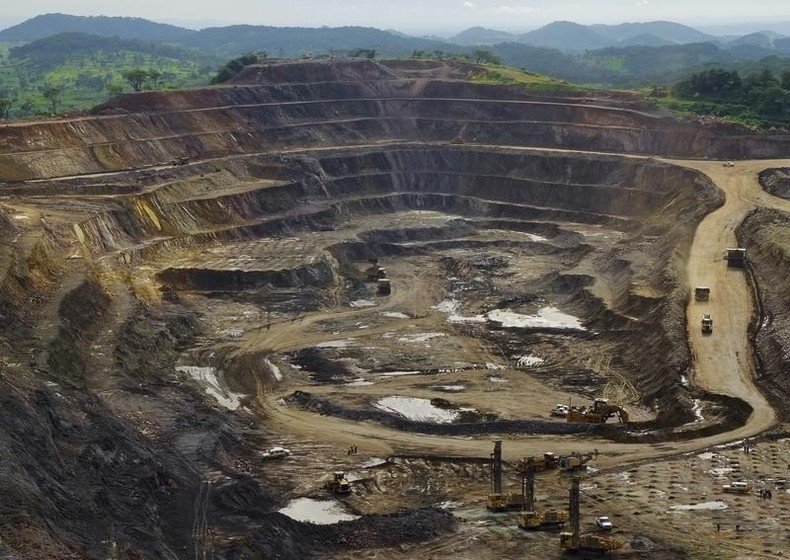
The report, titled Toxic Transition, alleges that a large-scale cobalt operation in southern Democratic Republic of Congo is exposing nearby communities to hazardous emissions, resulting in illness and displacement.
The Tenke Fungurume mine, owned by China’s CMOC Group, is among the world’s leading sources of cobalt, a key mineral used in lithium-ion batteries for electric vehicles, smartphones and renewable energy storage.
According to environmental watchdogs, operations at the site are contaminating surrounding areas and displacing thousands, even as its output feeds into global supply chains linked to some of the world’s largest carmakers.
“The health crisis is very real,” said Alexander von Bismarck, executive director of the Environmental Investigation Agency (EIA).
“Independent medical professionals say the connection to the mine is highly likely, and our own independent measurements show that the air in nearby communities has recently been above international safety standards.”
Communities at the centre of the supply chain debate
As automakers accelerate the shift away from fossil fuels, demand for cobalt has surged, with about 43% of global consumption now linked to electric vehicles.
However, communities where the mineral is extracted are bearing the brunt of this large-scale production.
The investigation, conducted by EIA and Congolese civil society group PremiCongo, focuses on the Tenke Fungurume mine, where a major processing plant is accused of releasing sulfur dioxide (SO₂), a toxic gas linked to respiratory illness and environmental degradation.
“This report shines a light on the human cost of the world’s energy transition and electric vehicle boom as automakers continue to turn a blind eye to their supply chains,” said Christian Bwenda, coordinator of PremiCongo.
“We now have strong evidence of what communities have known for years: They’re the victims of the unchecked growth of the Tenke Fungurume mine.”
Global automakers drawn into supply chain accountability questions
The report, cited by The Africa Report, traces cobalt from the Tenke Fungurume mine through battery manufacturers and into vehicles produced by major global brands, including BMW, Mercedes-Benz, Stellantis and Volkswagen.
None of the companies named denied that cobalt from the mine could indirectly enter their supply chains, according to the report.
In response to the findings, Mercedes-Benz said it had begun discussions with the mine’s operator, while BMW stated it investigates any indications of potential violations within its supply chains.
Similarly, Stellantis confirmed sourcing cobalt from the mine and said third-party auditors had previously reported “serious illness linked to pollution” near the processing plant.
Volkswagen, however, had not responded to requests for comment at the time of publication.
Experts challenge supply chain complexity claims
Nevertheless, Alexander von Bismarck, executive director of the Environmental Investigation Agency (EIA), said the health risks linked to the mine are significant.
He rejected claims that global supply chains are too complex to trace, arguing that responsibility ultimately lies with the companies involved.
“If you take cobalt as an example, the supply chain is actually quite simple.
A majority of the world’s cobalt comes from this region in DR Congo, and about 50% of global production comes from the Chinese company CMOC Group Limited,” he said.
He added that companies must take responsibility for their sourcing practices.
“The companies either have to stop lying, stop claiming to be complying with human rights and environmental standards, or they must actually comply.”
He further noted that tracing supply chains is not technically difficult for companies with significant resources.
“What we are seeing appears to be a matter of convenience rather than technical impossibility,” he added.
The report calls on automakers to halt purchases of cobalt linked to emissions concerns at the Tenke Fungurume mine until the operation can demonstrate compliance with both Congolese law and international environmental standards.
Africa pays the price in global race for critical minerals
As the global demand for critical minerals intensifies, the Democratic Republic of the Congo has become a focal point in the escalating United States–China rivalry, while African nations and local communities continue to shoulder the environmental and social costs of extraction.
Experts argue that the situation underscores the urgent need for stronger accountability mechanisms, including fair compensation and protection for affected communities, to ensure that Africa’s resource wealth delivers inclusive benefits rather than deepening existing inequalities.


