The World Alliance for Mercury-Free Dentistry (WAFMD) will on Monday, December 9, 2024, kick off a week-long flagship Africa Week for Mercury-Free Dentistry. It is themed: “Implementing the Children’s Amendment in Africa/Developing economies (COP 4.2)”.
Part of the decisions during COP4.2 include no dental (mercury) amalgam for pregnant or breastfeeding women, children from 1 to 6 years and women of childbearing age (15-39 years).


In a statement issued ahead of the week-long event which holds from December 9 to 13, 2024, in several African countries including Nigeria, Kenya, Ivory Coast, Sierra Leone, Ghana, and Tanzania, among others, Chairman and Founder, Dentists Committee for a Mercury Free Africa, Prof. Godwin Toyin Arotiba, said Africa should not be a dumping ground for dental amalgam, and African countries have poor resources and technology to manage mercury wastes.
He pointed that the African dentist desires to practice 21st Century mercury-free dentistry (minimum intervention Dentistry – MID) and not 19th century tooth destructive “drill and fill” dentistry (which is not evidence based).
“While 21st century dentistry aims to keep all teeth and oral tissue healthy and functional for life, drill and fill dentistry often results in toothless ‘grandpa’ smile in old age with poor oral and general health outcome,” Prof. Aritoba added.
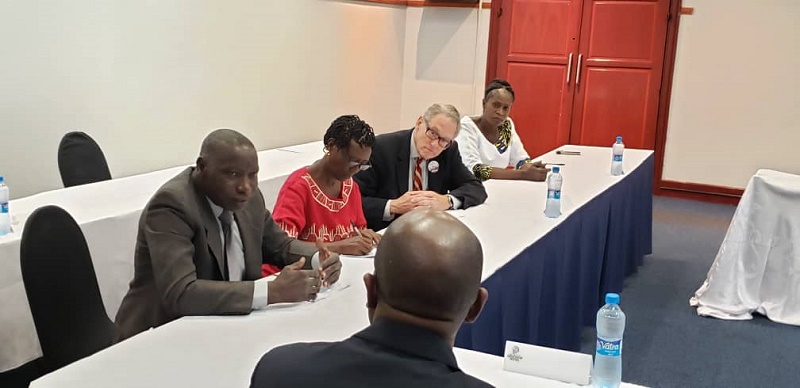
President of the US-based World Alliance for Mercury-Free Dentistry, Charlie Brown, during a recent visit to Abuja, Nigeria, disclosed that the organisation has activities in 23 African countries that all started after the Abuja Declaration of 2014 which became a prototype for the whole world on phase down of dental amalgam.
He went further, “The Abuja Declaration became the prototype for the whole world. After the Abuja Declaration, we did the Dakar Declaration, for Asia for mercury-free dentistry, the Declaration for Latin America, the Chicago Declaration for mercury-free dentistry in the United States. Then the Bonn Declaration.
“All these came from the Abuja Declaration because it just sounds governmental, it sounds official. It really was just eight of us in the room. We had the West African group, Dominique Bally from Ivory Coast, along with people from Benin, Senegal, Ghana, off course Nigeria and Tanzania. Everybody was so excited. So, the Abuja meeting actually started the campaign in East Africa too.
“Abuja Declaration is what those of us see as a vision Africa should have. Did we know what we were doing? Not yet. Did we have a plan? No, not yet. We had a vision and that was the Abuja Declaration,” he said.