

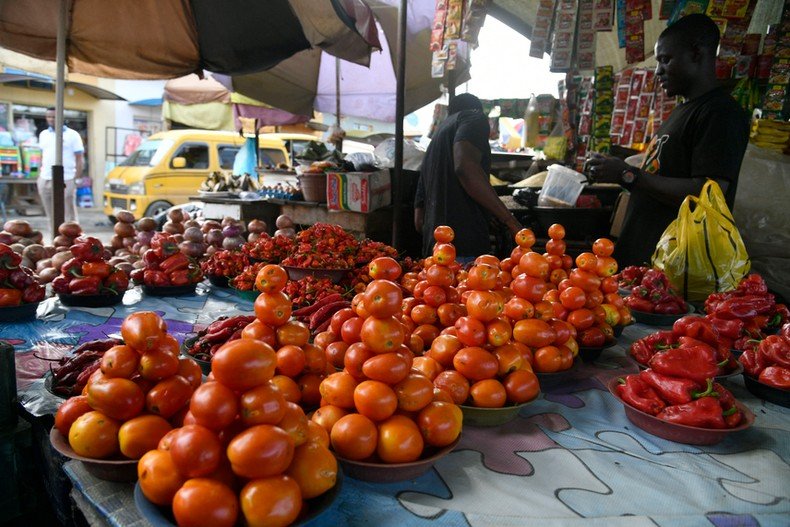
The decision, announced in a joint communiqué signed by Industry Minister Serge Gnaniodem Poda and Agriculture Minister Ismaël Sombie, reflects a broader push by the military-led government to strengthen local manufacturing and reduce reliance on raw commodity exports.
“The exportation of fresh tomatoes is suspended across the entire national territory until further notice,” the statement said, citing the need to guarantee supply to national processing factories.
The ban applies to all exporters, including businesses and individuals, and comes alongside the immediate suspension of Special Export Authorisations (ASE). Authorities said existing permits will remain valid for only two weeks, after which all approvals will be revoked.
Officials warned that violations will attract sanctions under existing laws. Tomatoes seized from illegal exports will be redirected to local processing facilities, particularly those operating under state-backed shareholding schemes.
Push for value addition in agriculture
The move underscores Burkina Faso’s growing focus on agro-industrialisation, as governments across Africa seek to retain more value from agricultural production.
Under the leadership of Captain Ibrahim Traoré, the country has accelerated efforts to shift from exporting raw produce to developing local processing capacity, a strategy increasingly adopted across the continent to boost job creation and industrial growth.
By prioritising domestic supply, authorities aim to ensure uninterrupted operations for tomato processing plants, which have faced periodic shortages due to cross-border trade.
Regional trade impact
The export suspension is expected to affect agricultural trade flows across West Africa, where informal and formal cross-border exchanges remain significant.
Neighbouring countries such as Ghana, Côte d’Ivoire, Togo and Niger could see supply disruptions, particularly in border markets that depend on Burkina Faso’s seasonal tomato output.
Ghana, which maintains strong agricultural trade links with Burkina Faso, may face short-term supply gaps or price pressures in local markets.
The decision also highlights a broader trend across Africa, where governments are increasingly intervening in commodity exports to stabilise domestic industries. Similar policies have been seen in sectors such as cocoa, maize and minerals, as countries attempt to balance export earnings with local industrial needs.
While the long-term goal is to build resilient agro-processing sectors, analysts say such restrictions could reshape regional trade dynamics if maintained for extended periods.


