– Advertisement –
As countries submitted their third round of Nationally Determined Contributions (NDCs) under the UN Framework Convention on Climate Change (UNFCCC), the inclusion of climate education in national commitments demonstrates both measurable progress and continued opportunity.
More than 150 countries now reference climate education in their NDCs. This is up from just 40 a few years ago. This dramatic increase reflects a growing global recognition that education is not peripheral to climate action but foundational to achieving it.
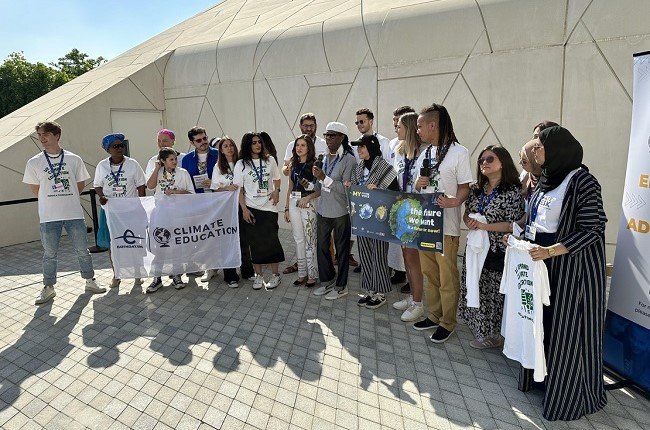
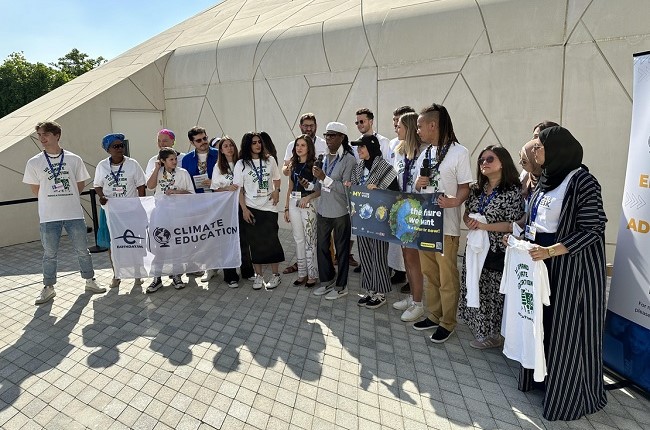
Over the past several years, IUCN Member EARTHDAY.ORG has led a campaign to embed climate education in countries’ NDCs, the core climate pledges under the Paris Agreement that guide policy, investment and long-term planning.
NDCs are updated every five years and outline how countries will reduce emissions, adapt to climate impacts and secure finance. For many governments, what appears in an NDC directly influences domestic plans, budget and international funding eligibility.
By ensuring that climate education is included in these commitments, EARTHDAY.ORG sought to move education from the margins of climate discourse into the heart of national climate strategies so that young people, educators and communities are equipped to protect the climate and the associated biodiversity loss.
Education matters for climate and nature
Climate change and biodiversity loss are deeply interconnected crises. Rising temperatures, shifting precipitation patterns and extreme weather events are degrading ecosystems, accelerating species loss and undermining nature’s contributions to people. At the same time, the degradation of forests, wetlands, oceans and other ecosystems exacerbates climate change by weakening nature’s capacity to absorb carbon and buffer climate impacts. It is all related.
Addressing this dual crisis requires more than technological solutions or top-down policy interventions. It requires an informed public that understands the relationships between climate and ecosystems, and that is empowered to act as stewards of nature. Climate education, when designed effectively, goes far beyond emissions and energy.
It integrates biodiversity, conservation, land use, food systems, water cycles and Indigenous and local ecological knowledge. This helps learners understand how protecting nature is essential to climate resilience and sustainable development.
By embedding education into NDCs, governments acknowledge the need for long-term investments in knowledge, skills and civic engagement critical to address these interconnected issues.
From the margins to the mainstream: The NDC campaign
When EARTHDAY.ORG began its climate education campaign in 2017, the global policy landscape was significantly different. At that time, only a handful of countries mentioned education in their NDCs, and where it did appear, the references were often general or lacked actionable depth.
However, by the second round of NDCs in 2020, a major shift occurred: climate education was reflected in approximately 40 countries’ NDCs, marking the start of a new era of climate education commitments.
Over multiple years, EARTHDAY.ORG conducted bilateral meetings with government representatives, education ministries, climate negotiators and civil society partners. These conversations took place on the margins of major UN climate negotiations, including the annual Conferences of the Parties (COPs), as well as during the intersessional Subsidiary Body (SB) meetings in Bonn.
In these settings, EARTHDAY.ORG advocated for education as a strategic enabler of climate and nature goals. The campaign emphasised how education supports:
- Climate adaptation and mitigation, by equipping communities with knowledge to manage natural resources under changing conditions.
- Biodiversity protection, by fostering ecological literacy and stewardship from an early age.
- A just transition, by preparing young people for green jobs across agriculture, conservation, renewable energy and ecosystem restoration.
The increase in the number of countries referencing climate education reflects both internal shifts in national priorities and the broader evolution of the UNFCCC process. The Paris Agreement itself provides a foundation through Article 12, which calls on Parties to enhance climate education, training, public awareness and participation under the Action for Climate Empowerment (ACE) framework.
As ACE gained visibility in recent COP cycles, governments became more attentive to integrating education into national planning instruments, including NDCs. EARTHDAY.ORG’s campaign helped translate this normative commitment into practical action.
As countries revised and submitted their third round of NDCs prior to COP 30, climate education began to appear more often and with greater depth. Today, 153 countries include climate education in their NDCs, a nearly fourfold increase from where the campaign began.
Education as a foundation for the green economy
One of the central messages of EARTHDAY.ORG’s advocacy is that education underpins the transition to a green economy. Protecting biodiversity and restoring ecosystems require a workforce trained in conservation science, sustainable agriculture, forestry, marine management, environmental monitoring and ecological restoration. These sectors depend on foundational education that integrates climate science with ecological principles and local environmental contexts.
By committing to climate education in NDCs, governments signal that investments in human capital are as critical as investments in infrastructure or technology. Students who learn about ecosystems, biodiversity and climate systems are better prepared to innovate, participate in democratic decision making and implement solutions that align climate mitigation with nature conservation.
Importantly, this approach also supports equity. Communities most affected by climate change and environmental degradation, which are often Indigenous Peoples, rural populations and those living in biodiversity-rich regions, stand to benefit from education that recognises local knowledge systems and empowers community-led stewardship of natural resources.
From commitments to implementation
Including climate education in an NDC is not the end of the journey; it is the beginning. EARTHDAY.ORG’s work increasingly focuses on helping countries move these commitments into action. This transformation happens through curriculum reform, teacher training, public awareness campaigns and partnerships across education and environmental ministries.
As IUCN advances its long-term Strategic Vision, there is a significant opportunity for Members to help operationalise education commitments already embedded in 150+ NDCs. Climate education references in national pledges create entry points for conservation organisations, research institutions, Indigenous networks and civil society actors to collaborate with ministries of education and environment.
We invite fellow Members of the Union to consider how their expertise in biodiversity conservation, ecosystem restoration and Nature-based Solutions can inform curriculum development, teacher training and community learning initiatives connected to NDC implementation. Education is a cross-cutting lever that strengthens not only climate ambition but also biodiversity outcomes and intergenerational stewardship.
By aligning climate education commitments with conservation expertise, we can ensure that future generations are equipped not only to understand the climate crisis but to actively protect and restore the natural world upon which all climate solutions ultimately depend.
Bryce Coon is the Director of Education at EARTHDAY.ORG, where he leverages over a decade of classroom teaching experience to drive global climate literacy. He and his colleagues successfully spearheaded the organisation’s NDC campaign, securing climate education commitments from over 150 countries. Bryce is currently focused on the strategic implementation and next steps of these international policy achievements