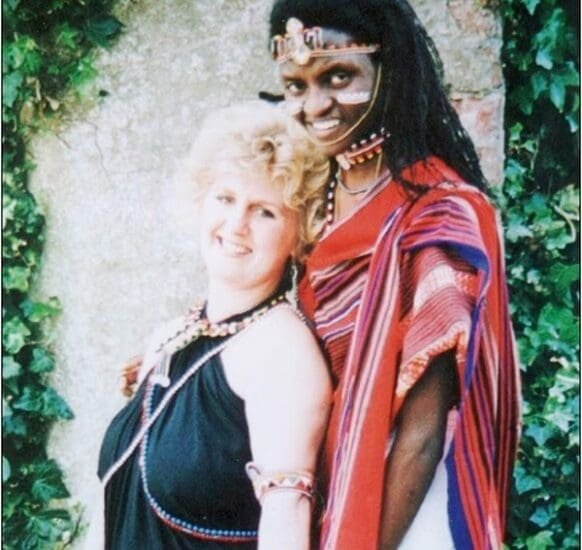
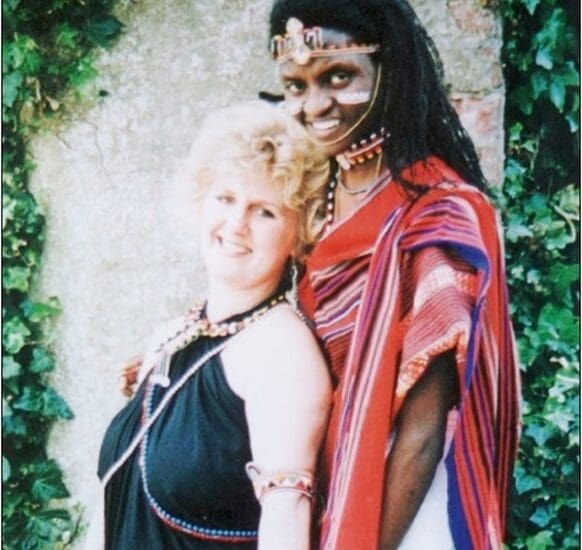
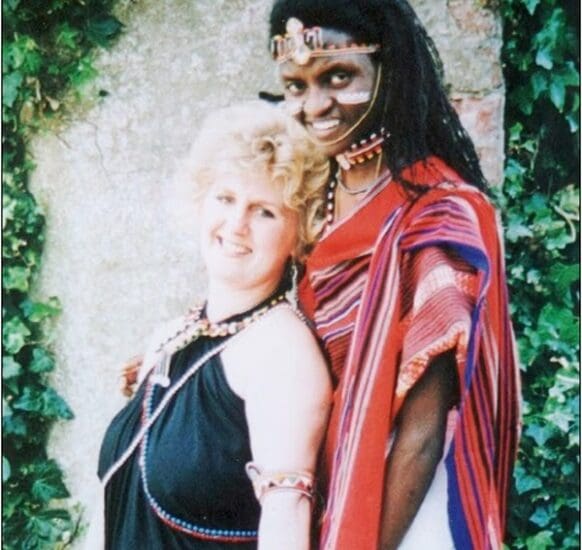
In a whirlwind love story that captured hearts across cultures, Cheryl Thomasgood defied convention by leaving her husband for a charismatic Maasai warrior.
But what started as a passionate romance quickly spiraled into a tale of reflection and regret. Cheryl’s journey, filled with romance and adventure, unveils the complexities of love that transcends borders.


– Advertisement –
As she navigates the challenges of her new life, her candid revelations serve as a poignant warning to women chasing dreams of exotic love.
Cheryl Thomasgood’s Cautionary Tale of Leaving Her Husband for a Maasai Warrior
At age 34, Cheryl Thomasgood was encouraged by a friend from her church choir to travel to the Samburu region of Kenya—a remote, arid area in northern Kenya known for its traditional Maasai and Samburu communities.
What began as a spiritual or cultural adventure turned into a life-altering romantic entanglement.
While there, she met Daniel Lekimencho, a young Maasai warrior, and the two began an unexpected relationship that eventually led her to leave behind her family in the UK, including her husband and three children.
Cheryl became deeply immersed in Daniel’s rural lifestyle—living in huts, walking barefoot, and adopting Samburu customs.
– Advertisement –
Despite the romanticism of the initial experience, Cheryl later revealed in interviews that her decision was rooted in emotional vulnerability and unresolved trauma, rather than clear-headed love or cross-cultural understanding.
Details: British Woman Leaves Family For Kenyan “Toyboy”
Who is she?
- Cheryl Thomasgood, a British hairdresser from the Isle of Wight, left her second husband and three young children in the mid‑1990s after meeting Daniel Lekimencho, a Maasai warrior, during a holiday in Mombasa, Kenya.
- She was 34 and he was around 10 years her junior.
What happened?
- She moved with Daniel to rural Kenya, living traditionally—sleeping in mud huts, surviving on goatskin and cow’s blood, and cooking by hand.
- Their whirlwind romance led to returning to the Isle of Wight in 1995, marrying (even wearing traditional Maasai attire on Valentine’s Day), and welcoming a daughter, Mitsi, in 1998.
WHY IT ENDED
- By 1999, Cheryl said Daniel’s priorities had shifted. He became focused on material wealth, which she described as feeling “used as a meal ticket”.
- Cultural differences and his inability to adjust to Western life compounded the issues.
REFLECTION & REGRET
- Now 65 and living quietly in Somerset, Cheryl says she “made a huge mistake…have a lot of regrets, especially about how it damaged my children”.
- She admits the relationship was an escape from past trauma and an unhappy marriage, not the healing she hoped for.
However, her eldest son, Stevie Liddington (43), paints a different picture:
- He says his childhood was “ruined,” recalling times of foster care, media embarrassment, and emotional abandonment.
- Stevie hasn’t spoken to Cheryl in a decade and describes her as narcissistic, accusing her of chasing publicity instead of showing care.
TAKEAWAYS / CAUTION
Cheryl now warns other women considering a romantic escape in Kenya—or any far‑flung cultural experience—that what feels liberating can have long‑term consequences:
- Unrealistic expectations can mask profound cultural and personal clashes.
- Emotional fallout can impact not only partners but deeply affect children and family bonds.
- Healing from trauma often requires support and reflection—not a spontaneous romantic getaway in a different culture.