
The department of trade has swooped in to safeguard British Steel’s assets, which could play a strategic role in the UK energy transition.
The UK government took control of the British steel company from Chinese owner Jingye Group on Saturday, after losses from its steelmaking operations forced it to the brink.
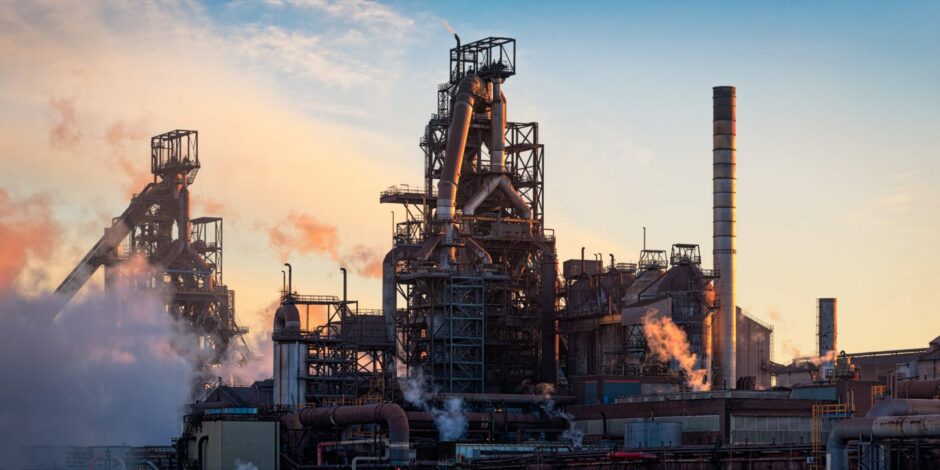
The first step the government will take will be to source raw materials for the plant, including iron ore and coking coal, which would enable the blast furnaces to continue operating.
The government said on Friday that it is committed to keeping the loss-making blast furnace at Scunthorpe operational.
British Steel revealed in late March that it was preparing to close its blast furnaces in Scunthorpe, citing losses of £700,000 a day.
The government said it has been engaged in ongoing negotiations with British Steel to enable the steelmaker to transition its blast furnaces to lower-carbon electric arc furnaces. But the Chinese owners of the firm rejected a lifeline in the form public funding last month, the government said a week ago.
British Steel was expected to replace its blast furnaces with electric arc furnaces in Scunthorpe and Teesside, which would lead to the loss of hundreds or thousands of jobs, as electrified plants need fewer people to operate them.
“This has raised concerns about the future of the sector in the UK and the impact of transition to electric arc steelmaking on employment and local communities,” the government said on Friday.
“There are also concerns about the potential loss of the UK’s ability to produce primary or virgin steel.”
Trade body UK Steel blamed the demise of the homegrown steel industry on “underinvestment in fabrication and production facilities”. It said without investment the UK could lose out on a £21 billion economic opportunity in offshore wind and other industries.
The UK remains reliant on foreign steel despite having the capacity to produce over half of the steel needed for the offshore wind sector, potentially 13 million of the 25 million tonnes of steel needed for offshore wind over 25 years, according to its report.
“Steel production can be an engine of economic growth, and we’re committed to work closely with the steel industry and the government to establish ways we can attract billions in private investment and ensure we’re internationally competitive,” said RenewableUK’s head of supply chain Ajai Ahluwalia.
Steel the nerves
 © Shutterstock / Chris Goddard
The steelmaker is the second steel company in the UK to fall into difficulty after Tata Steel shuttered its last remaining blast furnace in September.
Tata Steel closed its blast furnace in Port Talbot in South Wales to replace it with less carbon-intensive electric arc furnaces, a move that is expected to lead to the loss of 2,800 jobs.
Both companies reported that their steel plants were lossmaking.
Former British diplomat Greg Quinn said: “I am amazed that we have gotten to the stage where we nearly allowed Scunthorpe’s Chinese owners to shut it down whilst at the same time ensuring we cannot produce domestically the coking coal needed to fire the plant.”
To reduce emissions from steel production, coke and fuel use impacts need to be tackled as well as ferrochrome production, and downstream emissions in the steel value chain.
Quinn asked why the government had decided to bail out Scunthorpe and not Grangemouth, an oil refinery in Scotland facing closure that was chalked up to transition to producing sustainable aviation fuels.
The Chinese owner of British Steel, Jingye, cited the low-carbon transition, as well as tariffs and market conditions, as the reasons behind the company’s blast furnaces no longer being financially sustainable.
The UK government said that “excess capacity in the global steel industry has created a glut of steel on the international market”.
“If you are running an industrial process in the UK at the moment, there are very limited circumstances right now where a business case can be made to a board to invest in electrification,” said Daniel Paterson, a director at Electrify Industry.
US president Donald Trump increased the tariff on imports of steel, aluminium and derivative goods to the US last month to 25%, which UK Steel said it expects will negatively impact British exports of steel to the US.
‘Emergency’
Parliament has meanwhile been recalled to consider proposals to ensure the continued operation of British Steel’s blast furnaces are safeguarded.
Prime minister Keir Starmer said parliament will be asked to pass emergency legislation to give the business secretary powers to stop the closure of the blast furnaces, saying he would keep “all options” on the table in a social media post.
British Steel has appointed two employees of the company, Allan Bell and Lisa Coulson, as its new interim chief executive and chief commercial officer.
Talks between government leaders and British Steel remain ongoing. While the government said it would prefer British Steel to continue as a “commercially run business”, prime minister Keir Starmer said that “all options” remain on the table, including a potential nationalisation of British Steel.
More carbon than steel
 © Bloomberg
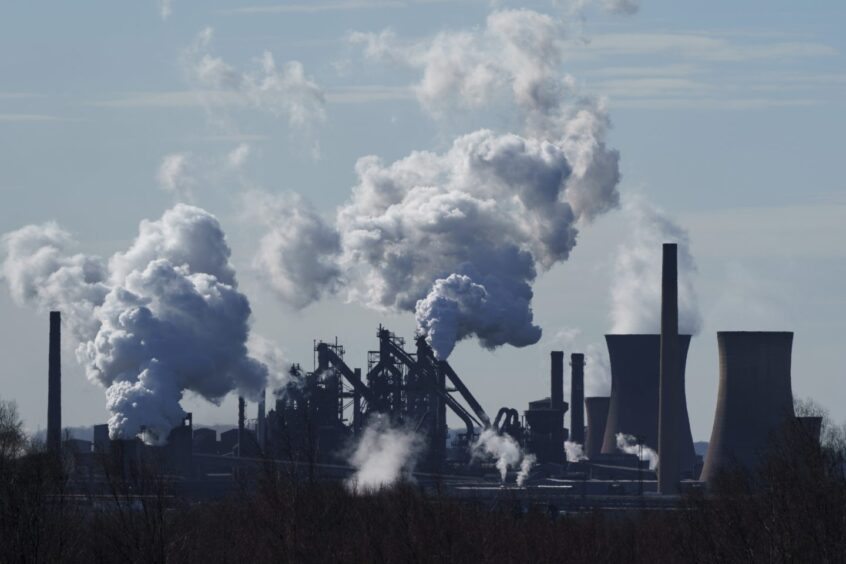
In the same House of Commons briefing, it said the steel industry was responsible for 13.4% of greenhouse gas emissions from manufacturing and 2.2% of all UK greenhouse gas emissions.
The steel industry must reduce emissions by more than 90% by 2050 under the Paris agreement.
Domestic steel manufacturing capacity remains critical to the UK’s green ambitions and decarbonisation goals.
Trade and industry minister Sarah Jones, who sits within the energy department, launched a consultation on the steel industry in January. That strategy, combined with the new National Wealth Fund, could help bridge the gap between supply and demand, according to UK Steel.
Organisations such as Electrify Industry, powered by MakeUK, say that “electrification is typically the most energy efficient route to decarbonisation”.
“Everyone is queuing for the same components,” said Paterson. “Decarbonisation does not need to mean deindustrialisation, it can mean reindustrialisation.”
Olivier Rostang, a consultant at Kairos Future, warned that a tonne of steel leads to more carbon dioxide than actual steel. He said steel is “almost the byproduct here and that needs to change, so we need to create more steel without creating all this carbon dioxide”.
About 20% of the global steel plants are expected to run to the end of their life in the coming decade, he said, creating potential for “changing some of that steel production method”.
The trade body estimates that British steelmakers could meet up to 86% of requirements for offshore wind with investment.
A study by UK Steel published in March suggested that in the last five years, less than 2% of steel used in UK wind farms was fabricated in the UK, and almost none was made using UK made steel.
Gareth Stace, director-general at UK Steel, said: “If we want to build the next generation of infrastructure, from offshore wind farms to defence and transport networks, we need to produce the steel here at home.
“With the right investment, we can turn this around and put UK steel at the heart of our energy and security future. This is a once-in-a-generation chance to build our industrial strength and reduce our dependence on foreign steel.”
Jonathan Reynolds and the Department for Energy Security and Net Zero were approached for comment.