

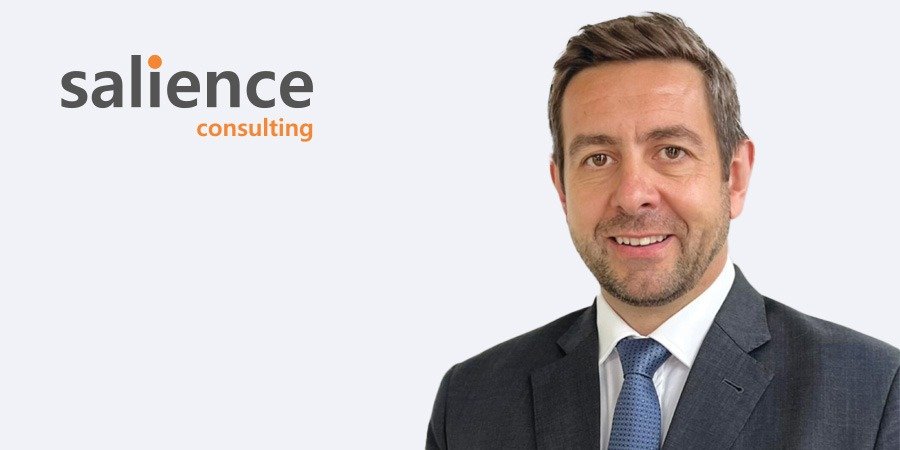
Salience Consulting, founded in Dubai in 2010, has carved a niche as a practical, hands-on ICT advisory firm. Telecom Review spoke with Ivan Skenderoski, CEO of Salience Consulting, to explore how the firm’s evolution reflects the changing ICT landscape, the trends defining the next generation of digital infrastructure, and how Salience is helping operators, regulators, and governments unlock sustainable, AI-powered connectivity.
Salience Consulting has been a trusted advisor in driving digital transformation across the ICT landscape. How would you describe your firm’s evolution over the years, and what differentiates Salience’s approach to helping operators and regulators shape the connected future?
We started Salience Consulting back in 2010 in Dubai, UAE, as a group of former British Telecom (BT) consultants who wanted to create a unique ICT boutique advisory firm that leverages practical advice drawn from real industry experience rather than just the superficial analysis that was being offered in the market.
The name “Salience” reflects our philosophy that work should “stand out, be seen, and make a lasting impression.”
Our mission is to “Transform countries and communities through digital and ICT advice”, and I believe we have, over the years, contributed to the digital landscape transformation in a number of countries, such as:
- Oman, with the introduction of national wholesale fiber operator OBC and a superior retail offering through new ISP Awasr Oman, resulting in increased fiber broadband coverage, take-up, and superior end customer experience.
- Bahrain, with the introduction of a one-stop shop in mobile tower permitting and legalization of the existing rollouts, making it easier to expand mobile networks, such as 5G, and provide better mobile broadband connectivity across the island.
- Serbia, through a focused multi-year engagement, to connect commercially non-viable areas via a strategy that injects government subsidy to unlock economic opportunities for people and businesses in rural areas.
- Kenya, where we delivered an assessment of the national gaps in Kenya’s digital infrastructure, resulting in World Bank financing of USD 400 million to deploy a new network and connectivity to public institutions (schools, hospitals), therefore improving lives and generating a significant increase in GDP to the Kenyan economy.
Salience started in the Middle East, but subsequently expanded to Africa, Central Asia, and Eastern Europe, including projects now as far as a broadband connectivity study for Mindanao Island in the Philippines to a flagship study for connecting Chile and Antarctica via a submarine cable. Over the years, we have successfully delivered over 150 individual projects in these geographies and expanded our physical presence from the initial Dubai office to two more Middle Eastern offices (Bahrain, Saudi Arabia), as well as a European office in North Macedonia and an African office in Kenya.
Our client base has also expanded from the initial focus on telecom operators, regulators, and investors to working with major international development institutions like the World Bank, EBRD, African Development Bank (AfDB), regional digital development bodies such as COMESA, ECOWAS, Smart Africa, and government ministries. Recently, we started working on smart/mega city projects across the Middle East, as well as AI and energy-sector-driven digital infra projects.
Our current service lines consist of (a) Technical Advisory, (b) Regulation, Economics and Operating Models, (c) Commercial and Financial Advisory, and (d) Recruitment Solutions.
Salience’s key differentiation lies in its deep focus on the digital infrastructure and ICT sectors, offering practical advice based on previous experience and supporting execution—so we don’t just recommend what to do, we help make it happen.
As a unique sector advisor, we couldn’t rely on a recognizable brand, so we adopted a flexible approach and went the extra mile for our clients in order to prove our worth.
As this year’s Knowledge Partner for the Telecom Review Leaders’ Summit, what key insights or trends does Salience Consulting aim to highlight through its contribution to the event?
As we operate in a technology-driven sector, we are in constant flux of having to adapt to the newest challenges and opportunities that come from different innovations in the sector. To highlight, these are some of the newest trends we are currently observing:
- Artificial intelligence (AI) is in every industry discussion (with or without reason!), but understanding of real impact vs theory is still to be seen. We are trying to define specific use cases for our industry, including internal operational optimizations vs how to use it to face customers and improve market understanding.
- Data centers (DC) are here to stay and are now being re-designed to provide hosting for the AI hardware; we are witnessing this trend across the Middle East. However, we are also seeing that the hype has potentially spread too fast and too wide, across countries and continents where connectivity needs to come first, and therefore, we are now facing the reality of DC in, for example, Africa being underutilized and supply outpacing demand.
- New alternative corridors for data flow are needed as the known subsea routes are even more vulnerable, with Red Sea cables now having two bottlenecks at Egypt and Yemen—the effect being damage on the reliability and reliance of the regional infrastructure. Therefore, new digital routes connecting Europe, Asia, and Africa are needed, as well as new corridors across terrestrial Asia, such as the Digital Silk Way project and the subsea cable in the Caspian Sea.
- Hyperscalers are the new kids on the block now, and they are now major customers of the telecom operators, but at the same time, they are major investors and sometimes operators of subsea and terrestrial networks, as well as data centers.
- Natural hazards (climate changes, floods, and typhoons) as well as regional conflicts (Ukraine, Middle East) are continuously having devastating effects on the digital infrastructure, and we are trying to find ways to embed more robustness in the design requirements to make sure it’s more resilient.
The Summit’s theme, ‘Tech Intelligence Beyond Mobility,’ emphasizes the growing integration of AI, data, and cloud across industries. From your perspective, what strategies will most significantly redefine value creation for service providers in this new era?
We started with data being stored locally, to data being moved to the cloud, to data being linked with AI. So, the development has some specific impacts on the telecom and ICT sectors overall:
- Data flows are becoming asymmetrical again. As we know, we started with asymmetric data flows, where download has been the more dominant data flow compared to upload. We were discussing more symmetrical data flows as users started generating more content, however, with AI, we might be moving back to asymmetry. I.e. a simple few-kilobits AI query now results in a processing reaction at the AI data centers, with gigabit data flows in-between and multiple megabits of data flowing back to the end user. Telecom networks will need to adapt to accommodate these data flows.
- Telecom operators need to define new services for enterprise and hyperscale customers that merge cloud storage and AI into a package that is easy to understand. As the enterprises belong to specific industry verticals, industry-specific products and solutions might need to be tried and tested before being introduced as products.
The other important related topic is data sovereignty and related regulation, because DCs are connecting in-between and sharing data, and with AI, this is more autonomous, so policies need to be protective of the data integrity and sovereignty, but at the same time, it should not be an obstacle to technological progress.
Looking ahead, how does Salience Consulting envision its role in supporting governments, enterprises, and operators to achieve sustainable digital transformation beyond mobility, particularly in the Middle East and Africa?
Both the Middle East and Africa are our focus geographies.
Still, they have different challenges, with our advisory across the Middle East focused on supporting higher value chain advisory, such as smart/mega cities, digital corridors, regulatory reforms for selected countries, and rebuilding war-torn infrastructure in certain countries. In contrast, Africa’s needs are more focused on base connectivity layers, cross-border corridors, and more affordable devices.
We see ourselves as a catalyst, having worked across multiple countries and regions—we apply lessons learned and best-case outcomes from one continent to another, from one client to another. Combined with our practical implementation support, we hope to elevate the traditional operators to the new technological challenges and support additional revenue generation.
We are also excited about the prospect of cross-government digital infra cooperation, like telecoms, the electricity sector, and other utilities. Digital assets are merging, and we believe we have an important role to play here.
Lastly, we see individual digital nations emerging (such as the UAE and KSA fronting the Middle Eastern developments), but regional initiatives are lacking.
We would love to see “Digital Arabia” as a regional digital and geopolitical unity that supports cross-regional digital development.


