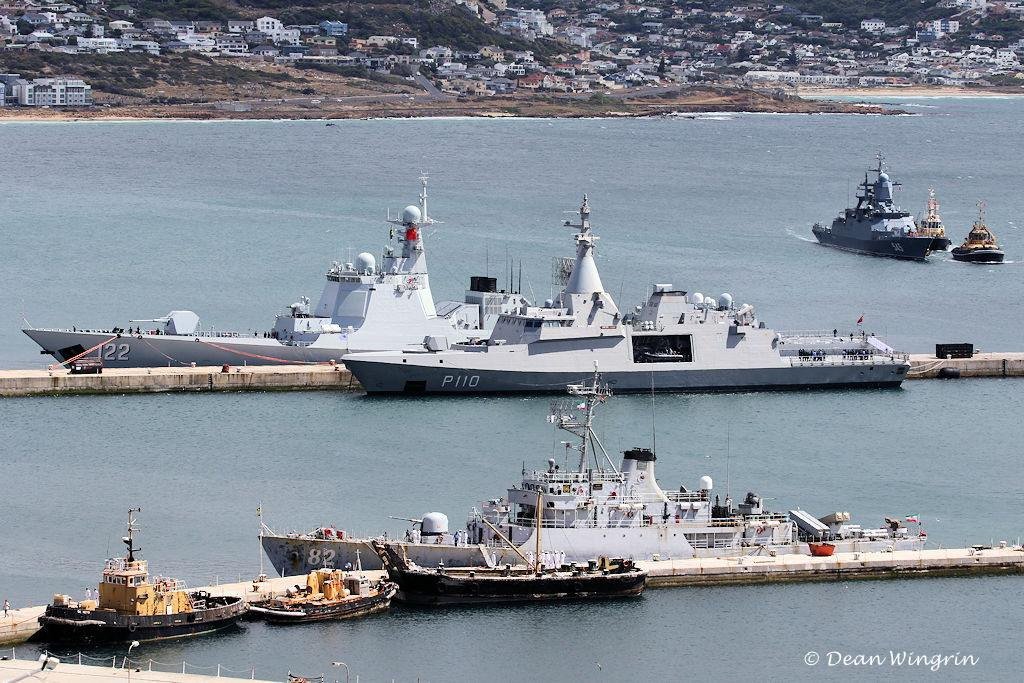
South African Navy Chief, Vice Admiral Monde Lobese, used his keynote address at the closing cocktail function of the BRICS Plus maritime Exercise Will for Peace 2026 aboard the frigate SAS Amatola on 15 January to underline the importance of multinational maritime cooperation, interoperability, and trust.
A defining feature of this year’s exercise was the inclusion of newly expanded BRICS Plus members. While South Africa, China, Russia, Iran, and the United Arab Emirates deployed active surface combatants, Brazil, Egypt, Ethiopia, and Indonesia participated as observers only.
India was notably absent. A spokesperson from the Ministry of External Affairs explained: “It was not a regular or institutionalised BRICS activity, nor did all BRICS members take part in it.”
Lobese said the exercise had tested procedures, sharpened skills, and demonstrated that “cooperation at sea is not an abstract ideal but a critical necessity” in addressing shared challenges such as maritime security threats, illicit activities, the protection of sea lines of communication, and environmental pressures. Lobese warned that these challenges “cannot be addressed in isolation.”
He noted that the participating navies had operated in “demanding and realistic scenarios” that tested procedures, sharpened skills and reinforced interoperability in a complex multinational environment.
Exercises like Will for Peace, he said, provide a practical framework for sharing doctrine and operational experience. The benefits, he emphasised, are “not theoretical” but translate into real mutual understanding and effectiveness.
Lobese also highlighted the human dimension of the exercise, noting that “these interactions, often informal, sometimes brief, are nevertheless foundational. They foster familiarity, confidence, and respect, which are indispensable when navies are called upon to operate together in regular circumstances.”

Photo: Dean Wingrin
From a South African perspective, hosting the exercise reaffirmed the country’s role as a maritime nation committed to multilateralism, particularly among Global South partners. He added that the diversity of participating nations had “enriched discussions and strengthened outcomes” and described the exercise as a “resounding success, despite some unfortunate negativities around unity.”
He reaffirmed that “The South African Navy is always ready to cooperate with other navies to achieve the crucial common goal of maritime security.”
One of the highlights, according to Lobese, was the ceremonial sail-past on the final day, during which the Chief of the South African National Defence Force, General Rudzani Maphwanya, received an honorary salute. Lobese described the event as “visually impressive,” saying it showcased the high levels of precision and coordination achievable through collaborative naval operations and demonstrated the shared maritime language that unites navies despite different national cultures.
Concluding, Lobese reminded delegates that “no amount of gold or silver can buy the value of friendship and cooperation” and called on participating navies to remain united in building peace, security, and orderly seas.
The exercise ran from 9 to 16 January and brought together BRICS Plus navies for a programme of more than 20 naval and aerial joint maritime safety operations, interoperability drills, and maritime protection serials, under the theme Joint Actions to Ensure the Safety of Shipping and Maritime Economic Activities. Serials included a live-fire exercise using “semi-heavy” weapons in the southern portion of False Bay.
The exercise was not without controversy. Iran’s participation drew sharp criticism after its warships took part, despite President Cyril Ramaphosa having requested that Tehran scale back its involvement. Opposition parties and analysts argued that the decision weakened South Africa’s claims of strategic neutrality and could strain relations with Western partners, whereas officials insisted the exercise was purely professional in nature, aimed at enhancing maritime security cooperation rather than signalling any shift in foreign policy.

Photo: Dean Wingrin
According to Iran’s Press TV channel, during a meeting on Friday with Captain Emad Nejad Moridi, head of Iran’s Naval Task Force 103 and top commander of Iranian forces in this exercise, Lobese said the two countries had agreed to promote maritime ties. He added that Iran’s Navy dispatched three combat warships to the exercise which showed the improvement of defence ties and friendship between the two countries.
Furthermore, the Iranian channel noted that “the South African Vice Admiral expressed his country’s full readiness to support the Iranian flotillas as both navies shoulder a responsibility to promote peace and friendship.”
Amid mounting negative publicity over Iran’s involvement, the SANDF quietly deleted a Facebook update confirming Iran’s participation in the Sea Phase of the exercise and subsequently ceased engagement with the media.
This tightening of information coincided with the Closing Parade on Friday morning being closed to press coverage, although sailors from South Africa, China, Iran, Russia, and the UAE were visibly represented.

Photo: Dean Wingrin
Speaking at the closing cocktail function, Lobese expressed hope that observer nations would, in future, commit naval platforms to the exercise, raising awareness of maritime safety and the protection of national interests. He also expressed his wish for the exercise to continue growing and endure into the future. China’s PLA Navy has already invited all participants to Shanghai later in the year for the final planning conference for the next iteration.