Billionaire Abdul Samad Rabiu, whose net worth Forbes estimates at around $9.8 billion, is advancing BUA Cement’s expansion in northern Nigeria, positioning the company to challenge its regional rival, Dangote Cement.


Dubai Talks With Chinese Partner
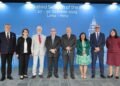
“Excited to welcome my friend Mr. Zhang Sicai, Chairman of CBMI Construction Ltd. (SINOMA China), and his team from China to our Dubai office,” Rabiu said in a statement shared on social media.
He said the discussions revisited more than 15 years of collaboration between both companies, describing CBMI as a trusted partner that has delivered cement production lines totaling about 14 million tonnes across BUA’s operations.
The meeting highlights the role of long-standing China-Africa industrial partnerships in expanding manufacturing capacity across the continent, particularly in capital-intensive sectors such as cement.
Strengthening Northern Nigeria Capacity
If completed, the Sokoto expansion would take BUA Cement’s total annual capacity to about 20 million tonnes, reinforcing its footprint in northern Nigeria, a region that has become increasingly strategic for cement producers due to population growth, urbanisation and cross-border trade links.
Nigeria remains Africa’s largest cement market, driven by housing shortages, public infrastructure spending and private real-estate development.
Producers have continued to invest despite currency volatility, higher energy costs and supply-chain pressures.
Competitive Cement Landscape
The proposed expansion comes as competition intensifies among Nigeria’s dominant cement producers, where scale increasingly determines market power.
Dangote Cement, Africa’s largest producer, operates installed capacity of about 52 million tonnes per year, including more than 35 million tonnes in Nigeria alone, giving it a wide lead in the domestic market.
BUA Cement, with current capacity of about 17 million tonnes, has been steadily expanding to narrow that gap. Adding a new 3-million-ton line in Sokoto would lift total capacity to roughly 20 million tonnes, strengthening its position as Nigeria’s second-largest producer.
While no investment value or construction timeline was disclosed, the discussions signal continued capital spending by BUA as it seeks to scale operations and compete more effectively with larger rivals.