Unlock the Editor’s Digest for free
Roula Khalaf, Editor of the FT, selects her favourite stories in this weekly newsletter.


Foreign investors have flocked to Nigeria’s markets in recent months, as the threat of a US trade war with larger developing economies has sent portfolio managers looking for cover in former crisis-hit frontier markets now on the rebound.
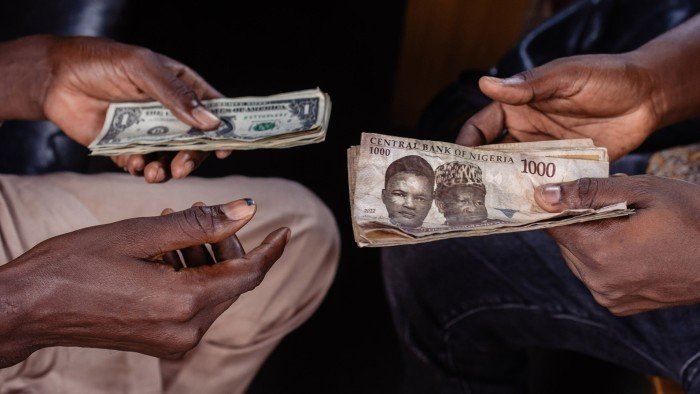
The Nigerian naira is among the world’s top-performing currencies since November’s US election with a rise of more than 7 per cent against the dollar, as a turnaround in the continent’s most populous nation — and the lure of yields of 20 per cent to 25 per cent — trigger a rally in the local bond market following a massive devaluation.
The rally in Nigerian assets reflects how “idiosyncratic” trades, or specific bets on countries coming out of currency crises or defaults, are in favour as investors are finding it increasingly hard to read how US President Donald Trump’s threats of tariffs will affect emerging markets as a whole.
“Even though everyone is doing a rethink with Trump’s policies and the inflation impact, if at all, of tariffs, investors are looking for potential places to invest that might be able to be resilient to all of that going on in the background,” said Razia Khan, Standard Chartered’s head of research for Africa and the Middle East.
Commodity-exporting frontier economies such as Nigeria are less integrated into the US economy than richer emerging markets that produce higher-value goods such as automobiles or electrical goods. That insulates the former group from wider tariff-driven sell-offs, said Alexis de Mones, debt portfolio manager at Ashmore, the emerging markets asset manager.
“They don’t have high trade surpluses with the US [and] they are not as exposed to the noise from tariffs in general,” he said.
Many of these countries are also coming off very difficult periods after high global interest rates in recent years led foreign investors to pull their money out, which exposed weak currencies and sent governments either to the IMF for help or forced drastic self-help economic policies.
Egypt, Turkey and other countries that were hit by capital flight have enticed investors back in the past year with tough economic medicine to raise interest rates. Dropping unsustainable pegs to the dollar has helped drive double-digit returns on local currency bonds. Nigerian local currency government bonds have also performed well, especially in the past month.
Many emerging market hedge funds produced their best returns in years by chasing these opportunities last year, and similar moves in dollar bonds of countries such as Argentina and Ecuador.
“Foreign portfolio investors are thinking Nigeria could be the next Turkey,” said Charlie Robertson, head of macro strategy at FIM Partners. “There’s been proper change in the fundamentals of the Nigerian economy . . . two years ago, you had a currency that was uninvestable.”
Nigeria’s stock market has gained about 4 per cent in dollar terms this year, better than many bigger markets. Nigeria had fallen off the radar for many international investors in recent years as controls on the naira made it difficult to extricate profits.
Since President Bola Tinubu took office nearly two years ago, his government has removed fuel subsidies that had burned up foreign reserves, while the central bank removed a peg that propped up the value of the naira and increased rates to 27.5 per cent.
The currency lost 70 per cent of its value against the dollar after two devaluations, but it has stabilised since November and is currently trading at what many observers believe is closer to its fair value, at 1,541 to the dollar.
“There has been a series of economic reforms that have really made a difference in the tradability of Nigeria from a local currency assets point of view,” de Mones said. “Under the previous administration, the naira was kept at an artificially high level,” he said. “If you had invested in a prior period and you had to get dollars out, you had to get in the queue.”
Despite the inflows of dollars from bonds bought by foreign investors, and a recovery in oil production to a four-year high last month, Nigeria’s gross reserves have fallen so far this year, to $38.5bn from $40bn.
Investors said the drop was likely to reflect the central bank paying down debts that inflated the gross reserves measure. This would improve net reserves, but these are not published. Policymakers also appear to be targeting stability or slight appreciation in the naira, investors added.
“I think they’re intervening to make sure the naira doesn’t come under a speculative attack,” said Bismarck Rewane, chief executive of Lagos-based consultancy Financial Derivatives. “My personal worry is that if oil prices drop or there’s a real reversal in gains from foreign portfolio inflows, the currency could be at real risk.”
Inflation is also elevated at 23 per cent as of February, with higher food prices driving the high cost of living. “For the second leg of the trade, you need to see disinflation kick in,” said de Mones.
StanChart’s Khan said: “We shouldn’t underplay the very real pain that ordinary Nigerians have felt through this liberalisation experience. The pain that people took may mean it takes a while longer before the benefits of all this are realised.”
While the naira still appears cheap and insulated from trade risks versus other emerging markets, “it has become a more populated trade for foreign investors”, one manager said. “The more interest there is in these trades, the less idiosyncratic it is in terms of risk.”