The debate over whether the UK should adopt zonal pricing has heated up, with utilities Octopus Energy and Ecotricity making statements for and against the initiative.
Octopus chief executive Greg Jackson has been among the leaders of proponents of zonal pricing.
Speaking during a series of briefings last week, Jackson set out the case for why Octopus Energy backs the initiative.
Key to his claims is that zonal pricing will save the UK at least £3.7 billion per year. This is the equivalent to taking around £132 off every customer’s bill.
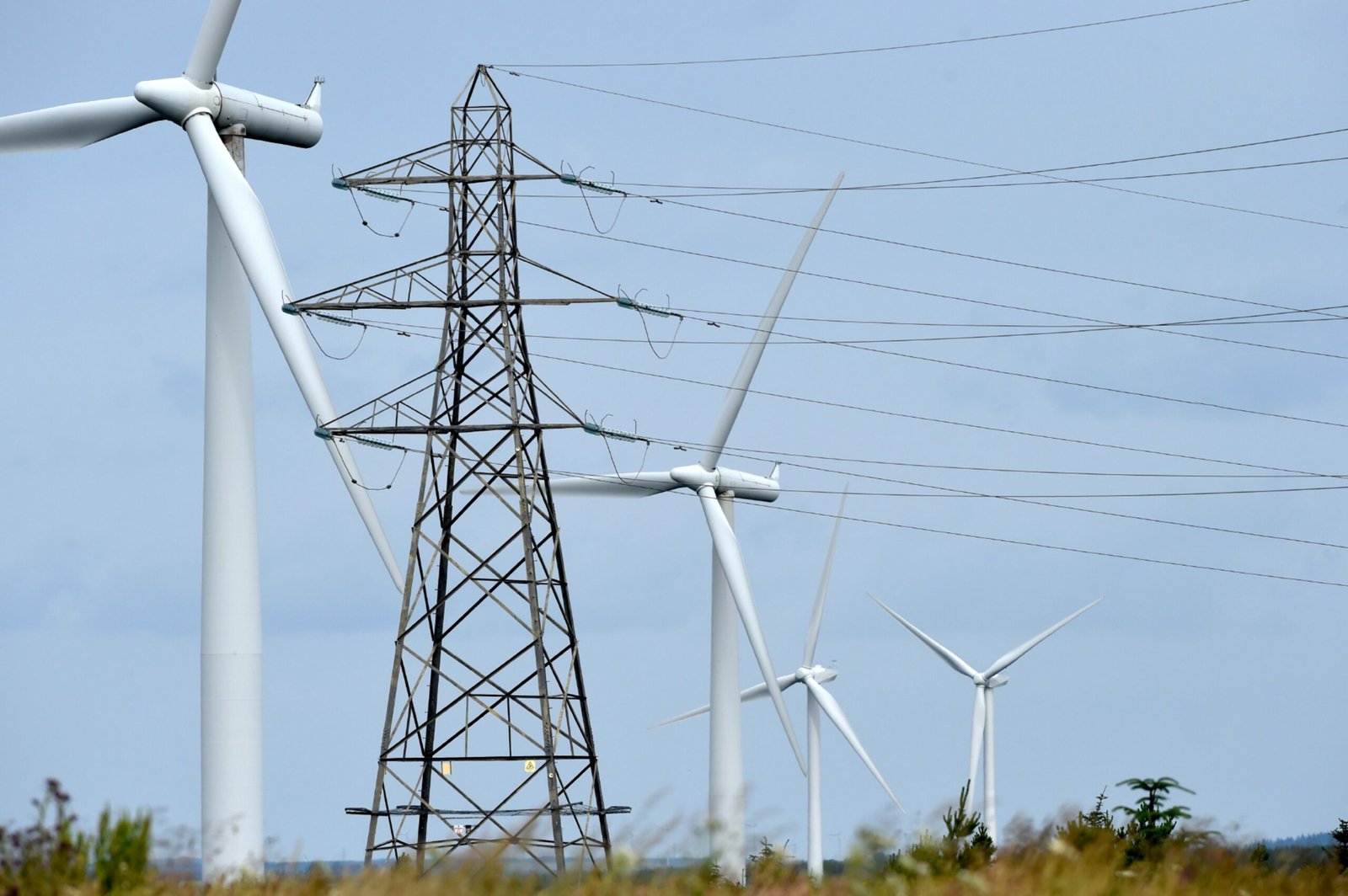
In addition, he has warned that the UK’s ageing cable infrastructure will be unable to cope with the roll out of offshore wind farms off Scotland’s coasts.
 © Supplied by Octopus Energy
Jackson said: “If you look at what’s causing our record high energy costs at the moment, we banged a load of renewables on to a system that wasn’t designed for it.”
This has led to curtailing, where wind turbines are switched off to avoid overloading the grid or depressing power prices.
“The more of them you build, the worse that gets,” Jackson added. “If you introduce a more sensible market, meaning zonal, then all that infrastructure should be more productive, and costs come down.”
Case against
However, fellow utility head Dale Vince from Ecotricity was quick to respond to Jackson’s comments.
He warned that zonal pricing would add additional complexity to the power market, delaying the push to net zero.
“Zonal pricing would be an incredibly complex trading arrangement, increasing our costs for sure, along with risk and uncertainty,” he said.
His position was echoed by Centrica chief executive group Chris O’Shea. Speaking last month during the presentation of the group’s 2024 preliminary results, he said: “Our position is that the energy market of the future requires more engaged consumers.”
 © Supplied by Ecotricity
He warned that the additional complexities introduced by locational pricing models risk alienating customers.
“If you overlay 12 local distribution zones and different standing charges, you could easily see that you’ve got hundreds to thousands of prices for electricity changing. How do you engage anybody?” O’Shea added.
In addition, Vince pointed out the length of time needed to implement zonal pricing, “with it being unlikely that it would be finished before 2030, more likely much later, which would create a huge deal of uncertainty for investors and market participants.”
Zonal pricing
The current system sees a uniform price applied to power across the country – wherever you are in the UK, you pay the same rate.
However, the UK has been looking to reform the way electricity prices work, with locational pricing being considered. While there have been several possible models proposed in the ongoing Review of Electricity Market Arrangements (REMA) process, one could see the UK divided into 12 zones, each with its own power price.
Prices would be dictated by supply and demand, with power-hungry areas with low power prices paying more compared to less populated areas with a lot of generation capacity.
The debate has heated up with a final decision on the future of the UK’s electricity sector expected to come soon.
Those in favour of zonal pricing have said that Scotland, with its abundant wind resources, would be one of the key beneficiaries of zonal pricing. Not only would it lower energy prices in Scotland, it would encourage energy-intensive businesses.
Alongside Octopus Energy, regulator Ofgem and the National Energy System Operator (NESO) have previously voiced support for zonal pricing.
The other side, which includes RenewableUK, Offshore Energies UK and Scottish Renewables, has warned that locational pricing will cause increased volatility and higher capital costs, jeopardising the renewable energy boom that could lower prices in the first place.
Developer Ocean Winds has also warned that, not only could zonal pricing erode the economic case for renewable energy projects in Scotland, but the uncertainty caused by the REMA process is also making investment more challenging.