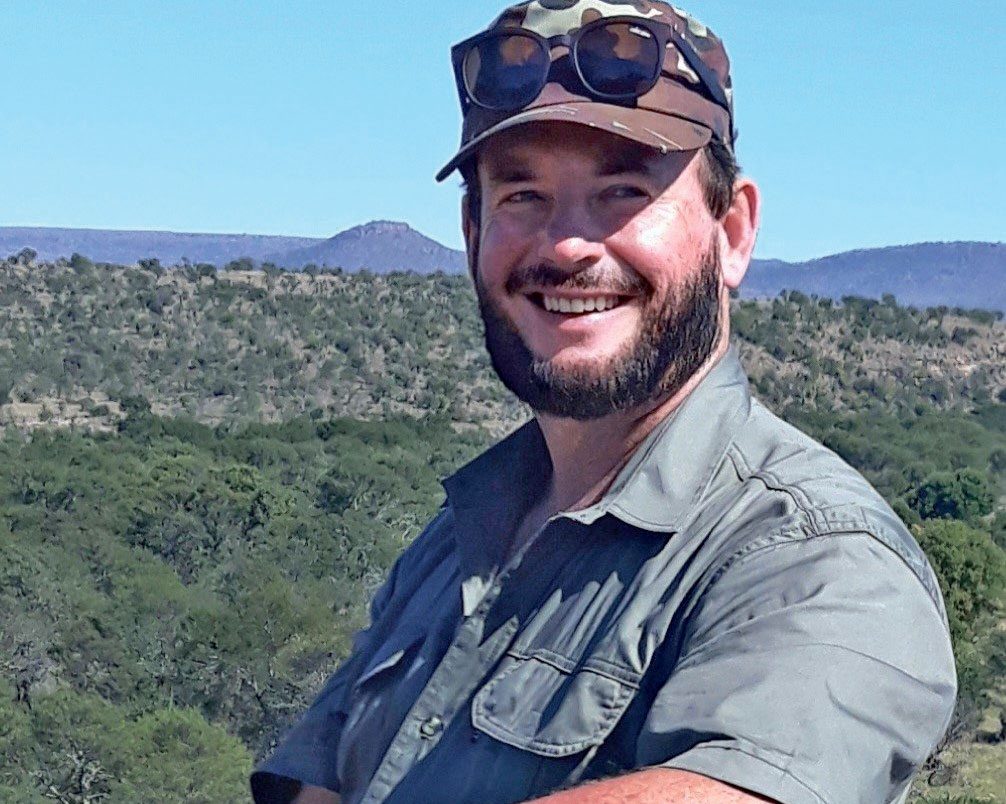
Ken Shuman, co-owner of Hilson Shuman Farming, is committed to carrying on his father’s towering legacy through innovation and adaptation. Janine Ryan reports.


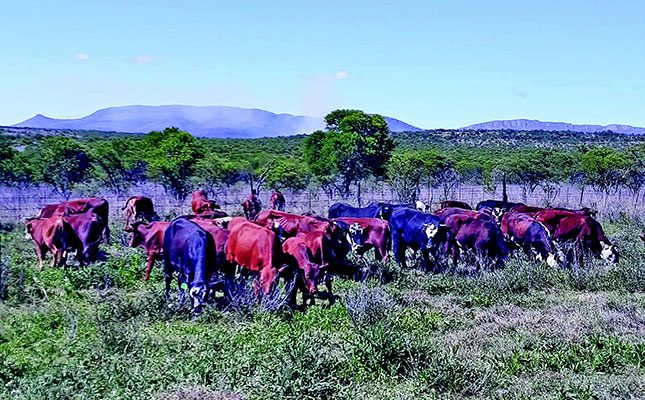
Photo: Supplied
While the Shuman family has been farming for more than 100 years, Ken Shuman, a fifth-generation farmer on the farm, says the operation has evolved and adapted over the years to remain viable and meet market demands.
The family is perhaps most renowned for farming Afrikaners and Merinos in Queenstown in the Eastern Cape, but since the death of Hilson Shuman, a prominent veteran farmer in South Africa, Ken and his farming partners have changed things up.
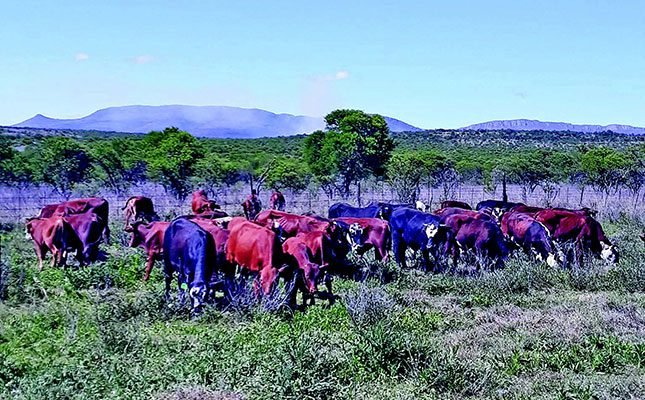
Over 4 000ha, Ken, co-owner of Hilson Shuman Farming, runs Afrikaner, Hereford, Brangus and Beefmaster cattle, as well as Dorpers. Hilson Shuman Farming also hopes to add lucerne and maize to the mix in the near future.
A farming legacy
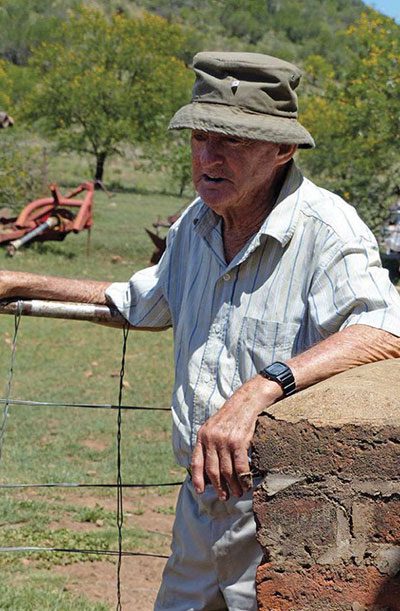
Hilson, who sadly passed away at the age of 86 in 2021, was a prominent veteran farmer in South Africa. He was the fourth generation on the family farm, and established the well-known Grey Craig farm.
At the time of his death, Hilson left behind a towering legacy in the breeding of both Afrikaner cattle and Merino sheep. Hilson presided over the farm when it eventually became known as the ‘Home of the Afrikaner’.
He began his farming journey in 1952 at the age of 16, after the sudden death of his father Ken, who died from a severe heart attack. Despite this abrupt start to his career, Hilson went on to become one of the country’s most respected and awarded agriculturalists.
In 2018, he achieved a remarkable world record by delivering his 65th consecutive wool clip, having already set the South African record with his 60th clip in 2013.
Hilson’s long-standing dedication was formally recognised in 2016 when he was honoured with the prestigious South African Veteran Farmer title by the South African Agricultural Society.
Beyond the farm gate, he was the longest-serving chairperson of the Border Mohair Growers’ Association, holding the position from 1976 to 1980.
Afrikaners
In cattle breeding, Hilson was equally pioneering. He registered the KS Africander stud (named in tribute to his father) in 1952.
The KS stud, bred from the Pringle and Gradwell bloodlines, gained significant popularity, supplying breeders across the Eastern Cape and into Namibia until its registration ended in 1984.
But Hilson was also a practical farmer, and like his son after him, adapted production to meet demand.
In 1983, on the advice of Schalk Viljoen, a top cattle farmer in the then Rhodesia at the time, Hilson decided to introduce Hereford cattle into the mix.
According to Viljoen, the Hereford would help Hilson produce a ‘beefier’ breed that was, at the time, in demand from farmers and feedlots. Ken Shuman today still crosses Afrikaner cows with Hereford bulls.
In 2020, Hilson Shuman Farming celebrated 100 years of farming with the indigenous Afrikaner.
Angoras
In the 1970s and 1980s, Hilson ran a flock of Angora goats. At the time, Ken says, mohair was in great demand.
“Farmers were crossing Angoras with Boer goats, and producing ‘mohair’, which wasn’t really mohair. But because of the great demand for mohair, even these farmers were able to sell their product,” Ken explains.
Hilson’s ingenuity led him to capitalise on the mohair boom, and at one point, he was running around 3 000 head of Angora goats on the farm.
The income he made from this was astounding, with Hilson able to buy adjacent portions of land with cash as they became available.
“This is something no farmers today will be able to do,” Ken says. “It was simply a different time.”
Ken adds that his father was so committed to the Angora concern that the cattle actually took second place in terms of his priorities.
“But dad struggled enormously with stock theft,” says Ken.
This was particularly exacerbated by the fact that security companies, for example, did not yet exist, and farmers were largely entirely responsible for their own safety as they could not rely on external services.
But Hilson adapted yet again when mohair prices began to drop.
“Once the boom was over, dad sold off all the Angoras,” Ken adds.
Merinos
Ken says that Hilson began building up his Merino flock in the 1990s.
Hilson’s father, also named Ken, believed that Merinos’ hooves were ‘lined with gold’ – a prophecy that became literal during the major wool boom of 1950.
According to a Farmer’s Weekly article published in 2013, Hilson vividly recalled the day the prices were phoned through from East London:
“I went to the windmill and read out the prices and he told me to go back home and tell my mother we were wealthy.”
This wealth, however, was quickly followed by tragedy. In 1952, Hilson had to sell large numbers of stock to cover death duties. That year, he marketed only 18 bales of wool.
Despite this setback, Merinos are at the centre of Hilson’s farming legacy.
Hilson inherited his father’s love for Merinos, but advanced the breed through scientific rigour. In the early 1970s, objective measurement shocked him into action when his wool measured 22 to 23 microns.
Determined to improve quality, he introduced Letelle rams, a move that dramatically reduced the micron count to a fine 18 or 19 in a single generation.
He continued to source genetics from various studs, leading him to quip that his sheep were like the ‘League of Nations’.
The end of an era
Ken says his father was determined to farm until the end of his days.
But Hilson’s plans were disrupted when the family received a tip-off from the police in 2020 that they were targeted for a farm attack.
“We were all astounded to learn this, and it was decided that mom and dad immediately had to be removed from the farm,” Ken explains.
Hilson and his wife, Isabel, quickly left the farm and moved to Cape Town to live with their daughter, Elizabeth.
Hilson, who was already suffering from dementia, suffered several setback with regards to his health.
“Dad went backwards very quickly after he and mom moved to Cape Town,” says Ken.
Indeed, Hilson sadly passed away in January 2021, not long after moving away from the farm to Cape Town.
He was survived by Isabel, Ken and Elizabeth. Isabel still resides in Cape Town.
Keeping the legacy alive
After Hilson’s death in 2021, Hilson Shuman Farming remained in limbo until the estate was wound up.
“We couldn’t add to the farming operation; we could only keep it going,” says Ken.
At the time, the family members weren’t even entirely sure that they wanted to continue farming, but it was at a family meeting at the end of 2023 when the estate matters had been finalised that the decision was made to continue the Hilson Shuman Farming legacy.
The farming operation now includes Ken and his nephew Ross Reid, whose day job includes working for an accounting firm.
Ken takes care of the day to-day operation of the farm, while Ross takes care of the financial side of the business.
Like his father Hilson, Ken is also a master of adaptation.
The farming concern now includes a flock of Dorper sheep, a feedlot and Afrikaner crossed cattle with Beefmaster, Hereford and Brangus.
“We decided to invest in Dorper sheep instead of the Merinos because of the amount of shearing involved in keeping Merinos. With the Dorpers, we don’t have to shear them at all, and they produce high-quality meat,” says Ken.
A large flock of Dorpers from Hanover was brought onto the farm at the beginning of 2025.
Due to the continuing issue with stock theft, the Dorper sheep are run on pastures near the homestead. According to Ken, this has resulted in a marked decline in stock theft incidents.
Ken also makes use of the security company Smhart for additional security.
As Dorpers are year-round breeders, Ken says the breed also particularly aligns to his breeding goals.
Lambing is scheduled to correspond with optimal pasture and weather. In his area, this includes February, May, August and November.
With controlled breeding, Ken facilitates up to four lambing seasons every year. However, he is also not afraid to adjust the lambing timeline depending on the climate, the veld condition and the overall needs of the farm.
“Dorpers are very flexible and this is one of the reasons we chose them; we can tailor their production to align to the farm’s needs,” says Ken.
Future plans
Farming is not an easy career path, even for someone who is a generational farmer. But Ken is determined to continue his family’s farming legacy.
“As I look to the future of farming in the Queenstown district of the Eastern Cape, I see growth rooted in resilience. Cattle and sheep farming here – where the sweetveld grasslands meet the rugged beauty of our landscape – is about adapting to climate, using technology wisely, and nurturing heritage.”
“With a focus on efficient feed production, strategic breeding, and secure pastures, Hilson Shuman Farming is poised to boost productivity while caring for our land,” says Ken.
In terms of the future of Hilson Shuman Farming, Ken says that they plan to increase the commercial cattle herd and Dorper flock population, and to produce crops to be used for feed in the feedlot, as buying in feed is expensive.
He adds that the Eastern Cape’s potential for livestock farming is vast, and he fully intends on capitalising on this.
“We’re gearing up to tap into it, sustainably. For me, the future is about balancing tradition with innovation, in harmony with this remarkable part of South Africa.”