

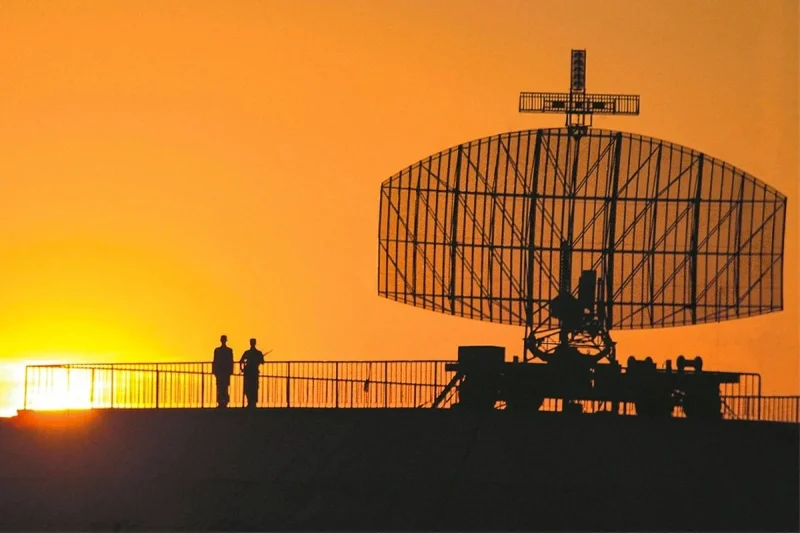
Armscor, South Africa’s defence acquisition agency, has launched a tender aimed at restoring and maintaining key radar systems for the South African Air Force.
This move, according to South African DefenceWeb, addresses longstanding concerns over the reliability of equipment vital to national airspace protection. Issued on 16 July under reference ETSS/2025/26, the tender seeks contractors capable of handling repairs and upkeep for six types of radar and associated gear.
The systems in question are air traffic control radars like the ATCR 33 and ATCR 2TI, the solid state approach radar known as STAR 2000, RSM970S radars, mono-pulse secondary surveillance radars or MSSR, and tactical mobile radars or TMRs. This effort comes as the air force grapples with equipment that has served for decades but now faces breakdowns due to scarce parts and limited funding for routine care.
Military aviation analyst Dean Wingrin, based in Cape Town, explained to DefenceWeb that he views the tender as a predictable response to broader issues plaguing the South African National Defence Force. He attributes the radar shortages to chronic underfunding of maintenance budgets, compounded by inefficiencies in Armscor’s handling of contracts and projects. Wingrin notes to DefenceWeb on 6th October 2021 that while the South African Air Force’s surveillance and air traffic radars have undergone various enhancements over the years, they remain outdated and urgently require replacement. The lack of fully operational radars hampers the air force’s capacity to provide consistent coverage, affecting not just military operations but also civilian air traffic management. He expresses hope that procuring spares through this tender will revive these essential tools, which play a central role in detecting intrusions and ensuring safe skies.
The importance of these radars cannot be overstated, as they form the backbone of airspace monitoring across the country. Units like 130 Squadron at Mariepskop in Mpumalanga and 514 Squadron at Air Force Base Hoedspruit rely on them for offensive and defensive air tasks. Employing both primary and secondary radar technologies, these systems identify and track aircraft within and beyond South African borders. The Umlindi long-range air defence radar, for example, delivers a three-dimensional, multi-purpose air picture in real time, while the mono-pulse secondary surveillance radars gather data on aircraft identities and altitudes. Information from these installations feeds into command centres such as the Lowveld Air Sector at Air Force Base Hoedspruit, the Bushveld Airspace Control Sector, the Air Force Command Post at headquarters, and the National Joint Operational Centre. In practice, when unknown or hostile aircraft are spotted, fighter jets are scrambled for intercepts, forcing compliance or landing as needed.
A radar operator from 514 Squadron, speaking from Mariepskop four years ago, described the site’s role in offering clear visibility of the skies, enabling early warnings that allow the defence force to fulfil its constitutional duties. Yet, in May of this year, the air force acknowledged that its radars, in service for more than 35 years, continue to function despite delays in spare parts acquisition and age-related downtime. Tactical mobile radars have undergone refurbishments to push their service life to 2034, with ongoing operational tests and evaluations to verify their performance.
This tender arrives against the backdrop of stalled ambitions for a complete overhaul. The South African Air Force has maintained a project on the Strategic Capital Acquisition Master Plan for nearly 20 years, now dubbed Project Chutney, to introduce new radars. Project Chutney, which aims to replace some mobile and fixed air defence radars operated by the South African Air Force. Budget reductions have rendered it unfeasible, leading to its suspension. The air force’s radar network, including ageing AR-3D models, integrates with civilian data from Air Traffic and Navigation Services to support systems like the Advanced Processing and Display System, Ground Command and Control System, and Current Intelligence System. These setups are crucial for air defence and flight safety, but their obsolescence limits effectiveness.
Looking back, efforts to sustain the radars have included notable upgrades. In September 2007, Tellumat’s Defence Division secured a contract from Armscor to modernise the Umlindi system by replacing core components with a new processor suite, advanced technical monitor workstations, bespoke software, servers, and a unified TCP/IP network. This followed Tellumat’s earlier work on the antenna, transmitters, and signal processing, drawing on two decades of maintaining South African Air Force radars. Colin Meintjes, then managing executive at Tellumat Defence, explained the choice of commercial off-the-shelf hardware to deliver a budget-friendly solution with straightforward paths for later improvements. The upgrade involved installing powerful Intel-based computers with custom interfaces in 19-inch racks, alongside LCD screens from 17 to 24 inches, all running on Microsoft Windows with Tellumat-developed applications.
Such interventions have kept the systems viable, but the current tender signals a recognition that piecemeal fixes are no longer sufficient. Armscor and the air force see the local defence industry as well-equipped to meet these needs, either independently or through partnerships with global suppliers. As the tender process unfolds, it could lead to contracts that not only repair existing radars but also incorporate incremental improvements, ensuring the South African Air Force retains its ability to monitor and defend the nation’s airspace amid fiscal constraints and evolving threats.


